
Motorists urged to ensure cars locked


Play
Police renew warning now that thieves use jammers to foil remote controls
Police and academics have again warned motorists to physically check if their doors are locked after high-tech car thieves started using stronger jammers to foil remote controls.
“Drivers should use a key to lock their cars,” Pol Gen Somyos Phumphanmuang, a deputy National Police chief and director of the Car and Motorcycle Theft Suppression Centre, told a press conference yesterday.
Car thieves are steadily improving their techniques to break into people’s vehicles and steal their valuables, as shown by the arrest of Wichien Bandasak, 48, in the parking lot of Macro’s Bang Phli branch in Samut Prakan on August 22.
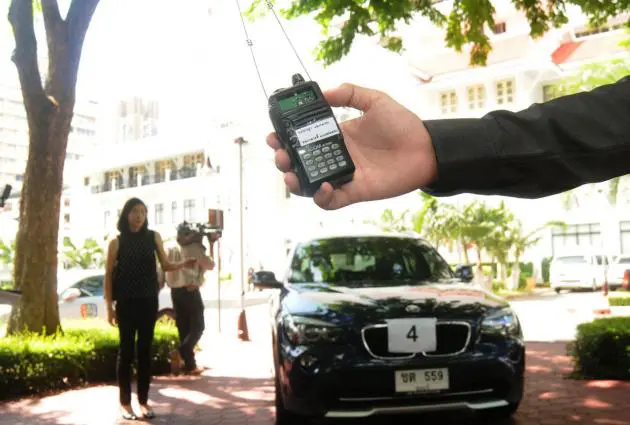
Bang Kaew police nabbed the man while he was allegedly ransacking customers’ cars. Police found that the suspect used a modified “walkie-talkie” radio transceiver with its frequency raised to match the targeted cars’ remote control signal. With this device, remotes within 25-55 metres of a car can’t lock the doors.
This was more effective than using other marques’ remotes to interfere with the targeted cars’ remote, he added.
Dusit Suksawat, a lecturer in electrical engineering and technology at King Mongkut’s Institute of Technology Ladkrabang, said the latest gadget had two antennas that could send out two stronger signals. The devices could be bought anywhere for about Bt5,000 and modified by experts to create signals strong enough to be used for criminal purposes.
Sayamon Kanchanawisitpol said she noticed a Mini Cooper parked nearby before she left her car to go into Macro to buy something. Fifteen minutes later, she was told that her car had been broken into by a thief, but police had caught him in time.
She said the thieves might not target particular brands of cars, but were more likely to target a car used by a lone woman. She urged fellow motorists to be more careful when locking their cars so that they wouldn’t be victimised by thieves using hi-tech methods against cars’ safety systems.
