
Trouble at rally was staged: press


Play
Unknown 'third force' set media vehicles alight and attacked police; protesters remained peaceful, media sources say
Reporters from various news groups covering the rubber farmers’ protest believed an unknown “third hand” is working to instigate violence and attacked press vehicles this week.
Journalists who witnessed clashes on Phet Kasem Road in Bang Saphan in Prachuap Khiri Khan province said they heard fire-cracker explosions and gunfire – which caused them to flee for safety at 1am on Friday morning.
Sombat Limpajeerawong, a 50-year-old reporter for Thai PBS, said he didn’t believe police or rubber farmers were behind the latest drama as police were only armed with shields and had no teargas. Plus, he said the protesters were peaceful.
“I believe a third hand is behind [these incidents]… I and [police] officers were no different. We had to hide in a rubber plantation.”
Pimporn Yurueng, 35, who works for TV Channel 3 in Prachuap Khiri Khan, shared a similar view.
She said police were hit with rocks and acid and retreated to a nearby rubber plantation and she said there would have been more violence if police had struck back.
“I was afraid. I didn’t know what happened but I think the attackers were not farmers but a third party.”
Nation Multimedia Group reporter Apichart Hongsakul said the young men who attacked police do not appear to be farmers and they were well equipped with home-made weapons including metal pipes and home-made explosives.
The Thai Journalists Association (TJA) and Thai Broadcast Journalists Association (TBJA) issued a joint statement yesterday condemning the attacks on press vehicles covering rubber farmers’ protest at 1.30am yesterday by an unknown group as a threat to the carrying out of press duties.
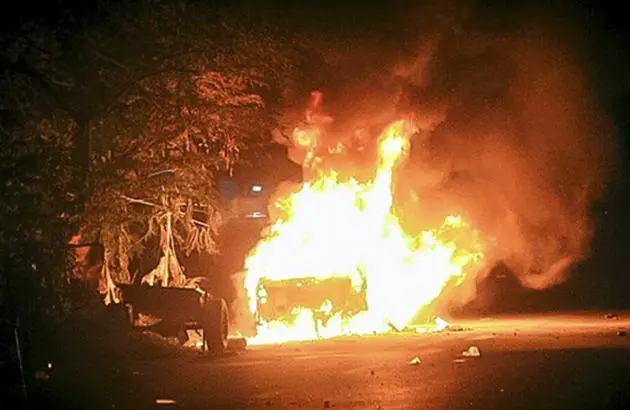
Molotov cocktails were hurled at press vehicles belonging to TV Channel 3, Thai PBS and Daily News newspaper in the dark of the night, damaging it. The TPBS car was also hit by unknown people earlier.
The two associations made five-point demands to all parties in the statements. They called on all sides to exercise and respect rights under the Constitution, to be tolerant, not resort to violence and to seek a peaceful resolution via dialogue.
Second, to be fair to all sides, an impartial fact-finding committee should be set up by the National Human Rights Commission to find out those responsible for the attack.
Third, the associations stressed that the press was not a party to the conflict and should not be subject to threats that may affect its duty to inform the public.
Fourth, the bodies urged the media to be impartial, and last but not least, they reiterated the right of members of the public to take the press to court or petition the press council if they think a particular media group is not fairly carrying out its duties.
