
Be cautious on BRN demands: Army chief


ARMY CHIEF General Prayuth Chan-ocha said yesterday that Thailand should not rush to conclusions about the BRN's five recent demands - and that a deep South special administration zone was not possible, as the locals didn't want it.
ARMY CHIEF General Prayuth Chan-ocha said yesterday that Thailand should not rush to conclusions about the BRN’s five recent demands – and that a deep South special administration zone was not possible, as the locals didn’t want it.
The general made his comments as the National Security Council (NSC) prepared for the October dialogue with the Barisan Revolusi Nasional (BRN).
Prayuth said the BRN’s demands had to be reviewed and more information sought before further talks were held. Regarding the fourth demand – in which the BRN reportedly called for a special administration zone – he said that Thailand already had two special zones, Bangkok and the tourist centre of Pattaya, and these two centres needed new administration and budgets.
Nevertheless, he said he believed the budget for the three southernmost provinces wasn’t sufficient and still needed the central government’s support. He’d explained this to the locals, who didn’t want a special administration zone. He claimed if the insurgents laid down their weapons, it would smooth the talks.
Prayuth said the project to bring “misguided” insurgent sympathisers back home had seen 900 people reporting themselves to the authorities. They’d been provided with vocations and safety while officials reviewed their arrest warrants, summonses and evidence.
NSC chief Lt Gen Paradorn Pattanatabut affirmed that Thai negotiators would discuss the BRN demands, as well as the violence during the Muslim holy month of Ramadan, in the peace dialogue with BRN in the third week of October. The NSC had forwarded the BRN’s explanation of the five demands to related agencies, including those supervising national security, the people’s sector and academics, for analysis. Results could not be expected for some time.
Paradorn said the restive region’s situation was in a process of recovery because the dialogue was ongoing. Search operations and public safety measures would remain strict and the insurgents’ attacks were declining.
Southern Border Provinces Administrative Centre (SBPAC) chief Thawee Sodsong, during a seminar yesterday on the roles of local media and the Malay language in the region’s peace process, cited the late prime minister MR Kukrit Pramoj’s quote that “we have to let them be themselves”.
He cited Kukrit’s comment in Yala on February 1, 1976 that Thailand had fooled the people in the region by telling them they were Thais, when they actually were Malay.
“What we had to do was to [encourage] them to be themselves and preserve the Malay identity. Moreover, we shouldn’t offer the view they have privileged rights over Buddhist Thais, but we should promote equity in the region,” he cited MR Krukrit as saying.
A solution to this conflict was to open up a space where all sides participated and one party didn’t carry all the burden, Thawee said. This issue belonged to the locals, of whom 80 per cent were Muslim and 20 per cent Buddhist. They themselves must work to solve it, he said. They should be put in the centre so they could propel forward their problem-solving attempts. SBPAC policy was to let the community create its own peaceful existence, he said.
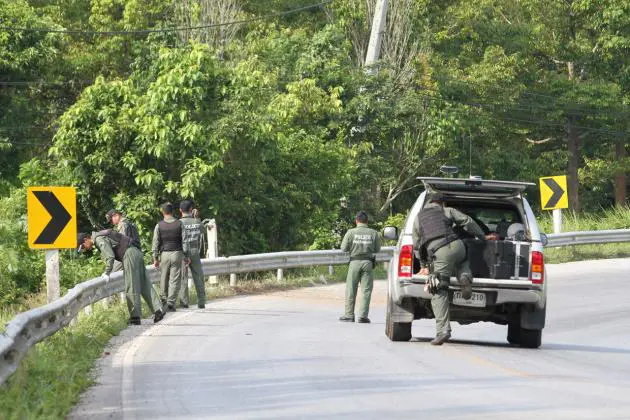
Meanwhile, violence continued yesterday, as two patrolling policemen were injured by a bomb attack and subsequent gunfight in Yala’s Yaha district. A resident passing by also received minor injuries.
