
Lessons from Aceh for Thailand's South


Play
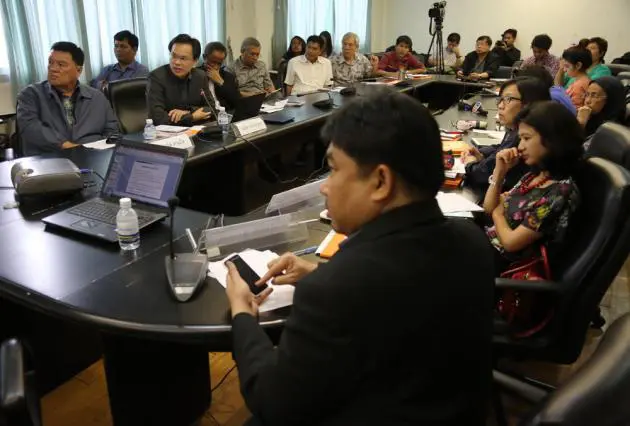
An active and strong mediator, and domestic political stability, were the keys to a successful peace process between Aceh and Indonesia, a seminar at the Thai Journalists Association (TJA) entitled "Lessons of Peace from Overseas to the deep South" hear
The situation in Aceh was led by separatist movement Free Aceh Movement, or GAM (Gerakan Aceh Merdeka), which was active between 1976 and 2005. Thammasat University lecturer Asst Prof Chaninthira na Thalang, said GAM was the sole movement.
In comparison, in Thailand’s troubled deep South, there were many active groups of insurgents, with Barisan Revolusi Nasional (BRN) as the umbrella body.
GAM began to gain momentum through negotiations and non-violent efforts, when there was political stability in Indonesia. In Thailand political division thrived, Chaninthira said.
The eventual mediator in Aceh’s case, unidentified by Chaninthira, was a stakeholder in the conflict and there were non-political members of Indonesian society who remained active in their roles which ever governments were in power during the peace process. It ended in 2005 when Indonesia recognised Aceh as a special region.
A senior Thailand Research Fund (TRF) official, Mark Tamthai, said both senior officials with the BRN and Thai authorities had not reached initial conclusions and needed more time to work them out. He said statements made frequently by most senior officials involved in an ongoing peace dialogue – that if the situation in the deep South did not worsen in five years’ time it should be regarded a success – showed their intent to only buy more time.
Mark said the violence in the deep South should be on the national agenda, to convince all parties involved and the BRN to realise the importance of the issue. “As the Constitution is not sufficiently respected, judging from repeat efforts to amend it, so the BRN is not confident in the so-called democracy. But once the issue is made a national agenda, it will require authorities, future governments and Parliament to deal seriously with the violence in the deep South.”
An academic with the Office of Peace and Governance, at King Prajadhipok’s Institute, Mathus Anuvatudom, said the lack of continuity of a two-year master plan to deal with the issue, and the lack of solidarity between two political camps, had led to the problem continuing, even worsening, at certain stages.
The government needs to seek more changes to communicate closely with the BRN and build up mechanisms to give them or other groups of insurgents channels to view their opinions or make proposals, he added.
