
Less krathongs this year, but fires started by lanterns
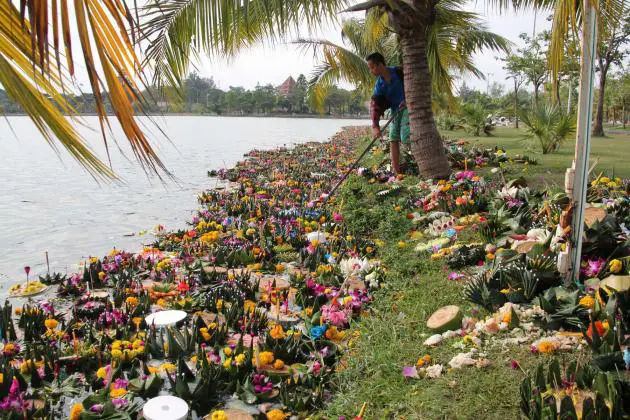


More than 800,000 krathongs were floated in Bangkok during the Loy Krathong festival on Sunday night, according to an official from the Bangkok Metropolitan Administration who said BMA staff collected the krathongs.
The total number was 5.6 per cent lower than the figure last year, the BMA spokesperson said yesterday. The drop resulted from a BMA campaign ‘One Krathong One Family’, as well as many Bangkok residents travelling to the provinces, said Bensai Keeyapaj.
Some 88 per cent of the 865,415 krathongs collected from canals and rivers in the capital – 757,567 of them – were made of disposable material while those made of hard-to-decay foam made up 12 per cent.
Floating lanterns were widely released this year at Loy Krathong events in Bangkok, which caused six fire incidents. She said the BMA would try to control use of yee ping lanterms, and that draft regulations were being worked out and would be passed by the city soon.
In Chiang Mai, local irrigation officials volunteered to collect krathongs floated in waterways above the Ping River watergate, which is under joint jurisdiction of two local administrative bodies, to cut short through administrative red tape and ensure this is done promptly. The office said delays in collecting the krathongs would hit routine water management and harm the environment.
