
Policy changes needed to fight HIV
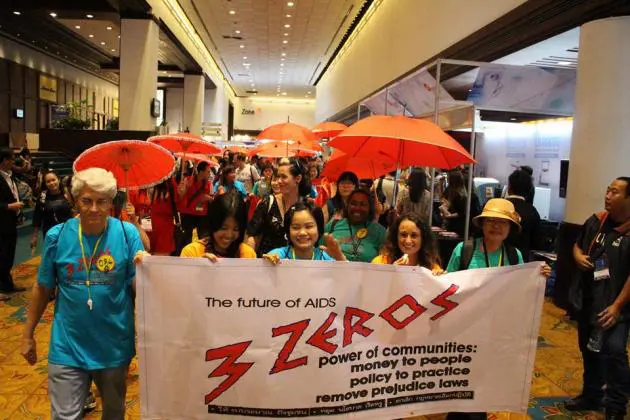


Region lacks schemes to prevent the spread of disease, conference told
LEGAL REFORM – including the revision and removal of some laws and policies affecting people living with HIV – must be implemented to end stigma and discrimination in the Asia-Pacific region, an international conference on HIV/Aids was told yesterday.
Almost all countries in this region have some punitive laws and policies that prevent people living with HIV and key populations from accessing life-saving HIV services, according to a recent UN report.
“HIV in Asia and the Pacific: Getting to Zero” by the Joint UN Programme on HIV/Aids (UNAids) said 33 countries in the region are known to criminalise soliciting, 18 countries criminalise same-sex sexual behaviour, 11 countries incarcerate people who inject drugs in compulsory drug detention, and 11 countries still have in place some type of HIV-related restrictions on entry and residence.
The report was launched yesterday during the 2013 International Congress on Aids in Asia and the Pacific (ICAPP11) being held in Bangkok until November 22. Over 3,500 participants including health experts, policy-makers, civic groups and representatives of people living with HIV are attending the conference to discuss new ways to handle HIV in the region.
According to the report, new HIV infections in the region remain concentrated among key populations including: people who buy and sell sex, people who inject drugs, men who have sex with men, and transgender people.
The region’s fastest-growing rate is among men who have sex with men and these epidemics are typically concentrated in major cities. The report estimated that HIV prevalence among men who have sex with men is over 10 per cent in at least 10 Asian metropolitan areas.
Although more people have access to the region’s HIV services, most programmes to protect key populations and their members’ intimate partners from HIV are inadequate in size and scale. Only an estimated 8 per cent of overall Aids spending in the region is for HIV prevention among key populations at higher risk, the report noted.
The report estimated that about 4.9 million people were living with HIV in Asia and the Pacific in 2012. Eleven countries accounted for more than 90 per cent of people living with HIV and new HIV infections in the region – Cambodia, India, Indonesia, Malaysia, Myanmar, Nepal, Pakistan, Papua New Guinea, Philippines, Thailand and Vietnam.
Emerging epidemics were evident between 2001 and 2012, |and new HIV infections increased 2.6 times in Indonesia, while Pakistan has seen an eight-fold increase in new infections. In the Philippines the figures have more than doubled.
