
Copy China's graft crackdown: Veera


Play
Activist says PM must wield absolute power to eliminate corruption here
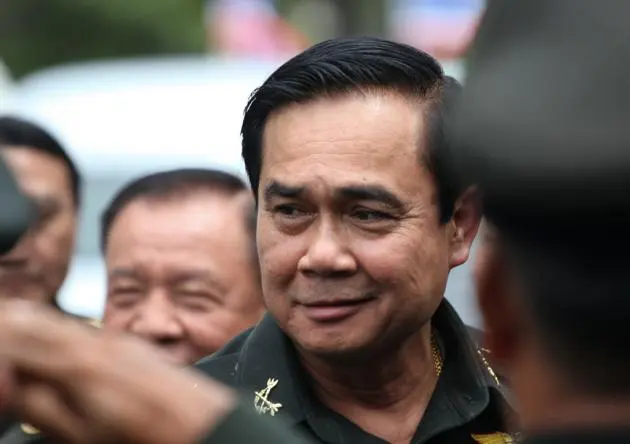
The new prime minister, General Prayuth Chan-ocha, was yesterday urged to emulate the Chinese president’s policy of cracking down on corruption seriously and without exceptions, as part of his government’s fight against graft.
Anti-corruption activist Veera Somkwamkid yesterday praised Prayuth, who is also chief of the ruling National Council for Peace and Order (NCPO), for promising to seriously fight corruption.
He said that to ensure success in reducing the problem of corruption, Prayuth needed to wield total power in the same way as China’s President Xi Jinping in the Chinese government’s policy against corruption.
“President Xi Jinping has dealt with corruption in China without exceptions. Although China is a communist country, I think they are more advanced than some democratic countries, particularly Thailand, about sincerity in tackling corruption,” Veera said.
Veera, who is secretary of the People’s Network against Corruption, was speaking at a seminar on “Reforming Thailand, Opposing Corruption”, which was organised by the King Prajadhipok’s Institute (KPI) at Government Complex in Nonthaburi.
Many corrupt Chinese officials, some of them senior public office holders with connections to the Communist Party, have been punished severely under the anti-graft policy.
Veera called on Prayuth’s government to be serious about stamping out corruption. He said the government leaders, particularly Prayuth, must serve as a good example.
The activist was recently released from a prison in Cambodia after being convicted of spying. He was arrested at a Thai-Cambodian border while inspecting a disputed area.
KPI deputy secretary-general Wuthisarn Tanchai told the seminar yesterday that the country’s leaders have to battle corruption with strong actions not merely words.
He admitted that national leaders often proclaim to be offended by corruption. But he said actions speak louder than words.
“The leaders have to set an example; put words into action and ensure that corruption stops once reform is in place,’’ he said.
Wuthisarn quoted the latest international survey – Transparency International’s Corruption Perceptions Index – which showed Thailand in a bad light in terms of corruption as the country has slipped from 88 to 102 on the world list.
Some surveys have shown that Thais find corruption acceptable if they also benefit from it. This proved that fighting graft would not be easy unless Thais are persuaded to value honesty and detest corruption. He pointed out three causes of corruption: passing of laws that allow graft, economic disparity, weak state and private check mechanisms against corruption.
Thawilwadee Burikul, director of the Research and Development Office, revealed at the seminar a survey result that showed 68 per cent of people would do nothing if they encountered corruption, only 16 per cent would file a complaint or call police or relevant agencies but not put their name as a complainant, 8 per cent would write to a paper but not give their name.
About 67 per cent found bribery unacceptable, while 0.3 per cent said corruption was acceptable.
