
Uphill task ahead for Prayut to achieve his mission


Play
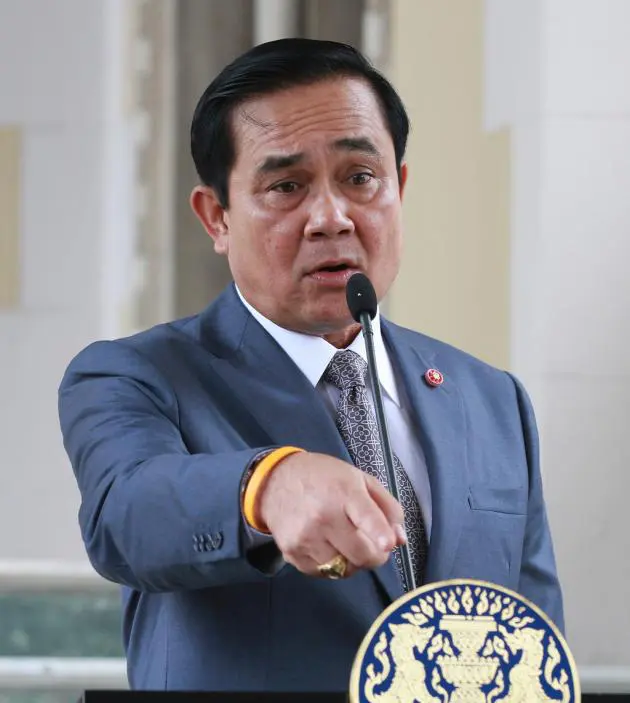
The government of Prime Minister General Prayut Chan-o-cha is akin to a ship fully equipped and ready for a journey now that the National Legislative Assembly has passed the fiscal 2015 budget bill.
However, the Prayut ship will definitely face rough seas, as it embarks on some challenging missions.
Among other things, the Prayut government’s toughest missions will definitely be the fight against corruption, the efforts to protect the country’s natural resources from being exploited, and reforming laws and the judicial system.
Prayut has boldly announced that his interim government will promote good governance and get rid of corruption in government agencies.
But this is definitely easier said than done. Fighting corruption is an uphill battle, which is sadly reflected in a satirical saying that if corruption is eliminated from Thailand, all roads in the Kingdom will be paved with gold.
Although Prayut has repeatedly reiterated that he will not condone corruption, his government faced embarrassment over the proposed purchase of very expensive audio devices for conference rooms at Government House. The issue was leaked to the media, bringing severe criticism even before the Cabinet had convened its first meeting there.
Prayut’s policy to establish natural-resource security will also be very tough to carry out. In other words, the policy will require that his government crack down on encroachment at national parks and forest reserves.
Actually, Prayut, as chief of the National Council for Peace and Order, had got tough with those who encroached on forests and parks long before he formed a government.
However, the mission has not progressed much as the authorities led by the NCPO ran up against several obstacles. This is mainly because the problems related to land and forest encroachments have accumulated for decades and any action has always generated wide repercussions.
Prayut’s promise to improve the laws and reform the judicial system is also an uphill task.
It requires thorough checking and rechecking to amend just one article of an act, let alone changing several pieces of laws.
Prayut cannot simply order officials to amend the laws the way he wants them because each article concerns the welfare of all people.
It is undeniable that several problems and the political turmoil originated from conflicts over law enforcement. As a result, the Prayut government will have to be extremely cautious before carrying out any legal amendments.
The amendments will have to be in line with the new Constitution that will be approved by the National Reform Council, but the first process – of setting up the NRC itself – has already brought Prayut and the junta severe criticism. Critics have alleged that the process of selecting NRC members is not transparent, as the junta has its own preferred choices.
Prayut hopes to achieve tangible results in these three tough missions within one year.
From now on, the Prayut government will have to be careful at every step, otherwise it may stumble and fall on its own and thus fail to reach its stated goals.
