
Farmers mass for subsidy amid fear over their livelihood
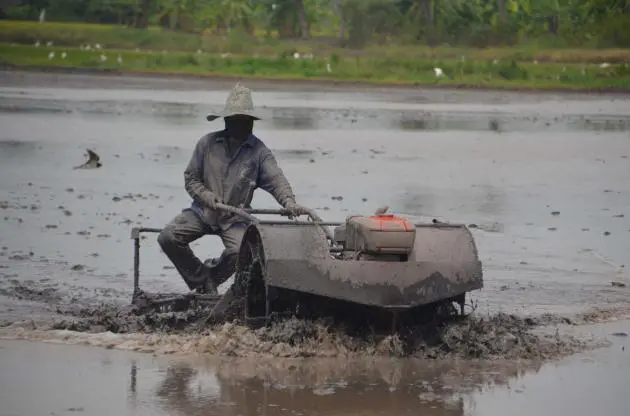


Huge turnout in some areas to register for handout; Drought worries many
THOUSANDS OF farmers have eagerly registered for the government’s scheme to hand out a Bt1,000 subsidy for each rai of their paddy fields. Their excitement, however, is being tempered by widespread concerns that water shortages will cause deep worries to those who make their living from rice growing.
The Royal Irrigation Department (RID) has already announced its decision to not provide water for paddy fields in the Chao Phraya River Basin till April 30 next year in the face of limited water resources.
According to the RID, rainfall during the rainy season has been below average this year.
In Amnat Charoen province, which is outside the Chao Phraya Basin, the provincial agriculture office was yesterday crowded with rice farmers hoping to get their hands on the subsidy offered by the government. The maximum cash handout per farmer under this scheme is Bt15,000, and payment is set to start on October 20.
“The turnout is so huge that we have to arrange appointment schedules and instruct some to come back at a later date,” the province’s agriculture chief, Songphan Jansawang, said.
He said after the registration, officials would verify the farmers’ information before the subsidy was handed over.
While the government’s |scheme to offer the subsidy of Bt1,000 per rai of paddy fields |was considered populist, many farmers were still not too happy.
These farmers are worried about the threat of water shortage and authorities’ warnings they should be very cautious about planting a double-crop field this year.
The Royal Irrigation Department has also announced its decision to reduce the amount of released water from several dams. This means farmland in some areas, such as Tambon Tha Chang of Phitsanulok’s Phrom Phiram district, will be affected.
“How can we survive?” Thongdaeng Noirung lamented yesterday.
Speaking up for many local farmers, he said authorities should find other measures to help rice farmers get through the drought.
“We have been growing rice for generations. Our land plots are also suitable for paddy fields. So please don’t tell us we only need to switch to other types of plants that generally need less water,” Thongdaeng said.
He also opposes emerging ideas that the government offers compensation to rice farmers who need to grow other crops.
“Such ideas, if implemented, are not at all sustainable solutions,” he said.
Manoon Maneechote, a farmer leader in Phichit province, said it seemed no government had ever really understood farmers.
“Rice farmers are not allowed a say in policy formulation,” he said.
Manoon believed most local rice farmers would likely go on with double-crop paddy fields.
“We need to feed ourselves,” he said, claiming about 99 per cent of his province’s land is used up.
