
Mixed reaction to NRC members chosen for CDC
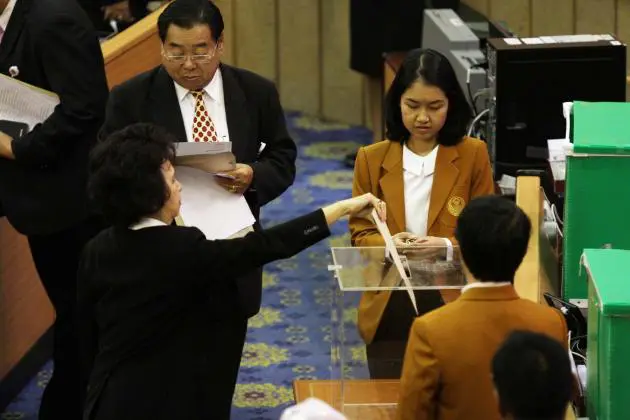


Two academics reacted differently to the 20 out of 36 charter drafters selected by the National Reform Council (NRC), hinting at an ongoing disagreement on the drafting of the new constitution.
Sirote Klampaiboon, an independent political scientist, said the newly chosen members of the Constitution Drafting Committee (CDC) can be categorised in four groups: former military generals, former members of the Group of 40, academics from King Prajadhipok’s Institute and NGOs who have close ties with the 2006 coup-makers
He questioned the credibility of the newly selected CDC members, saying: “Many of the names in the list are not very well known. I have been following politics for over 20 years and I still do not know many of them, and this makes me wonder who do they really represent?”
“There are more credible and better-known candidates who deserve to be CDC members,” he pointed out.
Sirote explained that the list demonstrated a lack of credibility and all-round inclusion. Furthermore, the list included members who have similar political viewpoints, which means those with opposing ideas would not be represented in the CDC. “This can create public mistrust in the new charter. They may consider it illegitimate, even in comparison to the 2007 post-coup Constitution,” he said.
However, Prof Surichai Wankaew, director of the Peace and Conflicts Study Centre University, disagreed, saying the 20 NRC members chosen to be part of CDC would help improve the political situation as they had been selected for their neutral stance towards the ongoing political conflict.
He added that the national reform process would be a lot more effective if the NRC was open to outsiders joining the CDC.
The 20 NRC members chosen to help draft the charter include:
Choochai Supawongse, ex-secretary-general of the National Human Rights Commission;
Paiboon Nititawan, former member of the Group of 40 senators;
Pracha Taerat, former deputy permanent secretary of the Interior Ministry;
Thawilwadee Bureekul, director of Research and Development Office, King Prajadhipok’s Institute (KPI);
Somsook Boonyabancha, former director of Community Organisation Development Institute;
Cherdchai Wongseree, former Phuket senator candidate;
Lt-General Nakorn Sukprasert, former provincial Army commander for Roi Et;
Jumphol Sukhmon, former election commissioner for Lampang province;
Nareewan Chintakanond, former appointed senator and former vice president of the National Institute of Development Administration;
Supatra Nacapew, director of Centre for the Protection of the Rights of People with HIV/Aids; Buntoon Srethasirote, director of Thammarat Institute for Social and Environmental Development
Lt-General Navin Damrigan, deputy former director of the Office of Science and Technology, Defence Ministry;
Anek Laothamatas, former political science dean at Thammasat University;
Kamnoon Sidhisamarn, former member of the Group of 40;
Charas Suwanmala, former political science dean at Chulalongkorn University;
Woothisarn Tanchai, deputy secretary-general of KPI and former 2007 Constitution drafter
Thicha na Nakorn, feminist and children’s rights activist
Mechai Viravaidya, former PM’s Office Minister
General Lertrat Ratanavanich, former deputy Army Chief
Manich Sooksomchitra, veteran journalist and ex-2007 charter drafter
