
'New charter will give us a better future'


Play
Kamnoon says new constitution's aim is to focus on reforms; insists his anti-Thaksin stance will not affect his neutrality
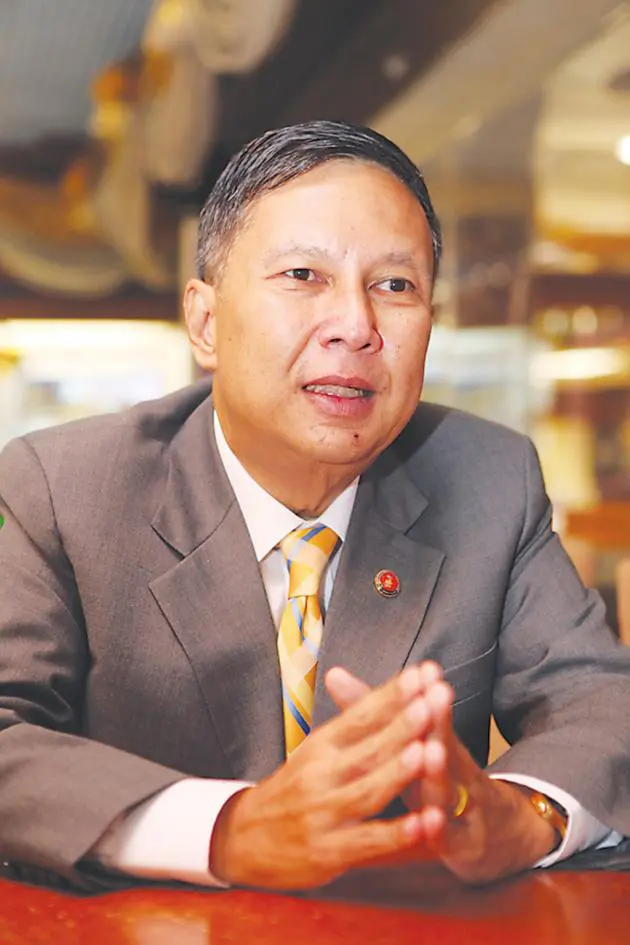
Kamnoon Sidhisamarn, a key member of the Constitution Drafting Committee (CDC), says he is determined to help create a charter that does not just serve this generation but also ensures security and happiness for future generations.
He also admitted that though he cannot deny his anti-Thaksin Shinawatra sentiments, which he is known for, he will try to be very neutral when drafting this charter.
“I cannot change people’s minds or what they think of me. I can’t deny being anti-Thaksin either, but would like to call on the public to see me as a human who has two children. I pledge that this constitution will be a neutral one that ensures our children have better, secure lives,” the political columnist turned lawmaker said.
A former law graduate who also oversees legal affairs for the National Reform Council (NRC), Kamnoon said there have been many cases in which previous constitutions have been wrongly interpreted in the legal sense and many articles have been misunderstood and wrongly implemented.
Therefore, he said, working on “intent of law and literature” is very important for this charter and how it is implemented in the future. Kamnoon is also chairman of CDC’s subcommittee in charge of Intent of Law and Literature.
“The intent of law needs to be written clearly in order to prevent misinterpretation and also for people to have a clear idea of what the law means,” he said.
He explained that his work for this subcommittee would cover two aspects: recording the intent of law; and arranging and reviewing the related literature.
The subcommittee has been keeping records since the first day the CDC began working and will be recording all evidence throughout the process of drafting the new charter.
The CDC will also arrange for political parties and political groups to participate and offer suggestions for the new charter, Kamnoon said, adding that the committee was open-minded and wanted to see this constitution passed on to future generations.
“Certainly every side we have invited to take part in the forum have different ideas about what should be inserted in the constitution, so the committee will have to make reasonable decisions. Also, the most important thing is that we have to be able to explain everything to the public,” he said.
When asked how the public and political parties could meet to discuss ideas while martial law is still in effect, Kamnoon said the CDC realised that this might be an obstacle, so the committee and the NRC would meet with the NCPO to find solutions.
However, he said he did not think it was time to lift martial law yet, adding that maybe the NRC would open other channels for people to offer ideas, such as via radio stations.
“Everybody, especially the junta, understands that eventually martial law will be lifted for elections to be held. I believe the military is doing what it can to prevent disputes or conflicts that could affect the country,” he said. Also, he was not certain that disputes would not erupt again once martial law is lifted.
“We will have to observe and evaluate the end result and see if it’s positive or negative, and whether the government has been able to accomplish the road map it has promised,” Kamnoon said. Though he expressed concern about heavy criticism the junta has faced recently, he also called on the public to understand that the authorities’ aim is to help the country achieve stability.
“Of course, the military staged a coup and it can now be considered dictatorship. However, the junta is also doing its best to promote democracy in the Kingdom,” he said, citing recent problems in which the junta banned many public forums and had some TV shows suspended.
He admitted that although the new charter may not offer absolute solutions to help turn Thailand into an ideal country, he said four key organisations – CDC, NRC, the National Legislative Assembly and the government – were trying to create a new structure for the country.
He explained that the new charter would focus on reform and create a new political structure that works hand in hand with developing the country and bringing it forward.
Moreover, he said, each side should move toward reconciliation and work on reducing if not eradicating inequality in society, because a good constitution focuses on the people rather than on the content of articles.
