
Tax axe to fall on tutorial schools


Play
When tax exemption ends, 'cram' school bosses say they will raise course fees
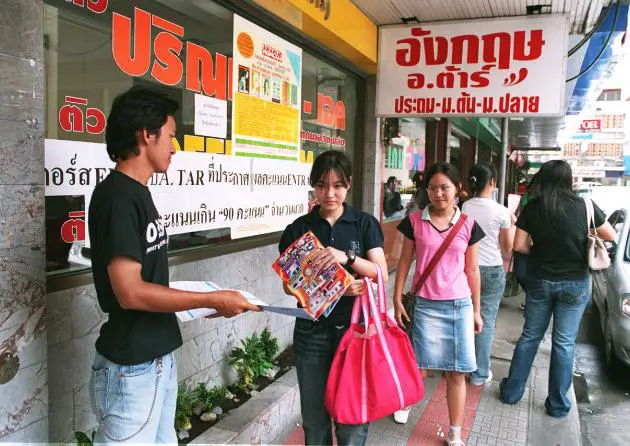
THE MULTIBILLION-BAHT business of cram schools will no longer enjoy tax exemptions once new regulations go into effect.
The Cabinet gave a green light yesterday to the plan to impose tax on all tutorial schools.
Currently, 2,379 cram schools are registered with the Education Ministry and together, they deal with some 200,000 students. So far, none of these schools have ever paid taxes thanks to a privilege granted to them under the Private Education Act.
Under that law, these schools are recognised as operating for the sake of education, which benefits children, provided they do not register themselves under the name of a company. It is very likely that thanks to this, some 90 per cent of Thailand’s cram schools register their operations as being run by individuals, not companies.
“Now, the Cabinet has decided to tax all cram schools, because clearly they provide tutorial services for commercial purposes. They are seeking profits,” Education Minister Narong Pipatanasai said yesterday.
‘Fee hike cannot be arbitrary’
He added that students should not be affected by the Cabinet’s decision given that cram schools could not arbitrarily increase their fees.
“We have an agency to govern their fees and profits,” Narong said.
Dr Bundit Sriputtangul, secretary-general of the Office of the Private Education Commission (OPEC), said cram schools’ profits could not go beyond an amount equivalent to 20 per cent of their expenses. In addition, all such schools are required to display their course/class fees clearly at their facilities.
Most of cram schools help students prepare for highly competitive entrance examinations to well-known schools and universities.
The cram-school business in Thailand is worth nearly Bt10 billion a year. Each student using the tutorial services in Bangkok pays an average of about Bt5,700 per year on average, while elsewhere in the country the service costs about Bt3,900 a year.
According to Bundit, private institutes offering language courses and music classes will continue to enjoy tax exemption because their services are supplementary to the Education Ministry’s curriculum.
Late last month, the Revenue Department also made it clear that private schools at both primary and secondary levels that offer tutorial classes would get tax exemptions.
Anusorn Siwakul, president of the Tutorial Schools Executives and Teachers Association, described the new regulation as unfair.
“How can you exempt language institutes that charge expensive fees from tax, but slap the tax on general tutorial schools?” he said.
Anusorn owns Wannasorn School, widely known as Pure Chem Centre (Chem Ou). His school has 29 branches and generates profits of up to Bt60 million a year. He said parents would be affected because his cram school will increase its fees because of the proposed tax.
Werachai Lertluckprecha, the owner of Excellent Centre in Bangkok’s Bang Na area, said he would definitely have to raise the course fees. At present, his school offers courses on 20 subjects at the rate of Bt2,400 per course.
“The fees have to be raised because we will have a higher cost. We will have to pay taxes and have additional expense of arranging accounting work like auditing,” he said.
Prime Minister General Prayut Chan-o-cha said cram schools should not pass on their tax duty to parents. “You have earned income and profits. You should start paying taxes,” he said. The Revenue Department has estimated that cram schools will generate about Bt2 billion in tax revenue for the country each year.
