
A third of party lists to be women


Play
Aim is Gender equality, but move seen as impractical for local administrations
THE Constitution Drafting Committee yesterday narrowly voted to add a clause to the draft charter requiring one-third of the party-list system to be made up of women.
The proposal had been pending at the CDC for quite some time. It had caused one drafter, Ticha Na Nakorn, to resign as a member of the CDC and the National Reform Council. She argued that the new constitution needed such a provision to fight gender inequality.
However, the CDC voted to reject a similar clause for local administrative officials, said Paiboon Nititawan, a member of the committee.
A CDC source said many drafters had voiced concerns that this proposal would be impractical for local administrative officials.
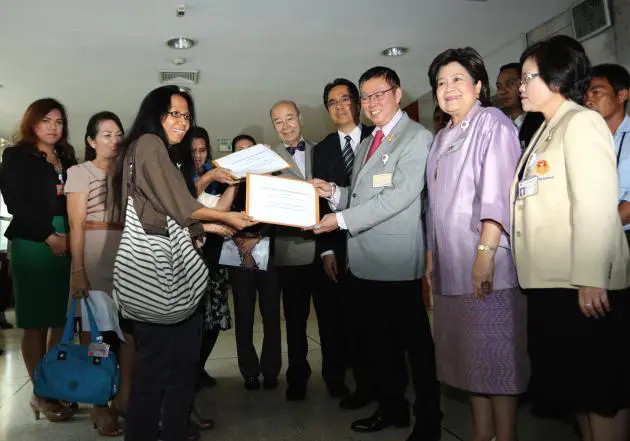
Before the meeting, Thanawadee Thajean, director of the Women’s Foundation, an organisation that campaigns for women’s rights, and others had gathered to forward a report to CDC president Borwonsak Uwanno urging him and the other drafters to scrutinise the gender proposal.
They said the clause would promote true equality and abide by the principles of human rights.
“I insisted on strengthening women’s roles in politics along with the budget system that concerns the gender aspect,” Borwonsak said.
The CDC also reviewed the clause on the dissolution of the House of Representatives. The drafters decided to follow the Constitution of 2007, meaning that if the prime minister loses a no-confidence vote, the House would not be automatically dissolved.
Under the earlier Constitution scrapped after the junta seized power last year, if the opposition won a no-confidence debate, the person nominated in the no-confidence motion to replace the prime minister would take over the premiership and form a new government.
The CDC earlier resolved that if the opposition party won a no-confidence vote, the House would be automatically dissolved. They reasoned that this article would prevent the executive branch from being placed in a weakened position by squabbling coalition partners.
However, this article raised many concerns among observers, many of whom believed it would reduce the opposition party’s requests for a vote on the prime minister. They feared that if the vote of no confidence passed, the House would be dissolved and all the MPs would have to run for election all over again.
More than 20 articles are still pending review in the CDC. The committee this week held a closed-door meeting to scrutinise the pending articles, reasoning that holding an internal meeting would allow its members to debate freely.
Spokesman Kamnoon Sidhi-samarn said the CDC was not ready to summarise the pending articles for the public. The meeting in several days would give a better explanation.
