
Trafficking activities cease amid crackdown and onset of monsoon
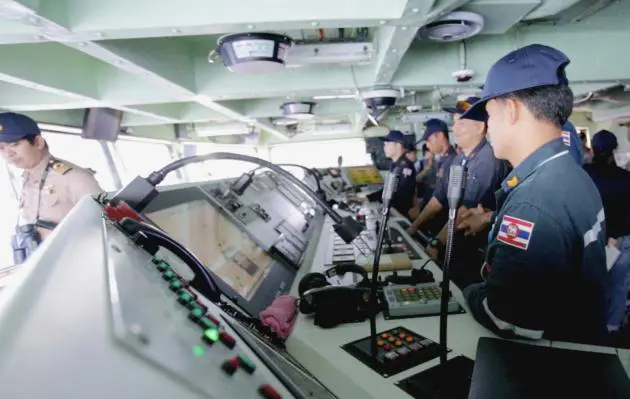


THE CRACKDOWN on human-trafficking in southern Thailand and the arrival of the monsoon season have put a halt to the smuggling of migrants from Myanmar and Bangladesh through Thai waters, a senior navy commander-in-charge of the government's search-and-r
Vice Admiral Sayant Prasongsamret, commander of the Phuket-based Third Naval Area, also admitted that most of the boats used in trafficking Bangladeshis and the Rohingya were Thai fishing boats.
“We need to face the facts so that we can address the problem correctly,” he said, adding that the Thai fishing boats were re-equipped so that they could take on human cargo for the long perilous journeys to their destinations in Thailand’s neighbouring countries.
He said the continuing crackdown, which has netted several human-trafficking suspects in southern Thailand, and the onset of the monsoon season have combined to disrupt the trafficking of migrants from the two countries.
“The start of the monsoon season is making their sea journeys difficult and dangerous,” he told The Nation on board HTMS Angthong, one of the so-called “floating platforms” initiated by the Prayut government to provide assistance to migrants abandoned in the Andaman Sea.
HTMS Angthong is one of the Royal Thai Navy’s biggest landing platform dock ships and serves as a floating hospital for the operation.
Following the discovery of more than 30 bodies in shallow graves near the Malaysia border last month, Thai authorities launched a crackdown on human-trafficking rackets and arrested several local politicians and officials. The navy commander said Thai authorities have disrupted the human smuggling chain and put a stop to the supply of fishing boats to the traffickers.
The navy has employed seven ships and four aircraft to patrol areas through which boats carrying migrants are most likely to pass. Their focus has been on areas west of the Similan and Surin groups of islands – two popular tourist islands off Phang-nga. Aircraft of the Royal Thai Air Force have also been involved in the operation along with a US surveillance aircraft under an agreement with the Thai government.
However, since the search-and-rescue operation began on May 26, no boats carrying migrants have been detected. Vice Admiral Sayant said the US surveillance aircraft last week reported spotting a boat suspected of carrying migrants but it turned out to be only a fishing boat.
The area under the jurisdiction of the regional navy unit covers more than 120,000 square kilometres with active traffic of fishing boats and cargo ships. He said the navy also seeks help from Thai fishing boats in reporting the possible presence of vessels carrying migrants.
“Our mission is to provide them with humanitarian assistance. We provide them with food, medical assistance and fuel and, if needed, fix their broken boat engines so that they can head towards their destination. It’s very clear that they use Thailand only as a transit point,” he said.
Vice Admiral Sayant said the search-and-rescue operation might need to be reviewed given the fact that the flow of boat people has halted for the time being.
The operation of the floating platform is a part of efforts by the government to tackle human trafficking after Thailand was downgraded to the lowest tier 3 in the US annual report on Trafficking of Persons (TIP).
Foreign Ministry permanent secretary Norachit Sinhaseni said in a separate interview that it is difficult to anticipate whether the US would take the current actions by the Thai government into consideration for the next TIP report due in the third week of this month.
“We need to look at some technical aspects since the report for this year might already have been done before the current situation erupted,” he said. “We have made clear that we are implementing a ‘zero-tolerance policy’, that means we don’t tolerate human trafficking.”
Asked if the recent message on Twitter by the US charge d’affaires in Bangkok W Patrick Murphy, praising the crackdown on trafficking syndicates would have an influence on the TIP report, Norachit said he could not draw conclusions from an informal reaction. “I have to rely on a formal message,” he said.
n(Watch full interview and the |search-and-rescue operation in action on NOW26 at 10.30pm tonight)
