
Vote for draft charter, Suthep urges


Play
Claims it will drive country forward, downplay's Democrat Party's opposition
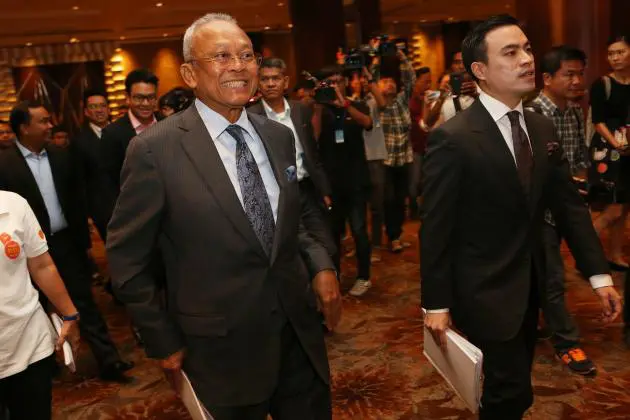
PEOPLE should vote “yes” to the draft charter in the upcoming referendum, Suthep Thaugsuban, president of People’s Democratic Reform Foundation (PDRF), told the press yesterday.
Suthep, who had led the People’s Democratic Reform Committee (PDRC) protest to oust the Yingluck Shinawatra government, said the draft should be able to drive five key reforms put forward by the “great mass of people”. He was referring to the PDRC, which has now morphed into the PDRF.
The areas the PDRC wanted reformed were politics, corruption, bureaucracy, economy and social structure, as well as police, though Suthep said he expected the National Council for Peace and Order (NCPO) to come up with legislation on police reform.
Claiming to be speaking on behalf of the “great mass”, Suthep said he backed the inclusion of the controversial National Strategic Reform and Reconciliation Council (NSRRC), which would have authority to take over administration in times of crisis.
He said he has seen lives sacrificed in previous political conflicts, and did not wish to see history repeat itself.
When asked why he had so much faith in the NSRRC, Suthep explained that the body would be made up of high-ranking officials, like a former premier and former Supreme Court president, who could guarantee it worked efficiently. Moreover, he pointed out, when time comes for the NSRRC to exercise its special authority, it would have to consult MPs and senators first.
He said the PDRF did not have any initiatives for the referendum campaign yet. Suthep also played down the Democrat Party’s opposition to the draft charter, saying that more than half of the PDRC members had never voted for the Democrats. He was previously the party’s secretary-general.

Former Democrat MP Tankhun Jitissara, also previously a key member of the PDRC, said he agreed with Suthep, adding that there was a cost to everything. However, he voiced concern about the NSRRC having absolute power over the executive and legislative branches, saying it could make mistakes if it was not impartial, which could lead to another round of political crisis.
For instance, he said, if the NSRRC proposed a blanket amnesty bill to achieve reconciliation, it could give rise to dissatisfaction. The last government tried to issue a blanket amnesty bill back in 2013, which eventually lead to its ouster. Tankhun pointed out that the resulting crisis could be even worse and drag NSRRC members, most of who will be high-ranking officials and members of the junta, into the conflict.
Meanwhile, red-shirt leader Weng Tojirakarn queried yesterday why Suthep was allowed to speak to the press, but other political groups were not.
Weng reminded the NCPO that it was only fair that other organisations be allowed to speak freely on politics, after Suthep was allowed to do this in his capacity as PDRF chairman. He also said people should also be allowed to express their opinion about the draft charter freely. “The NCPO should be held responsible if there are double standards in this regard,” he said.
