
Authorities deny labour report


Play
STATE OFFICIALS IMPLICATED IN ABUSE AS GOVT ANNOUNCES SWEEPING REFORMS OF SHRIMP INDUSTRY
THAI authorities have labelled an Associated Press (AP) report on the use of forced labour in the Thai shrimping industry as “incorrect and misleading”.
However, the report has prompted major changes in the industry’s controversial pre-processing practices.
On December 14, AP published a report under the headline, “Global supermarkets selling shrimp peeled by slaves”, alleging that Thailand continued to allow forced and child labour in shrimp-peeling factories in Samut Sakhon province.
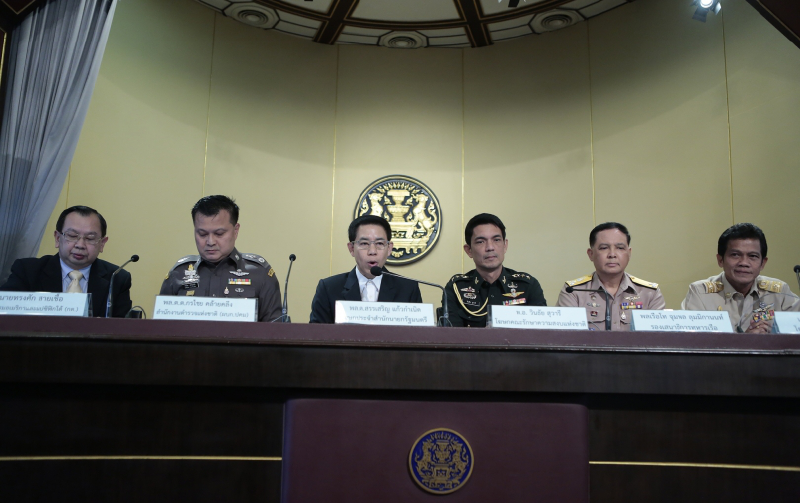
In response, officials from the Command Centre for Combating Illegal Fishing (CCCIF), the National Council for Peace and Order, the Foreign Ministry, Royal Thai Police and the Labour Ministry yesterday jointly held a press conference to clarify the situation.
Government spokesman Maj-General Sansern Kaewkamnerd and other officials said the government had been strictly enforcing the fisheries and labour laws to crack down on illegal labour while swiftly prosecuting offenders.
Citing the December 14 AP report concerning the use of forced workers from Myanmar in a pre-processing shrimp shed in Samut Sakhon, Sansern said the government “was trying to solve the human trafficking and forced labour – and the report was misleading”.
“It’s wrong to suggest that the reporters discovered the [labour abuse] issue by themselves and then officials took action against the shrimp pre-processing shed,” he said.
Instead, Sansern said, the incident cited by AP reporters was one of the Thai authorities’ operations to crack down on the use of illegal forced labour that occurred on November 9. Reporters were invited to monitor the operation.
Sansern also said it was incorrect to suggest in the report that police raids could send migrants without proper paperwork to jail while factory owners went unpunished.
The government is taking action against wrongdoers seriously so that anyone, including government officials, found to have been connected with these cases would be brought to justice.
Vice Admiral Jumpol Lumpikanon, a CCCIF spokesman, revealed that there were now 33 cases concerning violations of workers’ rights, including 16 cases in which state officials were involved.
“We are enforcing the law strictly. We have joined forces with several agencies, including human rights organisations, to set up 25 task forces to look after the problem in 22 seaside provinces. There are 125 targeted factories in our plan, 101 of them have already been inspected,” Jumpol said.
In response to the AP report, the Thai Frozen Foods Association (TFFA) yesterday announced that starting January 1, all members would be required to do shrimp pre-processing work in-house, so that they had full control over the work conditions of employees in the supply chain.
During the transition period, the TFFA plans to work with local non-government groups to offer employment opportunities to workers previously employed by out-sourced pre-processors.
Companies that are members of the TFFA have signed up to adhere to strict rules regarding employment conditions aimed at eradicating human trafficking and illegal labour practices.
Meanwhile, government spokesman Sansern said there were several factors concerning Thailand’s position in the world shrimp market, including the quality of products, not just cheap labour costs as cited in the AP report.
Labour Ministry spokesman Theeraphon Khunmuang said illegal migrant workers were being registered by authorities, adding that a total of 1.6 million foreign workers were working legally in Thailand.
“When they are registered, their rights will be protected. No one under 18 will be allowed to work, while the minimum daily wage is Bt300 and guaranteed,” he said.
“Moreover, the workers will be registered based on a bilingual employment agreement plus standard welfare and protection of human rights. Anyone [who finds] their rights are violated can inform the authorities to take action immediately via the hotline number 1694.”
Jumpol said many big seafood businesses currently hire out-sourced factories to supply pre-processed raw materials, including the shrimp-peeling sheds in Samut Sakhon.
The Labour Ministry is stepping up action against the use of forced labour, working with major seafood companies such as CP and Thai Union, to stop the companies buying from factories using illegal labour, and instead encourage them to deal with factories where working conditions are legally acceptable.

