
Balinese designers sense good times from Asia, Australia


Play
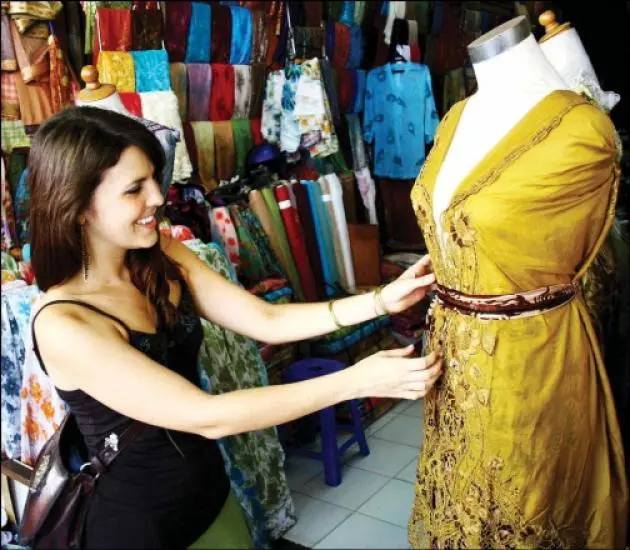
Balinese fashion retailers are forecasting sunny sales growth as the market is increasingly reliant on domestic buyers, dispelling the effects of financial gloom lingering within crisis-ridden European and US tourists.
Agung Subamia, general manager of the Biasa label, said the European and US crisis, which has affected the industry “as it is affecting other industries on the island”, would not spell doom for the island’s fashion industry.
“The market is shifting, given that Asia’s economy, as well as Australia’s, is strengthening,” he told The Jakarta Post.
Biasa experienced a 10 per cent rise both in revenue and production last year. The brand currently stocks around 15,000 items for women and men at its main store in Seminyak, the island’s dapper quarter.
Similarly, Made de Coney, the creative director behind the Lily Jean brand, said last year “was actually a good year for us”, as Indonesians and Australians assumed the role as its prime customers.
Data from the Bali Tourism Agency shows that the number of foreign tourists rose 10.5 per cent to 2.7 million people last year, from the 2.4 million recorded in 2010. Australians accounted for 28.6 per cent, the highest proportion of tourists, followed by Chinese and Japanese.
“Our revenues grew by a stable average of 10-15 per cent each year,” said de Coney, who launched the brand in 2004 after years in the fashion industry.
Lily Jean sells women’s clothing at up to US$350, according to prices listed on its website. The brand manufactures around 12,000 pieces annually.
In addition to setting up stores in Bali, certain brands have set foot in Jakarta, the country’s trend-smitten capital. The modish area of Kemang, South Jakarta, has been Biasa’s choice to establish its presence in the capital.
Agung noted that the clientèle in Jakarta, which contributed 20 per cent to overall revenues, tends to be homogeneous compared to the mixed bag of tourists in Bali.
Besides keeping up the domestic market, the Bali-based fashion designers have been able to maintain export levels as well.
Lily Jean, which exports to 12 countries including Japan and Brazil, have seen wholesale exports steadily rising by around 10-15 per cent, de Coney said, “European crisis or not.”
“Our percentage of sales traffic is 80 per cent domestic and 20 per cent exports,” de Coney said.
Growth in previous years has spurred Balinese designers to raise their growth expectations by at least two per cent higher than last year’s. However, brands still remain prudent about the crisis, which continues to cloud Europe and the US.
“One of our main customers are the Europeans. So yes, it might be possible that [the crisis] will affect us this year. We will have to wait for the high season to be sure,” de Coney said.
Yet, there is another tendency that Bali-based designers have to watch out for: The trend of abandoning the island’s unique style.
Agung said the thriving growth of Bali’s fashion industry has reached overwhelming levels — to the point that local designers were copying Western fashion.
“This retains very little of the original identity of the island,” he told the Post, adding that this kind of copying left Bali “too weak to be a fashion hub”.
Biasa sources 80 per cent of materials locally, with the remaining 20 per cent imported.
Emma-Lee Lovett, the head of marketing at the Beachgold label, said that Balinese designers “have made inroads” to establishing themselves on the international scene, and the island would eventually attain a “fashion-hub” status.
“There are probably 30 or more world-class labels that produce their brand from Bali now, and this number will steadily increase based on what the local industry can offer, in terms of handicraft skills,” she told the Post.
Her brand incorporates local elements, such as traditional fabrics and prints, into its designs.
She added that foreign tourists have given designers a global customer base and altered the perception of Bali as a summer island to that as a resort destination, and thus, giving rise to “resort fashion”.
“Eventually, through the promotion of the unique skills in the industries present in the island, Bali may reach the fashion-hub status,” she said.
