
Myanmar army role to be 'gradually' decreased: president


Play
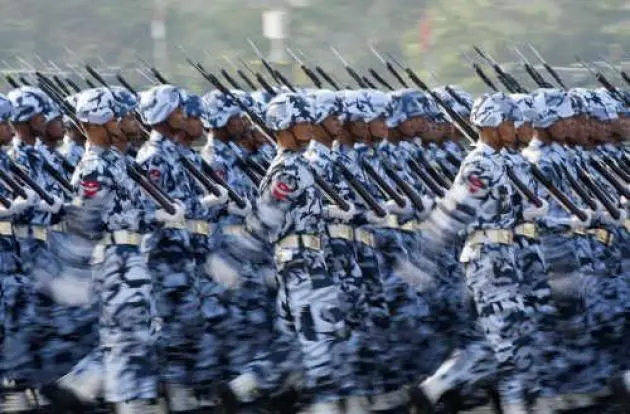
NAY PYI TAW - Myanmar's leader on Wednesday said the role of the powerful military should be reduced slowly in the transition to democracy amid opposition campaigns to ease the army's grip on political power.
President Thein Sein, a general-turned-reformer, reaffirmed his support for a "strong" military in the former junta-run country, as authorities are yet to strike a national ceasefire with several ethnic armed groups.
"We have to balance democratic maturity with the development of local peace to decrease the role of tatmadaw gradually," he told lawmakers in a speech to parliament in the capital Nay Pyi Taw, marking three years of quasi-civilian rule.
"The international community used to call us a dictatorship. Now we have transformed to a country with constitutional administration. We all have a duty to develop this situation together," he said.
His speech came as protests have spread many places, demanding the constitutional amendment to allow opposition leader Aung San Suu Kyi’s contest in the presidential election. If elected, she will be the first civilian leader in six decades.
Despite the launch of political and economic reforms in 2011, the military still controls power. Any change to the charter, which ringfences the army's parliamentary seats, needs the support of over 75 per cent of the legislature.
Outside the political arena, conflicts between the military and the locals are growing concerning land ownership. Farmers in different towns have complained and protested against the military’s grabbing of their land.
The latest protest took place in downtown Yangon on Monday, when residents from Michaungkan Wards 1, 2, and 3 opened a third protest camp beside Mahabandoola Park to win back lands confiscated by the military. About 200 protesters released a six-point announcement calling on the authorities to fulfill all their demands, according to protest camp leader Sein Than.
“We will only end this when the military returns our lands with seals and signatures. If not, this protest [camp] will wait for them to use violence. And if or when they use violence, that will become an example. Don’t try to coax us. We have had enough already. We will invest all of our lives here,” said Sein Than.
Among the six demands, the Michaungkan residents object to the military’s refusal to return the land, even though they were not confiscated according to the 1894 Land Acquisition Act to construct military housing, as per the letter that Defence Minister LtGen Wai Lwin sent to Lower House MPs Aung Thein Linn and Thein Nyunt.
