
EU-backed workshop offers tips for sustainable palm oil production


Play
Corporate social responsibility is of vital importance to Myanmar's burgeoning palm oil sector, an EU-funded workshop, that aims for sustainable development of the industry, concluded.
“Through this project, the EU intends to support Myanmar in protecting its most important biodiversity sites. The workshop provides the opportunity to further discuss ways of doing business differently in Myanmar, and ensuring economic activities are developed in an environmentally sustainable and socially inclusive way”, explains Roland Kobia, European Union ambassador to Myanmar.
Gary Paoli, an expert in sustainability from Daemeter Consulting with experience in the Indonesian palm oil sector, said: “Myanmar is in the early stages of palm oil expansion and in the very fortunate position to learn from other countries and avoid their mistakes.”
Facilitated by the current government’s enthusiasm for political reform, the Union of Myanmar Federation of Chambers of Commerce and Industry (UMFCCI) and conservation NGO Fauna & Flora International (FFI) have come together to co-host Myanmar’s very first workshop on the development of a sustainable plantation sector.
Funded by the European Union, the workshop introduced the principles of best practices for sustainable palm oil production to key stakeholders, including plantation companies, government agencies and civil society organisations. Organisers were extremely satisfied with the positive outcome of the workshop, which included a commitment to set up a ‘Learning Group’ as a concrete next step towards creating a sustainable palm oil sector in Myanmar.
Darrel Webber, secretary-general of the Roundtable on Sustainable Palm Oil (RSPO) – a global multi-stakeholder organisation and certification scheme – made the keynote speech, explaining in simple terms what is meant by sustainable palm oil. “It is legal, environmentally appropriate, socially acceptable and profitable,” he said.
The RSPO includes members from around the world who voluntarily commit to transform markets to make sustainable palm oil the norm. Members are from across the supply chain, including oil palm producers, processors, traders, retailers, manufacturers, banks and investors, as well as environmental and social NGOs.
“Plantation crops play a critical role in Myanmar’s national development strategy, and are a potential source of significant benefits. However, the social and environmental impacts of the plantation sector, particularly palm oil, have drawn criticism across Southeast Asia. The introduction and promotion of sustainable practices in plantation development can help maximise economic, social and environmental benefits and secure future access to international markets and finance which is increasingly linked to sound social and environmental practices,” said FFI’s Myanmar director Frank Momberg.
Tanintharyi Region in the spotlight
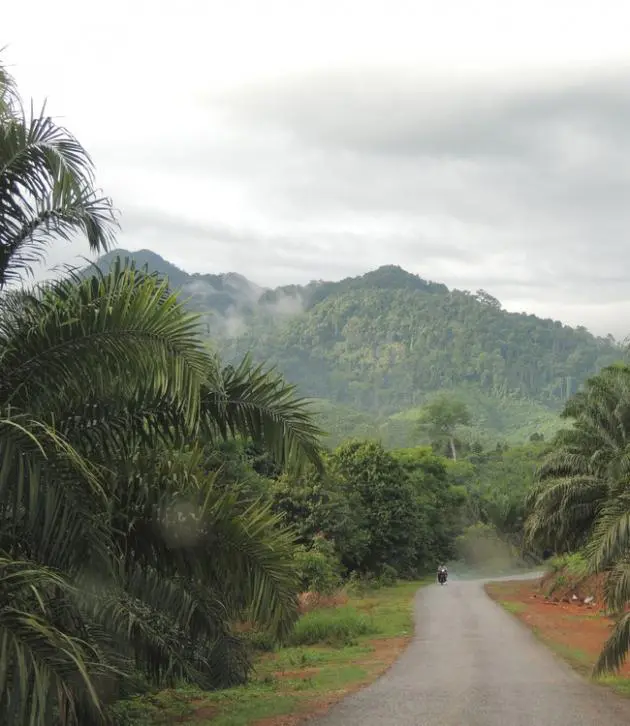
Fauna & Flora International (FFI) urged Myanmar to push harder in turning Myanmar’s southern Tanintharyi Region into a sustainable palm oil plantation area.
Since potential conflicts of interest are low, the Ministry of Environmental Conservation and Forestry and the Tanintharyi regional government can go ahead and designate Tanintharyi and Lenya as proposed national parks, creating a globally outstanding trans-boundary cluster of World Heritage Sites together with KaengKrachen National Park in Thailand,’ said Frank Momberg of FFI.
According to the non-governmental organisation, the region is the only area in the country where soil and climate conditions allow for growing oil palm.
To date, over 140,000 hectares of oil palm have been planted and 400,000 hectares allocated to 44 national companies. The government has been motivated to promote the sector in order to meet domestic demand for cooking oil and reduce reliance on expensive palm oil imports. However, as agro-climatic conditions in Tanintharyi are marginal, and Myanmar’s companies often find it difficult to access capital, know-how and technology, and must often rely on poor infrastructure, yields have been far below those of Malaysian or Indonesian growers.
The information was shared at a workshop on the sustainable palm oil industry in Yangon late last month.
The forests of Tanintharyi are one of Myanmar’s most important biodiversity areas, with 2 million hectares of intact lowland rainforest: a unique forest type limited to the very south of Myanmar, and home to globally threatened animals such as tigers, leopards, elephants, tapir, and gurney’s pitta, a colourfulground-dwelling bird found nowhere else in the world. Due to the area’s outstanding integrity and biodiversity, two national parks, Tanintharyi and Lenya, have been proposed and added to Myanmar’s tentative list of World Heritage Sites.
“Land clearing for oil palm and rubber plantation has been the driving force of deforestation and biodiversity loss in Tanintharyi,” said Momberg.
However, a land suitability study for palm oil presented by FFI during the workshop shows that there is no need for a conflict between plantation development and biodiversity conservation, since most bio-diverse forests are located inland along the Myanmar – Thai border: an area which is marginal at best for growing palm oil, since rain fall is lower and the dry season more pronounced than in the coastal region.
Not only are the agro-climatic conditions better in the coastal zone, but there is road access along the Kawthoung-Myeik road, with plenty of already-degraded lands throughout the road corridor due to past logging.
“Since potential conflicts of interest are low, the Ministry of Environmental Conservation and Forestry and the Tanintharyi regional government can go ahead and designate the proposed Tanintharyi and Lenya national parks, creating a globally outstanding trans-boundary cluster of World Heritage Sites together with KaengKrachen National Park in Thailand,’ said Frank Momberg of FFI.
Stakeholders represented in the workshop concluded:
• There are win-win solutions for conservation and plantation development to be found if all key stakeholders, including the private sector, government, and civil society organisations, actively engage and adopt RSPO principles. Doing so would foster environmentally friendly land use planning and move towards best practices in oil palm plantation management and expansion.
• Key stakeholders represented in the workshop agreed that RSPO certification could provide significant economic benefits and access to premium markets, especially for certified Kernel oil.
• The adoption of RSPO principles for sustainable palm oil, as required by most international banks and investors, could provide Myanmar’s palm oil sector with access to urgently needed capital and investment.
• Stakeholders agreed to establish a sustainable palm oil learning group that would facilitate stakeholder dialogue, education and capacity building for sustainable palm oil production, and to pilot the development of a sustainable oil palm plantation, based on RSPO principles, on a voluntary basis.
