
Budget falls far short of Yangon's power surge
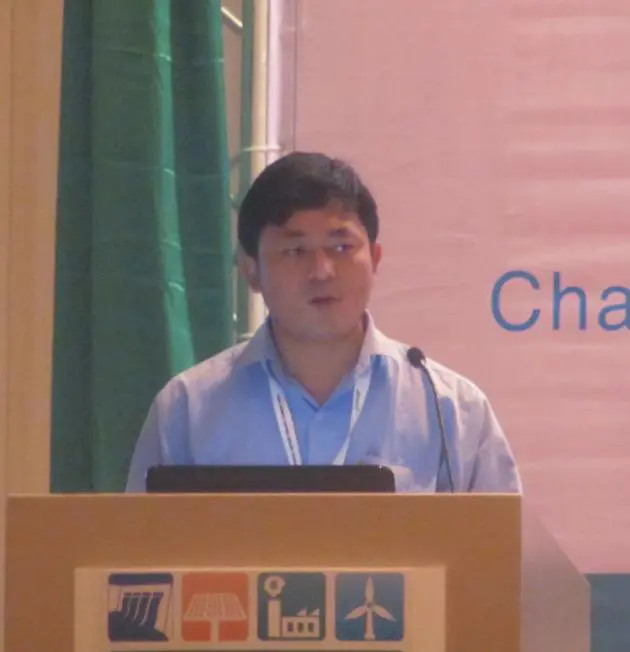


The Yangon City Electricity Supply Board needs a surge in cash to meet rising demand for power in the region, a senior official at the board said.
“The allocated capital budget is not sufficient,” Soe Moe, executive engineer of the board told Myanmar Eleven.
Merely Ks 26 billion (US$ 26.53 million) was allocated for the board’s budget in the fiscal year ending in March, he said, adding that this was not enough for a city of more than 5 million people. The board supplies the entire Yangon Region.
Demand for electricity has been rising by double digit rates since 2009, while the board’s budget has failed to keep pace, Soe Moe said.
The board had funded itself with its own revenues from the fiscal year beginning April 2006 until the fiscal year ending in March 2012 when it was reclassified as a state-owned agency. Since then its budget has been allocated by the Yangon Region government.
Soe Moe also forecast that demand for power in Yangon would more than double by 2020. He said demand for electricity rose slightly each year from 2006 to 2009, after which it surged by 30 per cent in fiscal 2009-2010. The next two fiscal years also saw double digit growth rates: 11 and 16 per cent respectively. However, these figures mask the steep rise in power shortages during those two years, he said.
In 2012-13 fiscal year, demand was 3,753 gigawatt hours (GWh), he said, adding that real demand in the next fiscal year was about 4,500 GWh.
“In April, 2014, our load reached 973.5 megawatts (MW), which is about 23 per cent higher than the 2013 data. In May, the load reached to 988.6 MW, which is about 50 per cent of the full generation capacity of Yangon,” Soe Moe said.
The board’s budget has risen from Ks 10.66 billion ($ 10.88 million) in fiscal 2007-08 to Ks 26 billion ($ 26.53 million) in fiscal 2013-14. In fiscal 2008-09, the budget was Ks 12.6 billion ($12.86 million), rising slightly to Ks 12.82 billion ($ 13.08 million) in fiscal 2009-10 fiscal year. It jumped more than 20 per cent the next fiscal year to Ks 16.55 billion ($16.89 million) and rose to Ks 18.73 billion ($19.11 million) in fiscal 2011-12 fiscal year.
The Japan International Cooperation Agency has forecast that total demand in Yangon Region will reach 10,850 GWh in 2020 and 25,944 GWh in 2030. The Yangon City Electricity Supply Board estimates that by 2020 Yangon’s total demand will reach 2261 MW, with the peak industrial demand of 615 MW and the peak non-industrial demand of 1,548 MW.
The board also estimates that energy consumption growth is expected to rise 19 per cent over last year. The annual power consumption growth rate will be 19 per cent till 2020, estimates say. Non-industrial demand growth is expected to start slowing in 2020, tapering down to a 9.8 per cent annual rate. Industrial demand is expected to grow 20 per cent annually until 2020.
Soe Moe said that in an effort to improve manufacturing output, the board had been providing 24-hour electricity to all the industrial zones in Yangon since early 2014. There are 26 industrial zones in the region, with several others in the planning or construction phase.
He said plenty of investors were very interested to invest in much-needed power distribution sector.
The board is allowing independent power producers to distribute power to industrial zones in Yangon. Some are currently doing feasibility studies for power distribution. As for pricing, they need to negotiate with the industries they intend to supply, he said.
As of April 2014, there were 9,472 transformers and 1,031,669 consumers in Yangon. Distribution of transformers is rising at a 9 per cent annual rate (640 more transformers were installed last year) while the number of consumers is rising at a 7 per cent annual rate (58,700 consumers were added last year).
The board provide electricity to 74 per cent of the city’s population (1,238,168 households) while 26 per cent of the city’s population has yet to access to electricity (285,005 households), according to the board.
