
EU asked to stop pestering Myanmar on human rights


Play
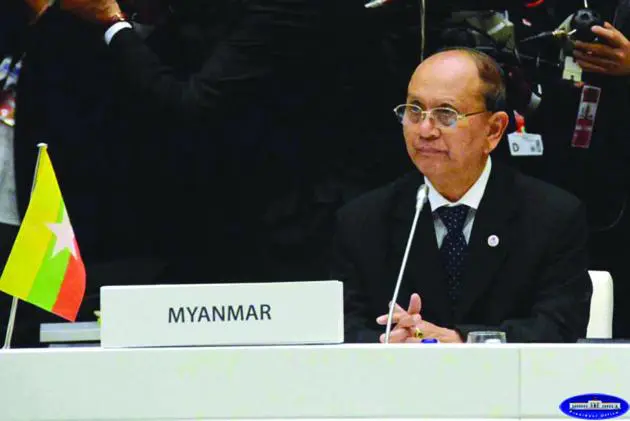
President Thein Sein has urged the European Union to stop its practice of submitting an annual report on the human rights situation in Myanmar to the United Nations General Assembly. He was speaking at the 10th Asia-Europe Meeting held at MiCo Conference
In his address, he said that his administration had been carrying out reforms for three years, transforming the country from military rule to a democratic regime in the first wave of reforms. A political system all can participate in could be established. Reforms in the political, economic and administrative sectors as well as private sector development were effected in the second wave of reforms.
“The government is emphasising two factors – peace and stability, and the development of the state in an effort to carry out reforms. The government is working with all concerned organisations for national reconciliation. Now, we can manage to cease fire with almost all ethnic armed organisations. A nationwide ceasefire and enduring peace are very near. We will continue trying to hold political dialogue after signing the nationwide ceasefire deal,” President Thein Sein said.
“Our administration thanks the international community for supporting Myanmar’s peace process and we will keep trying until we have achieved success in the peace process. As democratic reforms are very delicate, our country is facing difficult challenges just like other countries are doing, but we are determined to overcome such challenges. We will go ahead, but won’t go back,” President Thein Sein said.
“The government is undertaking wide-ranging measures in the protection of human rights. The Myanmar National Human Rights Commission has been formed and it is independently carrying out the task of protecting human rights. If there are violations of human rights, anyone can lodge a complaint. Myanmar is the fifth country among Asean countries to have a national human rights commission,” President Thein Sein said.
“In spite of Myanmar’s improving human rights, the international community has not recognised the situation yet. Myanmar is taking comprehensive measures for the protection of human rights at home and aims to become a member of the United Nations Human Rights Council. Myanmar has a plan to sign human right conventions, trade union conventions and conventions on women and children,” President Thein Sein said.
