
New World Bank assistance aimed at poverty


Poverty reduction will be the most obvious benefit of the World Bank's three-year partnership with Myanmar, which was launched last week. With a population of 51.4 million, Myanmar is one of the least developed countries in Southeast Asia, with the povert
Poverty in Myanmar is largely a rural phenomenon, with at least 70 per cent of the country’s poor living in rural areas. With this in mind, the bank last month approved US$100 million credit to the government’s Agriculture Support Project, aimed to increase productivity and create jobs. The project aims to benefit 120,000 households in Bago East, Sagaing, Mandalay, and Nay Pyi Taw, home to over one-third of the country’s poor.
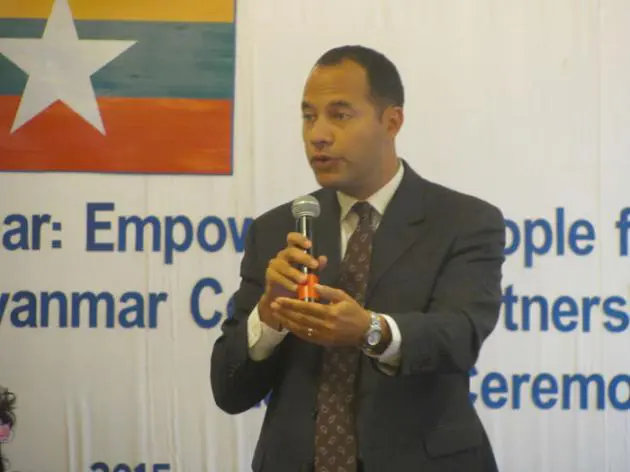
At the launch ceremony, Nikolas Myint, the World Bank’s senior social development specialist, stressed the importance of agriculture in both inclusive growth and poverty reduction. “Agriculture generates over half of employment and 37 per cent of GDP. Yet, productivity in agriculture is the lowest among all sectors,” he said.
Ulrich Zachau, the country director, added that improving irrigation will help by allowing planting during the dry season. Farm advisory and technical services will also be provided. The project will also provide contingency funds in the case of emergencies.
According to statistics, poverty rates vary across geographical zones, with poverty highest in many areas affected by conflict and the coastal zone (53.1 per cent, including 77 per cent in Rakhine State) and hills zone (40.9 per cent), and are lowest in the dry zone (29.5 per cent). Due to population density, the incidence of poverty is concentrated in Myanmar’s farming heartland of the Delta and in the Dry Zone. These two zones are home to 64 per cent of the country’s poor.
The Country Partnership Framework, the first since 1984, focuses on three main areas - rural development, health and education, and private sector development. Gender, conflict, governance, and climate change are the four important cross-cutting themes that will be integrated into the three focus areas.
“In three years, three million people will gain access to electricity and additional 2.5 million people benefiting from improved rural infrastructure and access to public services,” said Myint.
