
Forest areas down to 25%, official says


Play
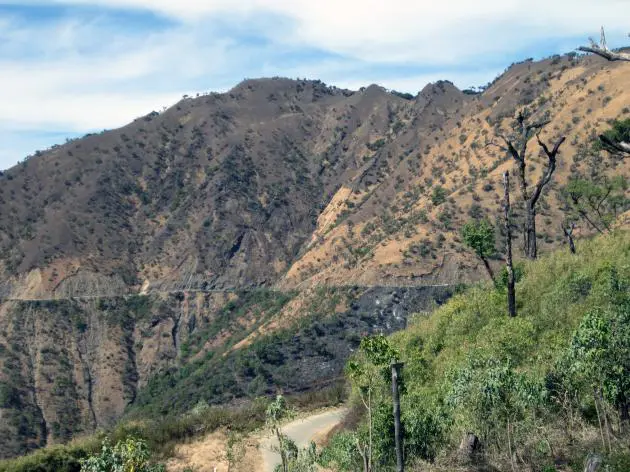
Due to deforestation and smuggling, the total area of remaining forests is now a fifth of the nation's total land mass and only 19 per cent of that is dense forest, the Forest Department says.
The data was recently submitted to the United Nations’ Food and Agriculture Organisation. It was a result of the latest survey of forest coverage in the country.
According to the data from World Bank, Myanmar had 58 per cent of the landmass as forests in 1990 but went on a steady decline over the years till date.
"We have submitted the annually collected data and carefully measured calculations," said an official from the planning department of the Forest Department, who asked not to be named.
The exporting of raw logs of lumber was stopped as of April 1, 2014, but wood smuggling still rose in Kachin, Sagaing and Shan states.
From 1995 to 2014, the amount of wood exported by Myanmar reached 1.4 million tonnes. The Forest Department had employed methods such as satellite imaging and field measurements every dry season of the year to gather accurate data on forests. The Environmental Conservation and Forestry Ministry has said that every state and region submits a major report on forestry within their own areas every 10 years.
Drafting the new forest law, the department mulls increasing jail terms by two to five times for any crime related with wood smuggling and raising fines. The current law was imposed in 1992.
Myanmar earned US$94 million from timber product exports in the 2014-15 fiscal year, according to the Commerce Ministry. The amount was $854 million lower from the previous year, which was the last year for raw log exports. Since April 1, 2014, only finished timber products are allowed for exports.
The country produced 476,019 tonnes of hardwood from 2006 to 2011 and 226,782 tonnes since the current government assumed power in 2011, according to official data.
Official figures from the ministry show that the country exported teak and hardwood logs worth $947.8 million in the fiscal year 2013-14 through sea and border trade. Exports were mostly of teak logs, which earned $638.37 million that fiscal year.
