
Firms look to sunny prospects after polls


Play
YANGON - LOCAL LEADERS expect Myanmar to enjoy a better business climate in the post-election period.
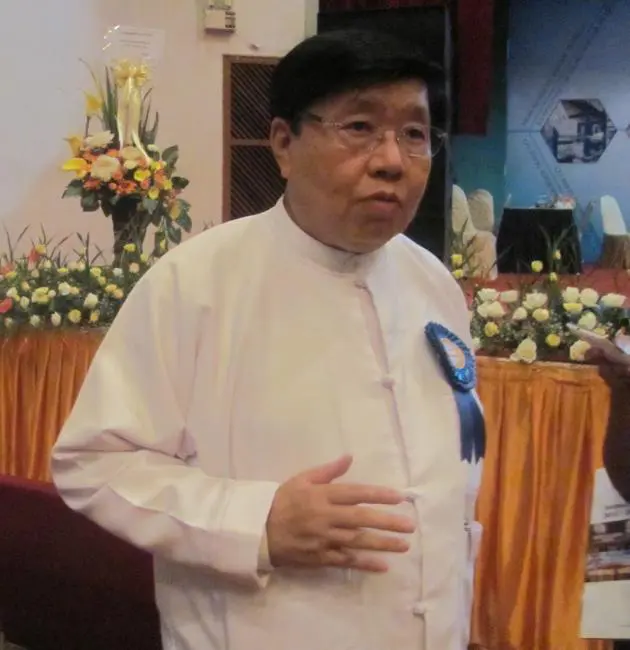
Win Aung, president of the Union of Myanmar Federation of Chambers of Commerce and Industry (UMFCCI) and chairman of Dagon Group of Companies, said in an exclusive interview that he expects more favourable conditions in the next government’s term although he has witnessed a lot of improvement during President Thein Sein’s tenure.
“Whoever takes the presidency, we believe he/she will focus on strategies and plans for further economic growth. As we believe there is room for improvement in Myanmar, we do hope to see further developments in the next government’s term,” he said.
Maung Maung Lay, managing director of Ni Lay Naing Co and vice president of UMFCCI, even expected an increase in foreign direct investment (FDI) after the election. He acknowledged that foreign companies were on a wait and see, but once a free and fair election is delivered, investment would pour in.
After witnessing a surge in FDI from Asian countries, Myanmar has a huge potential to receive more FDI from the European Union, the United States, and Australia, he said.
“The trend is already good. It should be better in the next government’s term. The most important thing is to maintain the momentum and go ahead. The door is already open and there is no reason to close it again.
The question here is ‘how quickly we can go up’ - rapidly or steadily? As economy is the backbone of a country’s development, we believe the new government will also prioritise sustainable economic growth,” he said.
According to Win Aung, UMFCCI has had discussions with potential investors every day. He noted that though some prefer to wait until after the election, there is no sign that FDI is declining. In this regard, the Thilawa Special Economic Zone has played an important role in drawing foreign investment. More than 50 foreign firms have declared an intention to invest in the zone, which should create about 5,000 jobs by early 2016. Supported by the 24-hour electricity guarantee, Thilawa can become a hub for high-quality light industries.
“Regardless of business types and countries, investors usually keep an eye on developments of the country they are keen to invest in,” he said. “Judging from the current developments, we do believe that the elections will be free and fair, and all stakeholders and candidates will fully concentrate on transparency and fairness of the elections.”
After the election, he expects to see greater production of value-added products as well as better infrastructure, to support productivity enhancement and exports. All businesses need capital, technology, and markets, he said. Supporting further development require institutionalisation of business organisations. UMFCCI now has more than 70 sister organisations.
In this regard, the SME law has been enacted. The Myanmar Investment Law, a consolidation Foreign Investment Law and Citizens Investment Law, as well as Myanmar Companies Act are likely to be enacted soon.
“To attract more foreign investors, we need to put a strong legal framework in place first. UMFCCI also actively participated in the discussions of enacting new laws and modifying old laws. The authorities concerned always take our input and suggestions into serious consideration,” he said.
