
Japan looks to allies for maritime security
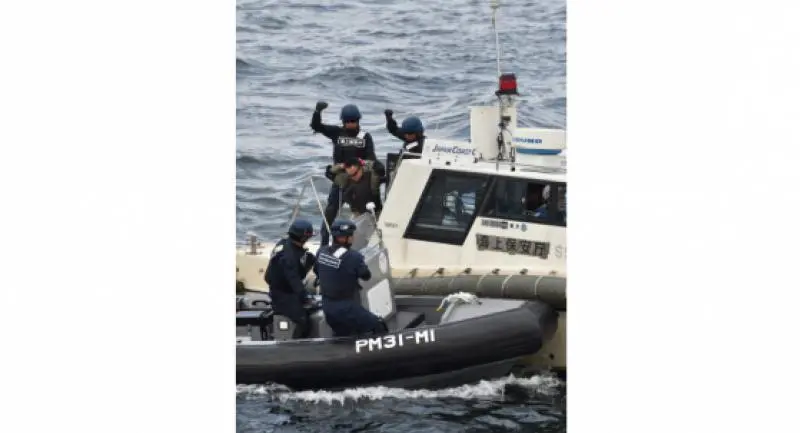


INDONESIA, the Philippines and Vietnam are Southeast Asian countries Japan can rely on for maritime security in the South China Sea amid rising Chinese ambitions and possible policy changes by the United States, a Japanese professor says.
Japan is not a party to the conflict in the South China Sea but has expressed concern over the stability in the sea for safe sea-lanes and freedom of navigation since the area is a major route for its transportation of goods.
From Japan’s point of view, Southeast Asia’s security can be divided into two zones, mainland and maritime.
While China, which is putting security pressures on Japan and other nations in the region, has strong influence on land, Japanese politicians believe that its influence is not so strong on maritime states like Indonesia and the Philippines, said Professor Tomohide Murai at Tokyo International University Founda-tion’s Institute for International Strategy.
“So, if Japan needed cooperation in military and security matters, Indonesia is very important player. It is the world’s biggest Muslim country, where communist China has found it difficult to gain influence,” he said.
Chinese influence in Indonesia is not so strong due to their historical background. Japan has a high visible presence as it has granted a large amount of Official Development Assistance to Indonesia, he said.
Malaysia is not a good option even though it shares a lot of similarity with Indonesia as it has a significant Chinese ethnic population, he added. Singapore is too small in terms of military capability, he said.
The Japanese government expected Vietnam to play a bigger military role in the region to balance with China, notably in the maritime conflict in the South China Sea, he said.
“Some say Vietnam is only the country in Southeast Asia that we can trust on security matters as it has battle experience and knows how to fight against China, Murai said, “Militarily speaking, Vietnam’s six submarines are a very useful force.”
The Philippines used to be a very good partner of Japan until President Rodrigo Duterte’s flip-flop in its relations with the US, China and Japan, he said.
“Like US President-elect Donald Trump, we cannot have confidence in such leaders. Furthermore, American influence in the Philippines is so strong, and Japan cannot compete,” he said.
“We Japanese don’t like to be number two.”
“In Thailand, Japanese influence is visible but we are worried about Chinese influence in the country, It is so strong,” he said.
Thailand has stable image
Japan also is worried in which direction Thailand will go. But basically, we Japanese still regard Thailand as a democratic society like us, meaning its direction will not change dramatically. Basically, Thailand’s image is stable compared to others in the region.
“But, frankly speaking, Japan cannot expect the Thai military to play any role in maritime security,” Murai said.
Myanmar is a favoured place for Japanese investors but Japan still feels that Myanmar’s political situation is still not stable, he said.
“Relations between the civilian government leader Aung San Suu Kyi and the military is not so well established. We feel hesitant in making any deals with Myanmar. We cannot foresee Myanmar’s future five years from now, after all, Aung San Suu Kyi is not a young leader,” he said.
Regarding security tensions with China, notably the conflict in the China East Sea where territorial disputes over the Senkaku islands, which are known as Diaoyu by China, the professor urged the Japanese government to consider boosting its military capability.
Increasing the military budget from the current 1 per cent to 2 per cent of gross domestic product is enough to improve our deterrence, he said.
The US allocated 3 per cent and Europe has allocated 2 per cent of their respective GDPs for military spending, he said.
“If Japan allocated 2 per cent of GDP for military purposes I don’t think any country would complain about Japanese military expansion,” he said.
Japan has mulled for some time an amendment to the constitution to widen its military roles, both regional and globally, but the opposition party and public opinion have not yet reached any consensus, he said.
But, the mood of anti-militarisation among Japanese people is fading as people who experienced World War II pass away, he said.
“More importantly, unlike China, Japan cannot be a military giant again. Japanese citizens would not allow our country to become something like before the WWII. Other countries notably in Southeast Asia have no reason to worry about Japan’s military role in the region,” Murai said.
However, the professor remained hopeful that the new US administration under President-elect Donald Trump would neither reduce its military presence in the Pacific nor abandon Japan.
Also, the economic slowdown would likely reduce the speed of Chinese military expansion, he said.
If the government in Tokyo managed to increase military budget and amend the charter, Japan would be able to develop its military strength close to China within five years, |he said.
