
Currying favour with the chef
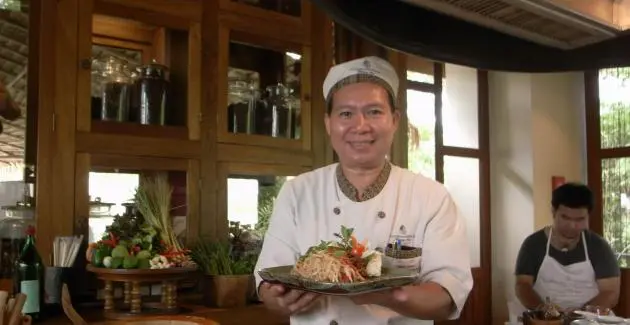


Pitak Srichan, chef at the Four Seasons Resort Chiang Mai, teaches the media how to prepare khao soy gai
Up from Bangkok late in December for a gourmet evening at the Four Seasons Resort Chiang Mai’s restaurant Sala Mae Rim, many media members selected to stay on for a few lessons in northern cuisine at the resort’s cooking school, spending half a day in the kitchen with chef Pitak Srichan.
Even without formal training, Pitak, a native of Nakhon Phanom in Northeastern Thailand, is an authority on Thai food. He’s cooked all his life, collecting recipes from family members, relatives, friends and colleagues. In Thailand, great chefs pick up skills in the world of real kitchens, not at cooking schools. Despite a limited education, Pitak speaks fluent German, English, Korean, Malay and some Dutch, all of it picked up during his long overseas stretches.
After helping his brother run a restaurant in his hometown, Pitak helped Koreans cook Thai food in Saudi Arabia (where he picked up Korean), and over the next 20 years, cooked at renowned Thai restaurants in Libya, Germany, Malaysia and the United States. He returned home in 2002 and joined the resort.
During his class, Pitak unveiled the recipes for two basic dishes: som tam and khao soy, a common dish in the north. Basic maybe, but not easy unless you have the right mix of ingredients and prepare them in the right order.
“I always refuse to cook if someone wants my som tam not hot. Som tam is not som tam unless it’s hot,” says Pitak.
You begin by lightly crushing chillies (five pieces) and garlic (one piece) in the mortar. Then add dried shrimp, cashew nuts (or nuts), long bean and pound. Season the mix with fish sauce, palm sugar, lime juice and tamarind juice. Then add green papaya and cherry tomato and mix well.
“Som tam should have a sour, salty and sweet flavour,” he says.
Five pieces of chilli could set one’s mouth on fire. But that is the real som tam.
Next up was khao soy gai (curry noodle with chicken). Pitak made the red curry paste first. The ingredients are shallot, garlic, dried jalapeno chilli, galangal, lemongrass, coriander root, kaffir lime skin, shrimp paste and salt. To get quality red curry paste, pound the ingredients in the mortar. Do not process them in the blender.
The chef got the crispy-fried egg noodles ready for us in a bowl garnished with Thai coriander then informed us that we would be preparing the soup.
He told us to heat the wok and add coconut milk (one-and-a-half cups). Stir until it boils, add red curry paste and stir, then add hung lay curry yellow curry powder (used in northern curries mostly) and mix well.
We were then told to add slices of chicken and keep stirring until the meat turns white. Add some more coconut milk, bring it to the boil and add chicken stock, Thai fish sauce and palm sugar paste.
When it’s done, pour the curry soup on top of the egg noodle. And there you have it.
Despite my coconut milk being slightly burnt, the chef said my creation tasted great and gave me a certificate. But, there again, he said that to everyone.
