
The magic of Merlot


Play
Wines from both banks of Bordeaux light up a delicious dinner at The Reflexions
The wine regions of Bordeaux are divided into several wine-growing areas and dominated by three major rivers: the Gironde plus the two smaller but still substantial rivers, the Dordogne and the Garonne, which flow to the Atlantic Ocean.
Cabernet Sauvignon grapes dominate the left bank of the river, especially in Haut-Medoc while the other side of the river is more suited to Merlot.
For more than 400 years, Bordeaux has been the favoured home of the negociants or wine merchants and Jean-Baptiste Audy was no exception. He settled in Libourne, near Saint-Emilion and Pomerol, back in 1906. Located on the Dordogne River, on the Quai du Priourat, it was ideally situated for the offices of wine merchants and indeed today is often dubbed the wine capital of the world.
Audy distributed all the leading wines of Bordeaux, with a clear preference for the right bank, and most particularly the appellation of Pomerol, of which Merlot is dominant.
In 1924, the Audy family became the owners of several vineyards, among them Clos du Clocher, Courlat, Clinet, Bonalgue and La Cabanne, and the company took its place among the tightly knit circle of negociants trading on the Place de Bordeaux.
Audy’s grandson ran the company from 1991 to 2002 and in 2003, his own son Jean-Baptiste, came on board.
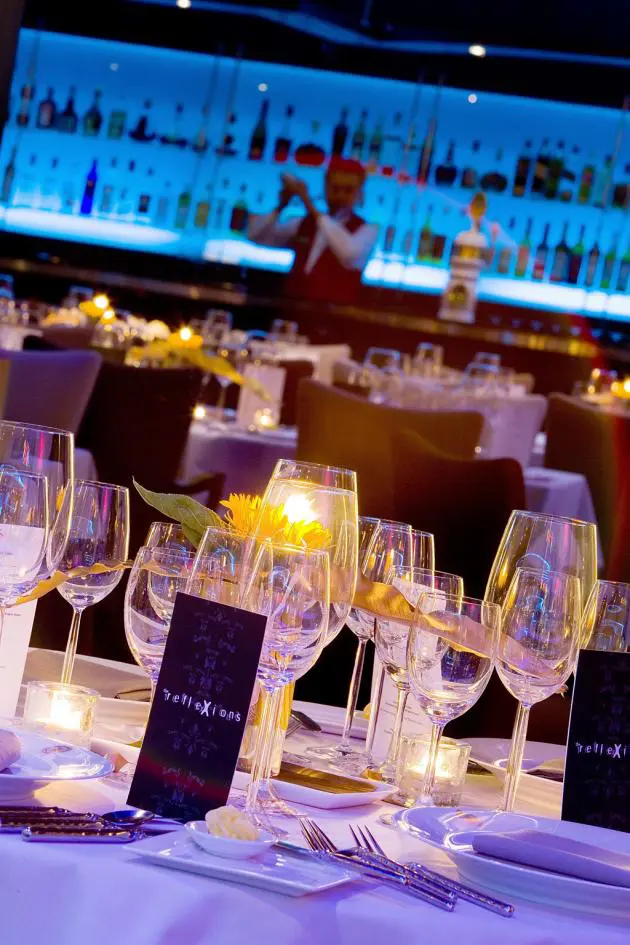
A recent wine dinner at The Reflexions, Plaza Athenee Bangkok, A Royal Meridien Hotel hosted by IWS, the importer of JB Audy wines, offered three wines from both the right and the left banks.
Arriving guests were served with Champagne Bollinger, Special Cuvee Brut to enjoy with the canapés.
Dinner started with Oxtail consommé with ravioli and brunoise vegetables paired with Château du Courlat, Cuvee Jean-Baptiste, 2008, a difficult pairing of liquid with liquid. The wine was Lussac St Emilion AOC, which is Merlot based with Cabernet Franc, an easy everyday drinking wine with soft plum and red fruit and a hint of vanilla and red fruit and soft tannin on the palate. So even though the pairing was not traditional, the intense oxtail flavour and taste could cope well with the red.
The second course was grilled Australian lamb chop, vegetable tian with goat cheese and cumin sauce served with Chateau Bonalgue, 2006. The wine was Pomerol AOC with 90 per cent Merlot and 10 per cent Cabernet Franc. The vines have an average age of 25 years and are grown in 7.55 hectares of gravel and sandy-clay soils, with a subsoil of gravels and alios – the rich band of iron-ore that distinguishes the Pomerol terroir. These qualities make this a heat-retaining soil, meaning that the grapes ripen early and evenly, reaching perfect maturity.
The 2006 vintage was known as a fruity one. With a hint of smoke and lots of berry fruit, the wine was a superb match for the lamb chop, which was perfectly cooked and juicy. It made the tannins in the wine rounder while the wine made the lamb is sweeter and softer.
Then came a selection of French Farmhouse cheese with condiments served with Chateau Clos du Clocher, 2007, a traditional pairing about which they could be no doubt.
If all of Pomerol is renowned for its terroir, only a handful of chateaux can demonstrate the famous dense iron-rich clay across their plots. At Clos du Clocher, as at Petrus, Le Pin, La Conseillante and Vieux Chateau Certan, a “natural contract” binds the vines to their terroir, ensuring they reach full maturity, and that the grapes show intense complexity.
The Chateau Clos du Clocher was another Pomerol AOC but with 70 per cent Merlot and 30 per cent Cabernet Franc, making it more structured and bodied than the first two. It also had a hint of wood and smoke from the barrel. For those who enjoy their cheese and wine, it was a pleasant experience.
Illy’s Blended Coffee and a selection of fine teas served with Mignardises provided the perfect ending to a fine meal.
