
A different man for all seasons
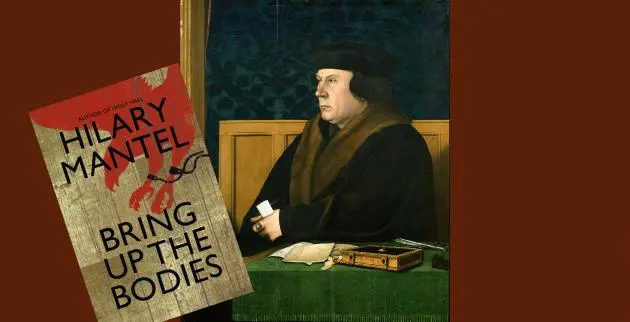


Hillary Mantel's glorious prose fills two novels about Henry VIII's times, with a third awaited
Hillary Mantel was a 56-year-old English novelist of indifferent success when she sat down to write about Thomas Cromwell, chief adviser to King Henry VIII. As she recounts in a recent profile in the New Yorker: “I was filled with glee and a sense of power, a sense that I knew how to do this ... I knew from the first paragraph that this was going to be the best thing I’d ever done.”
The reader shares her exhilaration, as did the judges of the Man Booker Prize, who awarded her novel “Wolf Hall” with the coveted prize in 2009. Amazingly, she won it again just three years later for her sequel “Bring Up the Bodies”. This is the best work of fiction I’ve read in many years.
“Wolf Hall” opens with 15-year-old Cromwell slithering like an eel on the cobblestones of his household courtyard. He has been knocked on the head and now is being kicked into oblivion by his father Walter, blacksmith, brewer and brawler, town drunk of Putney on the outskirts of London. Nursing his wounds, Thomas takes off for France to enlist in any war that will have him.
He is next seen at the age of 40, the trusted henchman of Cardinal Thomas Wolsey, Lord Chancellor to Henry VII. Here is Mantel’s thumbnail portrait: “He is a man of strong build, not tall. His speech is low and rapid, his manner assured; he is at home in courtroom or waterfront, bishop’s palace or inn yard. He can draft a contract, train a falcon, draw a map, stop a street fight, furnish a house and fix a jury. He will quote you a nice point in the old authors, from Plato to Plautus and back again. He knows new poetry, and can say it in Italian. He works all hours, first up and last to bed. He makes money and he spends it. He will take a bet on anything.”
The year is now 1527 and King Henry, besotted with Anne Boleyn, is determined to put aside his first wife, Katherine of Aragon, Spanish aunt of Holy Roman Emperor Charles, in favour of producing a male heir from a new queen. Boleyn’s ambitions lead to Wolsey’s downfall, though Cromwell stays loyal to him to the end.
“Wolf Hall” ends with the beheading of the scholar Thomas More, former Lord Chancellor, for the crime of staying loyal to the papacy after Henry VIII broke away from the Catholic Church to marry Boleyn. “Bring Up the Bodies” ends with Boleyn’s beheading. Cromwell played a central role in both these cases, despite his great friendship with More and at least grudging admiration for Boleyn.
Cromwell is also loyal to his king, and why not?
“You cannot see Henry and not be amazed,” Mantel writes. “Each time you see him you are struck afresh by him, as if it were the first time: a massive man, bull-necked, his hair receding, face fleshing out ... His height is six feet three inches, and every inch bespeaks power ... His rages are terrifying, his vows and curses, his molten tears.”
And Cromwell reflects, “You can be merry with the king, you can share a joke with him. But as Thomas More used to say, it’s like sporting with a tamed lion. You tousle its mane and pull its ears, but all the time you’re thinking, those claws, those claws, those claws.”
Equally forceful is Anne Boleyn, educated in the French court, charming, manipulative and resolute in her pursuit of the English crown. She resists Henry’s overtures until she is assured of marriage, but when she fails to produce a male heir, he assigns Cromwell to arrange her downfall.
A youthful page accuses four courtiers of adultery with the queen. The four had once taken part in a public burlesque depicting Cardinal Wolsey being dragged to Hell and had often mocked Cromwell for his lowly birth, so he has no compunctions about sending them to the gallows.
Yet he does have compunctions about drawing up charges against the queen. “He has seen beautiful indictments, not a word wasted. This was not one: the phrases jostled and frotted, nudged and spilled, ugly in content and ugly in form. The design against Anne is unhallowed in its gestation, untimely in its delivery, a mass of tissue born shapeless.”
Cromwell is ultimately raised to an earldom. He is immensely rich and most nobles in the land owe him money. His trusted proteges – son Gregory, adopted son Rafe Saddler and nephew Richard Cromwell – advance from one vastly profitable scheme to another.
Yet, in historical fact, Cromwell will be beheaded for treason, on flimsy charges, in only four more years. The will of a king is both fickle and all-powerful. This notion would not be challenged for another century, until the advent of Richard Cromwell’s great-grandson Oliver. Then it would be royal heads that rolled.
But for Thomas Cromwell’s last years we must await the conclusion of Hilary Mantel’s trilogy, in the sort of glorious prose that only she can muster.
