
Snakes and tigers alive!


Play
The wildlife gets a little too close for comfort on a visit to the jungle that straddles Thailand and Malaysia
Our women don’t go rowing boats into the jungle or paddle down rapids,” grins the guide, as I jump into the river to push our flimsy boat laden with rucksacks, equipment, tents and food.
What made me want to spend four days in the jungle and brave bloodthirsty leeches, mosquitoes, wild boar ticks and risk my limbs being punctured by sharp thorns?
Well, imagine sitting in a boat at night, listening to the music of crickets and cicadas, gazing into the night sky dotted with stars and enjoying the light show by the fireflies in the trees.
I am in the middle of the jungle wilderness of Ulu Muda, which stretches from Kedah state in Malaysia into southern Thailand.
From the jetty on the Muda River, we take a seven-hour boat ride to our campsite, greeted all the way by eagles, egrets and bee-eaters which soar in the hot sky.
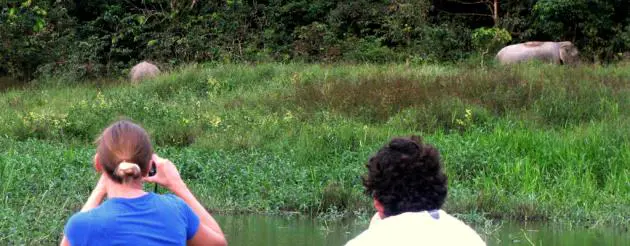
As well as a wild boar lapping at the river’s edge, almost everywhere on the bank we see tell-tale signs of elephants – patches of red earth trampled down by the thirsty jumbos.
There is a bustle of activity: an egret wheeling to catch a big, reddish dragonfly; crabs crawling hurriedly in the mud; geckos darting around the hot sand; hundreds of butterflies in myriad hues flapping their wings while sucking water from the sand.
After seven hours under the fiery sun, we reach our destination and pitch our tents. I jump into the cool water but the strong current pushes me over the rocks.
Ouch! My knees are knocked blue-black! The river is definitely no place for the beauty-conscious and fair-lady type. I thank my lucky stars when the men gallantly offer to cook for me.
After a hearty meal of steamed rice and fish, I am looking forward to sleep when a loud shriek rings in the air. A snake! It had slithered under someone’s ground sheet. Look out! Another follows behind.
“Can we camp somewhere else?” I shiver.
“In pitch darkness? No way,” replies our guide Alastair.
He trails the snake and finds a nest in a hole. Somehow he catches it and relocates it across the river. We check our book on wildlife and identify it as a krait – a lovely but deadly black snake with white bands across its slim body. The book describes it as a fast snake which can be very aggressive if threatened.
The next day, we are greeted by the calls of the gibbons and see a serpent eagle seizing a snake in its beak. More excitement is in store on the day’s trek.
The sides of the river are akin to mini-cities of bustling life. Huge ants scurried around with scraps in their jaws, and big dragonflies are everywhere. These latter combine beauty with their role as “bio-control” agents.
As dragonfly larvae feed on mosquito larvae, they help keep the pesky insect at bay.
Countless multicoloured butterflies settle on our wet shirts as we attempt to take photographs of these beauties. We make plaster-of-Paris moulds of footprints of elephants, tapirs, otters and boars as souvenirs. The tapir tracks are especially distinctive – four toes in front and three toes behind.
Then, suddenly, the group in front stops in their tracks. “Sshh!”
A loud growling makes my hair stand on end. Alastair signals for quiet – a tiger is prowling in the bushes just metres away. The loud roar of the boat’s engine rings out as it heads in our direction, and presumably scares off the predator.
Whether we were to be its prey we shall never know. My worries dissolve at the thought of seeing more wild animals. And, thankfully, our guides carry long parangs for defence and to cut our path when jungle vines and thorny plants block our way.
The close encounters with wildlife are awe-inspiring, but I’m glad we have protection – it really is a jungle out there.
