
Colorectal cancer: early detection can mean a cure


Play
Cancer is the leading cause of death worldwide and once it is established, it cannot be cured.
This may sound frightening, but cancer can be coped with and the best way to catch cancer early is to have screening tests.
The incidence rates of colorectal cancer have increased in recent years, with some 1 million new patients diagnosed with colorectal cancer globally. In Thailand, colorectal cancer is the second leading cause in males and the third leading cause in females in terms of cancer prevalence. The figures for the incidence of colorectal cancer in Thailand are 10.9 per 100,000 for men and 7.3 per 100,000 for women. Thanks to recent advances in medical technologies, effective screening can be performed through a colonoscopy, which allows a doctor to look at the interior lining of the large intestine. If an abnormality is discovered, treatment can be provided promptly.
The colonoscopy is a widely accepted method of screening for colorectal cancer at its early stages in people aged over 50 years, especially in Western countries and United States. This method helps to detect abnormalities in the large intestine or anus accurately, precisely and safely even when no symptoms are present. Immediate treatment can then be provided.
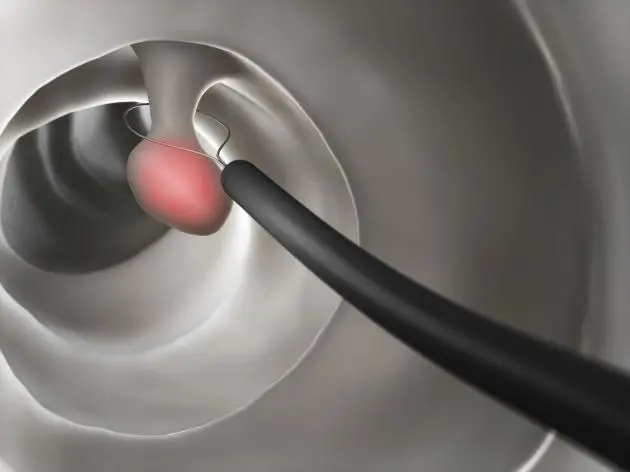
The colonoscopy procedure uses a long and narrow tube inserted through the anus and into the large intestine. The latest dual-focus high-definition narrow-band imaging colonoscopy is now widely used. A special light enables the doctor to see a clear view of the large intestine and any abnormalities of the blood vessels and tissues, facilitating precise diagnosis of mucous membrane and colorectal cancer. If a polyp is found during a colonoscopy, the doctor can remove and send it to a laboratory for analysis immediately. If an abnormality is discovered, such as bleeding and intestinal obstruction, treatment can also be provided promptly.
There are currently limited data regarding screening by colonoscopy for Thai people. However, in other countries, a colonoscopy is recommended at 50 years of age even when no symptoms are present, and the screening test should be performed every 10 years thereafter. People who are at higher risk, such as those with a family history of colorectal cancer, should undergo the screening test every 5 years.
Who is at risk of colorectal cancer?
- People aged over 50 years
- People with a family history of colorectal cancer or inherited syndromes
- People with a personal history of colon polyps
- People who frequently eat high-fat foods, red meats and low-fibre food.
- People with a personal history of inflammatory bowel disease
- People who are overweight, have diabetes, or smoke
Warning signs of colorectal cancer
- Abnormalities in bowel movements, such as chronic diarrhoea, or alternating bouts of diarrhoea and constipation
- Abnormalities in stool, such as red or dark blood in stool
- Abdominal discomfort or bloating, gas and pain
- Lump in the stomach, weight loss, paleness and weakness
Many patients with colorectal cancer experience no symptoms in the early stages of the disease. By the time the symptoms do appear, the tumours tend to have grown large and become more difficult to treat. It is important to be attentive of any abnormalities in order to receive early treatment without delay.
A colonoscopy is the best screening test available for colorectal cancer. The recent advances in camera technologies enable the doctor to diagnose and treat the disease precisely and quickly. However, the doctor’s medical and surgical expertise is another important consideration for effective colonoscopy screening.
Asst Prof Somchai Leelakusolvong, MD is director of the Liver and Digestive Institute and a specialist in Gastroenterology and Hepatology at Samitivej Sukhumvit Hospital. Call (02) 711 8822-4
