
For birds and mice, fast-track reincarnation
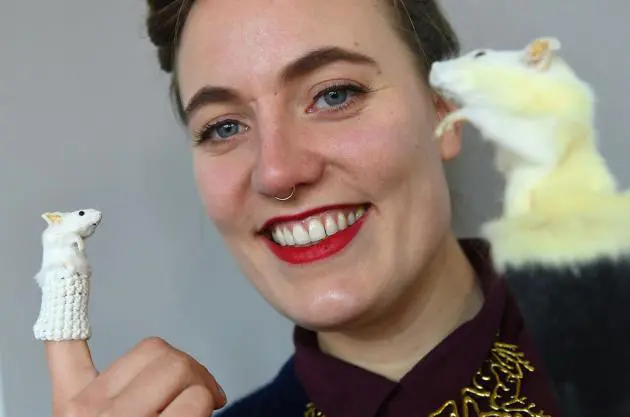


Needle and thread in hand, dutch artists are at the forefront in reviving "Dead-Animal Art"
IN A LOFT in a disused school in The Hague, artist Noortje Zijlstra takes a frozen crow carcass from a refrigerator and cuts it open, pursuing her latest “dead-animal art” project.
Wearing surgical gloves, Zijlstra gingerly cuts into the bird’s breastbone and then removes most of its insides. “This is what I do. I take its ‘jacket’ off and use it as my medium for art. As soon as that happens, it ceases to be a dead animal,” Zijlstra says as she slices away.
Zijlstra, 28, is part of a new group of young Dutch artists gaining international recognition in the art world by using taxidermy as their creative medium.
Their work has won critical acclaim for elevating the centuries-old practice of mounting animals to a “higher plane”, a review said recently. But for other art enthusiasts, Zijlstra admits, the sight of a stuffed dead animal remains macabre, even hard to stomach.
Many of her unconventional works adorn a desk at her studio overlooking a drab working-class suburb. They’re ready to be shipped off for display at the Rotterdam Festival of Contemporary Art.
There’s a stuffed squirrel standing upright on its hind legs, a test tube inserted into its throat that serves as a flower holder, and a white dove’s head mounted on a shuttlecock.
An artwork simply entitled “Drumstick” features a single preserved baby chicken leg, mounted on a wooden stand, covered in fluffy white feathers. The heads of two geese blend into a strange new animal in another untitled work.
“My work fuses taxidermy and art, sometimes creating work that may shock or even revolt, but I hope it serves as a catalyst for conversation,” Zijlstra says. Wearing a purple dress and plaited hair, she bears an uncanny likeness to the late Mexican artist Frida Kahlo.
Elsewhere in her studio, a family of mice is mounted, but instead of fur, their hides have been replaced by decorative sugar dyed red, green, blue and yellow. “Food often features in my art,” says Zijlstra. “I use them because I want people to think about what they put in their mouths. My art has a lot to do with the concept that you are what you eat. And I am vegetarian.”
In the nearby city of Haarlem, Jaap Sinke and Ferry van Tongeren have just returned from exhibitions in Britain that earned rave reviews. Titled “Darwin’s Menagerie” in reference to the British naturalist, the hugely popular show by Sinke and Van Tongeren debuted at the prestigious Jamb gallery in London in October before moving to the same city’s Shapero Modern Gallery.
At the Shapero their creations recreating Dutch masters’ paintings of animals hobnobbed with works by Andy Warhol, Pablo Picasso and Damien Hirst as part of the exhibition “Natural Selection”. A private collector scooped up the Sinke-Van Tongeren pieces for an undisclosed sum, says Sinke.
“This is not quirky nature meets urban cool,” Henrietta Thompson wrote in a review for Britain’s Daily Telegraph. “This elevates taxidermy to a higher plane.”
“Taxidermy as art is definitely making a comeback,” Sinke says. The revival started in the late 1990s, with German artist Thomas Gruenfeld “creating” new animals in his “Misfits” series, explains Leontine Coelewij, curator at Amsterdam’s Stedelijk Museum of Modern Art.
Today the Dutch artists’ works “link into a larger trend about how artists use nature and think about nature,” Coelewij says. “They want to raise important questions about how we as humans view the natural world – and how we relate to nature and use nature.”
Back in The Hague, Zijlstra takes a second look at the crow’s skin and feathers, now detached from the skeleton. “I’m not sure what it’s going to become,” she says, “but whatever it will be, I hope it gets people talking.”
