
Punching pretty


Play
Women help make the small town of Bhiwani India's boxing capital
The first pale rays of sun are shining down on Bhiwani when a shrill whistle wrests the small Indian town from its slumbers.
It’s coming from boxing coach Jagdish Singh, standing in the courtyard of his academy with a stopwatch in one hand and a whistle in the other, driving his pupils on. After 30 seconds he whistles again, and 30 seconds later once more.
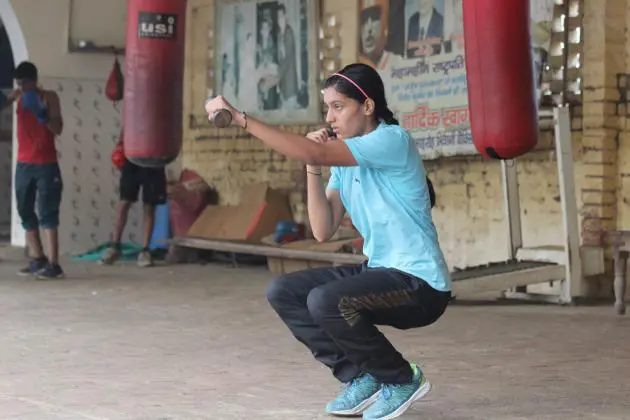
For two hours Singh oversees the young men and women as they move from one training station to the next: rope climbing, lifting barbells, one-handed press-ups, shot put, squat jumps, punching sandbags and punch-balls, and hitting tyres with a hammer.
In the monsoon heat their sweat is soon dripping onto the stone floor.
Bhiwani is an outwardly unremarkable town in the north of India, with more potholes than trees. But in the past few years it has gained a reputation as the boxing capital of the subcontinent.
People can be seen jogging everywhere, and there are at least eight boxing clubs. At the Beijing Olympics, all three Indian quarter-finalists came from Bhiwani.
At first it was only men who wanted to become professional athletes. But now women too are pulling on the oversized red and blue boxing gloves.
Savita Gothra (50 kilograms) and Sakshi Dhanana (54 kg) won the junior boxing world championships in Taipei in May. Soniya Gothra (48 kg) won silver.
But it’s not necessarily medals that young people in Bhiwani want.
“I really want a secure job,” says 15-year-old Nithi Dhaka. “Mum wants me to join the police force.”
The Indian government reserves a certain number of jobs – in the police force, the army, paramilitary forces and the rail service – for successful athletes.
Coach Singh says many of his students see the boxing club as a potential way out of poverty.
“India is a very corrupt country. Normally we need either money or access to a member of parliament or at least a local politician to achieve anything,” he says.
But the families of prospective boxers face many problems. That includes the fees for his club and the cost of the special shoes which need replacing every two months due to the intensive training schedule.
“The girls need a balanced diet too,” adds Singh. But often they only eat flatbread and lentils. “Some parents can only send a bottle of milk once a week with the bus.”
In any case, 17-year-old Rajini Singh says she has become more self-confident thanks to her boxing lessons.
“I feel safer because I know I can defend myself,” she says.
Banty Panghal, also 17, agrees. “There are 13 of us girls in the club who help each other. Together we’re very strong.”
Their boxing prowess is a valuable asset in a country where women and girls daily face unwanted sexual advances and taunts.
When the girls have returned to their dormitory and the coach can no longer hear them, 22-year-old Priyanka Chaudhary adds a story to their comments.
“We were riding along on our bicycles when a guy came towards us and kept making stupid comments. He thought we were just girls and wouldn’t do anything.”
But this time the girls turned the tables on him. “We beat him up and took him to the police station,” says Chaudhary.
