
25 Years of UNESCO Heritage: What will Happen After the Award?


At “Heritage for People: From Conservation Excellence to Shared Impact,” speakers marking 25 years of the UNESCO Asia-Pacific Awards for Cultural Heritage Conservation
- After 25 years of the awards, future conservation efforts will focus on four key challenges: adapting to climate change, empowering communities, securing sustainable funding, and passing on traditional skills.
- Strategies to tackle climate change include reviving pre-industrial building knowledge and using culture-based solutions to protect historic sites from risks like extreme heat and flooding.
- Long-term success for awarded sites will depend on giving local communities a leading role in deciding what to protect and developing sustainable financial models to ensure sites remain in use.
- A critical future focus is on education to raise public awareness of heritage and on preserving traditional craftsmanship to ensure essential repair skills are not lost.
At “Heritage for People: From Conservation Excellence to Shared Impact,” speakers marking 25 years of the UNESCO Asia-Pacific Awards for Cultural Heritage Conservation explored how communities can keep historic places in use long after the work is done.
UNESCO held “PEOPLE – HERITAGE – FUTURE: Celebrating 25 Years of UNESCO Asia-Pacific Awards for Cultural Heritage Conservation” in Bangkok on 25 November, 2026.
Over 25 years, the programme has recognised work to protect places ranging from schools and workshops to market streets. Residents, craftspeople, conservation specialists and their partners have worked hard to keep these places in use.
However, UNESCO is now facing four challenges: teaching people about heritage and passing on skills, preparing for climate change and other crises, giving communities a leading role in conservation, and finding the funding and partners to keep projects going.
Richard Engelhardt, Founder of UNESCO Asia-Pacific Awards for Cultural Heritage Conservation, explained why the programme began.
Asia’s best-known monuments listed in the awards have already drawn visitors from around the world. The places that told the story of how most people lived and worked were receiving far less attention.
“It was clear that while the heritage monuments of the rich and powerful were well protected and aggressively advertised as international tourism attractions, the region’s 10,000-year heritage of farmers, traders, workers, and migrants was largely unrecognized.”
“Ignored, unloved, and quickly disappearing under the twin juggernauts of explosive population growth and breakneck economic development,” Engelhardt noted.
Much of this heritage in Asia and the Pacific remains in private hands, he said, and local people have cared for it for generations.
Over time, the awards began to receive applications for farmyards, shops, ships, schools and workshops, as well as places of worship and prominent homes. Saving a workshop, for example, can also mean keeping alive the skills of the people who work there.

What heritage can teach us about a warming climate
Climate change was one of the first issues discussed at the roundtable, “Heritage for People: From Conservation Excellence to Shared Impact.”
Matt Benson, Senior Director, Think City, Malaysia, said a historic site can become harder to use before there is any visible damage. Extreme heat can keep visitors away. Flooding and rising seas can put the site itself at risk.
“We need to amplify the role of culture in climate action. And we need to propagate this idea of culture-based climate action,” ” Benson said.
He also said that traditional building materials and ways of managing water can help cities adapt, pointing to firefly tours in mangroves. These tours give visitors and local businesses a reason to care for the forest, which also stores carbon.
Gurmeet Rai, Director, Cultural Resource Conservation Initiative (CRCI), India, looked at how people built before industrialisation. Over generations, they learned what worked in their local climate.
She argued that modern science can help us understand which of those methods still work and how to adapt them today.
“If we as humanity are experiencing climate change, we’re part of the problem,” Rai said.
“And to find a solution to that problem, we have to go back to our pre-industrial knowledge systems, and then use innovation, because science has progressed.”

Letting communities decide what to protect
People who know a place can help decide how to protect it. Ratish Nanda, CEO, Aga Khan Trust for Culture India, said that in his own work it had taken thousands of meetings to understand a community well enough to work with it.
“You need an interdisciplinary approach. It cannot only be done by architects and conservators,” Nanda said.
“And even with communities, an understanding of the community is required, which, in our case, has required thousands of meetings.
And finally, the role of craftsmen and volunteers needs to be recognized.”
For Dong Wei, UNESCO Chair in Cultural Management, Asian Academy for Heritage Management (AAHM), Southeast University, China, fast-growing cities raise another question: whose heritage gets attention?
Two of his projects received awards in the first round in 2000, he said. He has visited them again over the years. Given how quickly Chinese cities have grown, he might do the work differently today.
When he arrived in Bangkok, the new high-rises reminded him how much the city had changed in two decades.
“In the coming years, should we pay more attention to the minority people and their heritage?” Dong asked.
He also called for people from remote areas to have more opportunities to take part in conservation. In a region where a neighbourhood can change within a generation, that means giving more people a say in what should be kept and what can be built around it.

What role will it continue to play in local life?
A community may know what it wants to protect and still lack the money to keep it in use. Rai said new funding should build on the ways communities already care for a place.
Digital media can also help build public support. She proposed asking award applicants three questions: who will look after the site, how will they pay for it and what role will it continue to play in local life?
“What is your legacy plan for this site?” Rai asked.
The roundtable, which included Yeo Kang Shua, Ph.D. from Singapore University of Technology and Design (SUTD), also looked at how to tell whether a project is still working years later.
One proposal was to invite past winners to report voluntarily after five or ten years on how people use and care for their sites. A congregation that can still gather in its place of worship and a district that can better cope with flooding show two different ways a project can make a lasting difference.

Tai O: How a former police station became a nine-room hotel
Karl Law Ka-ho, Hotel Manager at Tai O Heritage Hotel, Hong Kong SAR, China, shared a real example from a project still in operation.
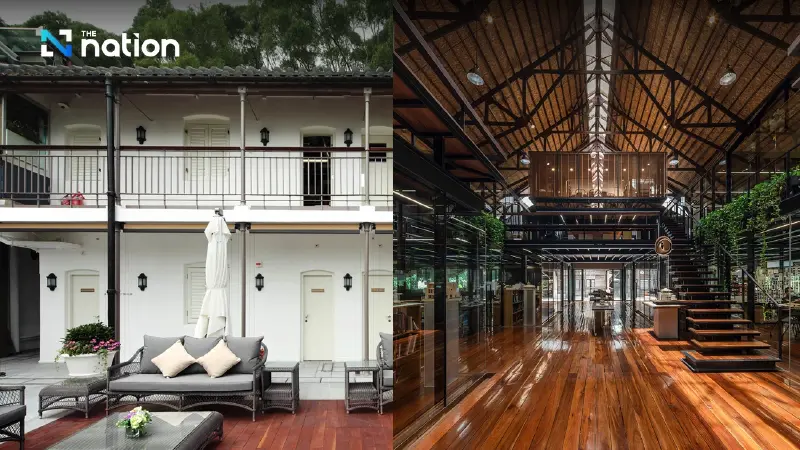
In Tai O, a fishing village in Hong Kong, a former marine police station built in 1902 now houses a hotel. Law said the building was converted in 2012 and received a UNESCO conservation award in 2013.
The restoration gave the building a new use.
Keeping it open meant finding a way for a small hotel to support itself and bring business to the village.
“We only have nine rooms and one restaurant,” Law said.
“So how can we sustain this project? First of all, we work with the local communities a lot.”
The hotel buys local ingredients and uses local services. It offers free guided visits to the building and takes visitors on cultural tours of the village.
The tours bring business to people outside the hotel, too. More than half the staff come from Tai O or nearby areas. They can tell visitors about life in the village through their own families’ experiences.

Who will pass on the skills to care for these places?
A building can be restored even as the skills needed to repair it are disappearing. Nanda said conservationists should also pay attention to who still knows how to do the work and whether they have anyone to teach.
“I think craftsmen are dying out,” Nanda said. “So the emphasis on traditional craftsmanship would be critical.”
Selia Tan, Professor, Wuyi University, China, saw education as part of the answer. She described villages as classrooms where residents can teach from experience.
By visiting a site, future conservation workers can see things a drawing or report cannot fully explain: how people use a building, what they value about it and what skills they need to keep it standing.
“But I think we still need to focus on heritage conservation, and also education. Most of all, education, because a lot of people in our society still don’t have any idea of heritage,” Tan said. “We need more people to understand what heritage is.”
The roundtable also discussed using artificial intelligence to make project records easier to search. A team in one city could look up how another team solved a similar repair problem. More people could learn from those records, but they would still need enough knowledge to judge the answers the tool gives them.
“When you have good fundamental knowledge, AI is an enabler. It’s a tool,” one participant said.

What the next generation will inherit
Feng Jing, UNESCO Bangkok Representative, closed the event by calling for young people to help shape the future of the heritage they inherit. He also said communities should have a voice in decisions about their own heritage.
“Heritage conservation is ultimately about people,” Feng said. “Heritage conservation must remain firmly connected to the lives and aspirations of communities, and young people.”
In Tai O, Law described how that can happen. Young people from the village who work at the hotel can tell visitors how their families live and what the former police station means to them.
Over the next 25 years, more communities will face the same choice: which places, stories and skills do they want to pass on, and what will they need to do to keep them alive?
The UNESCO Asia-Pacific Awards for Cultural Heritage Conservation began in 2000. The programme recognises work by private individuals and organisations, as well as partnerships between public and private bodies, to protect or restore places of cultural importance across Asia and the Pacific.
In Thailand, recognised projects include Tamnak Yai, Devavesm Palace (2005), Amphawa Canal Community (2008), Samchuk Community and Old Market District (2009), Scriptures Hall of Wat Thepthidaram Worawihan (2011), The Residence of Phraya Si Thammathirat (2014), Kaomai Estate 1955 (2018), Mrigadayavan Palace Woodshop (2021), Neilson Hays Library (2021) and Rabindhorn Building (2024).
