
Patrick Stewart, Star Trek and X-Men actor, dies aged 86
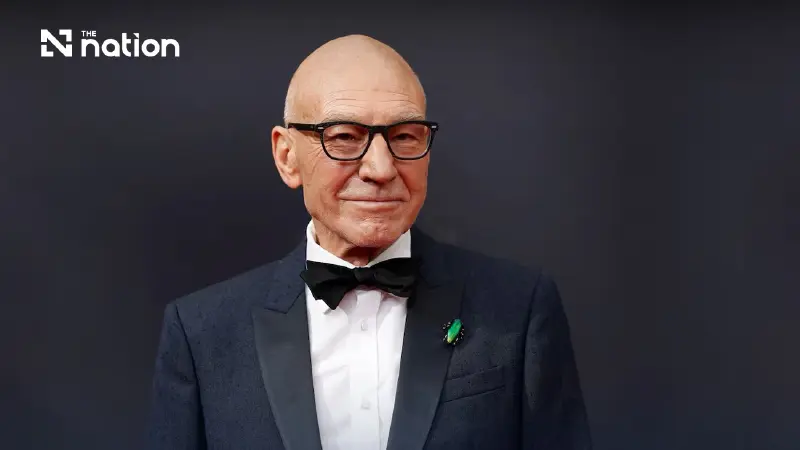


Patrick Stewart, who brought Shakespearean authority to Captain Picard and Professor X, has died at his Los Angeles home at the age of 86.
- Patrick Stewart, the actor known for playing Captain Jean-Luc Picard in Star Trek and Professor Charles Xavier in the X-Men films, has died at the age of 86.
- His death on October 28 at his home in Los Angeles was announced following a "brief and poignant journey with Alzheimer’s Disease and Lewy Body Dementia."
- Stewart was a celebrated Shakespearean actor who gained global fame in his late 40s when cast as Captain Picard in Star Trek: The Next Generation.
- In addition to his iconic Star Trek role, he played Professor X in numerous X-Men films, becoming central to two major science-fiction franchises.
Patrick Stewart, the Shakespearean actor who became a global screen star as Captain Jean-Luc Picard in Star Trek and Professor Charles Xavier in the X-Men films, has died aged 86.
A statement on Stewart’s X account announced his death on October 29, saying he had died the previous day at his home in Los Angeles, in the care of his wife, American musician Sunny Ozell.
The statement announcing Stewart’s death described “a brief and poignant journey with Alzheimer’s Disease and Lewy Body Dementia”.
Stewart’s career took him from a childhood in poverty in Yorkshire to the Royal Shakespeare Company, followed by leading roles in two major screen franchises. Knighted for services to drama in 2010, Stewart continued acting into his 80s and will appear in Avengers: Doomsday, scheduled for release in December 2026.

From Yorkshire hardship to the Shakespearean stage
Stewart was born in Mirfield, Yorkshire, on July 13, 1940. Stewart recalled that his father returned from the Second World War with alcoholism and post-traumatic stress, and physically abused his mother. As a child, Stewart sometimes placed himself between his parents in an attempt to protect her.
Acting offered Stewart what he called a “safe space”. A teacher introduced him to Shakespeare through The Merchant of Venice when he was 12, beginning an interest that would shape his professional life.
Stewart began losing his hair at 17 and was bald by 19. Initially embarrassed, Stewart eventually came to embrace his appearance.
Stewart became an actor at 18 and established his stage reputation with the Royal Shakespeare Company from the 1960s. Worldwide recognition came much later, when he was cast as Picard at 47.
Captain Picard brought global fame
Star Trek: The Next Generation ran from 1987 to 1994, following the original television series of the 1960s. Star Trek creator Gene Roddenberry returned to the concept after the earlier programme’s enduring popularity and the success of its spin-off films.
Roddenberry’s imagined future offered an optimistic view of humanity exploring the cosmos, travelling faster than light and encountering alien civilisations.
Stewart nearly declined the part. His longtime friend and fellow Shakespearean actor Ian McKellen had advised him to stay in the theatre rather than accept Star Trek.
Picard was conceived as a cerebral, disciplined contrast to William Shatner’s swashbuckling Captain James T. Kirk, whose adventures could sometimes tip into unintended comedy. Picard’s reserve, however, could also appear stuffy, humourless or self-important.
Stewart became a fan favourite, with Picard’s commands “Make it so” and “Engage” among the character’s recognisable catchphrases. The role made Stewart central to a commercially successful science-fiction franchise.
Stewart played Picard in 176 episodes across seven seasons, several Star Trek films and the streaming series Star Trek: Picard, which began in 2020 when he was 79.

Reflecting on The Next Generation in a 2022 interview with The Guardian, Stewart described the distinction between himself and Picard becoming progressively harder to identify over the seven seasons.
“So much of what I believed and felt went into that show,” Stewart told the newspaper.
Stewart also acknowledged that his seriousness initially extended beyond the character. In a 2023 interview with The New Yorker, Stewart recalled calling the principal cast together to complain about a lack of discipline and too much fooling around on set.
When a cast member protested that they needed to have some fun, Stewart recalled thumping his chair and declaring: “We are not here to have fun.”
Stewart’s colleagues never let him forget the remark. “They taught me so much about loosening up and being freer,” Stewart added.
Stewart was similarly critical of his early performance, believing his portrayal of Picard improved after the first two seasons.
“I found it lacking intimacy. It was very authoritative, but there were few other qualities in him,” Stewart reflected.
The series concluded with a two-part finale built around shifts in time, which the Reuters obituary singled out as a possible high point for the ensemble.

Professor X opened another screen chapter
Stewart initially resisted another defining role: the telepathic, wheelchair-using mutant Professor Charles Xavier, also known as Professor X, from Marvel’s X-Men comics.
“I said, ‘Look, I know this isn’t science fiction, but it’s fantasy, and I’ve done that,’” Stewart told The Guardian.
“But they persuaded me that it wouldn’t be like ‘Star Trek,’ so I did it. And yet again I was proved wrong,” Stewart recalled.
Stewart first played Xavier in X-Men in 2000 and returned in several films, becoming central to another lucrative franchise. McKellen appeared alongside him in some instalments as the villain Magneto.
Stewart also portrayed Xavier in Doctor Strange in the Multiverse of Madness, released in 2022, and filmed his return as the character in Avengers: Doomsday.
Marvel Studios paid tribute on October 29, describing Stewart as “a singular talent, a generous collaborator and a true gentleman”.
Knighthood placed Stewart alongside his acting heroes
Queen Elizabeth II knighted Stewart at Buckingham Palace in 2010 for his contribution to drama.
Stewart told reporters that his heroes included Laurence Olivier, John Gielgud and Alec Guinness, all of whom had also been knighted.
Being “in that company is the grandest thing that has professionally happened to me”, Stewart said at the time.
Stewart was married three times and had two children. His third marriage, to Ozell, took place in 2013.
