
The queen of history
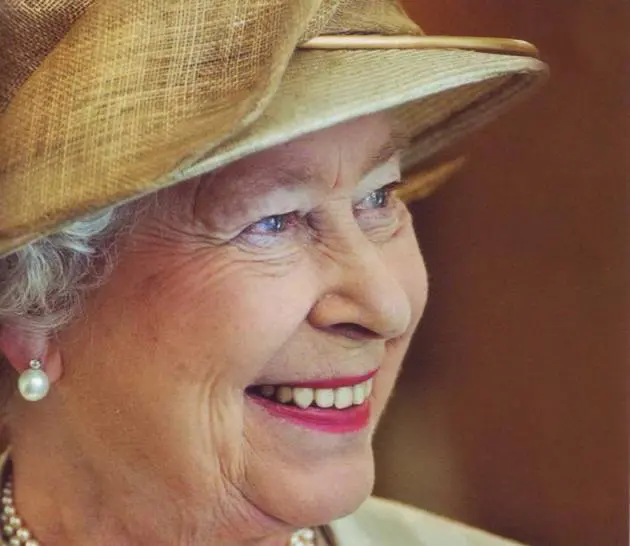


A complete and engaging biography of Elizabeth II explains her quirks and underscores her value
A fascinating historical figure to begin with, Britain’s Queen Elizabeth II becomes a fully rounded human being in this detailed and disarming biography, published to coincide with her diamond jubilee on the throne but in no way a mere celebration of her monarchy.
The real appeal of “The Real Elizabeth” is in the story’s telling. BBC journalist Andrew Marr’s prose brings to mind David Attenborough’s lively documentary narration – elegant, edifying, entertaining and seasoned with wry observations. Marr in fact treaded similar ground with his celebrated television series “The History of Modern Britain”.
Most people alive today have known no other British monarch. I was born in England just after her coronation in 1953 (and was nearly named Philip after her husband). In the longevity of Elizabeth’s rule, readers in Thailand will appreciate echoes of the enduring reign of His Majesty King Bhumibol – and the modern challenges to his role and relevance. They share more in common than might be expected of such distant lands and cultures.
So much has happened in all those years that it’s easy to forget many events, especially the ones pushed to the back of the memory by more recent developments. These days when watching Elizabeth we tend to think of Diana or William. It takes a good movie like “The King’s Speech”, about her father George VI, to retrieve the more distant past.
In this regard, “The Real Elizabeth” becomes an instant treasure, brimming with recollections from every stage of Elizabeth’s life, most of which reflect indelibly upon the history of the world, reaching all the way back to pre-medieval times if necessary to explain the “sacred” oils with which she was anointed upon being crowned.
As the pageant of history rolls forward, there are aspects to the Norman Conquest and George III that directly affect the queen’s business today, but, more tellingly, her private demeanour and her public persona are shown to come specifically from her father and mother, her uncle Edward VII and her grandfather George V.
Apart from these relatives and her husband, and certainly apart from the 13 prime ministers who’ve come and gone in her time, Philip’s uncle Lord Louis Mountbatten was prominent in her work and personal life. In the latter regard it was mainly as mentor to Prince Charles, but one of the book’s most telling passages about the queen stems from Mountbatten’s death.
Timothy Knatchbull, 14, was aboard the admiralty lord’s small private boat when an IRA bomb blew it apart in 1979, killing Mountbatten – his maternal grandfather – as well as his paternal grandmother and his twin brother. Queen Elizabeth had him and his spared sister brought to Balmoral Castle while their badly maimed parents recovered in hospital.
They arrived in the early hours of the morning and expected to search out their own rooms in the sleeping country house. But the queen and Philip, sleepless with concern, came “steaming up the corridor at us,” the boy reported. “It had this sort of feeling of a mother duck gathering up her lost young … And it was a wonderful moment, total surprise. And they led us to the back of the house where they had soup and sandwiches – no one else around.”
The Queen of Great Britain and Northern Ireland (and Canada, Australia and 12 other Commonwealth nations) showed them their rooms, unpacked their bags, hung up their clothes and each day supervised the dressing of Timothy’s wounds while tending to the healing of the children’s hearts.
If this is a lovely revelation about “the real Elizabeth”, Marr coaxes more of the same from Princess Anne, the queen’s own daughter, and he’s far from finished.
There’s a secret to Elizabeth’s characteristic dour facial expression. Several of Marr’s sources explain that she’s not really grimacing at the crowds of well-wishers or scowling at troops on parade. That’s her default expression when she’s struggling to overcome surging emotion. Wishing to maintain dignity above all else, she pulls a mask over what might otherwise be tears – of gratitude, of pride, of an admiration that’s mutual.
Marr is astute in assessing the queen’s dealings with heads of state, particularly when crises arise at home or abroad in the Commonwealth. Constrained by law from interfering with government, she has displayed wisdom and delicacy, though tact has been ill-advised among despots like Idi Amin and Robert Mugabe and bigots like Ian Smith of the former Rhodesia.
The queen comes off better in the author’s analysis of her wealth, a chronic ache and target for left-leaning lawmakers whenever the economy falters. She’s extremely rich, of course, but a breakdown of the figures shows that, in financing the monarchy, British taxpayers have always got a bargain, even before she joined them in paying income tax in 1993.
What they receive in return becomes evident in yet another surprise-filled chapter, this one about the old royal yacht Britannia, now a dockside tourist attraction in Edinburgh. Assailed as an anachronistic luxury, it in fact more than paid for itself in the form of national prestige and actual income from foreign investments secured on board. The queen is in turn cast as a sort of global brand, a guarantee of dividends for overseas corporations.
The monarchy deserves its subjects’ support, Marr inevitably decides. “You would have to have an elephant-hide layer of republican sentiment to resist.”
The Real Elizabeth: An Intimate Portrait of Queen Elizabeth II
By Andrew Marr
Published by St Martin’s Griffin, 2012
Available at Asia Books, Bt535
Reviewed by Paul Dorsey
