
Sitting in with a younger crowd


Play
The new designs at the Milan Furniture Fair are low-priced and comfy
High-end home furnishing at prices that are no longer high: That was the trend at the recent Milan Furniture Fair where much of the world goes to see cutting-edge furniture design.
“It’s not enough any more to be innovative and offer high-quality products,” says Claudio Luti, president of Milan’s trade-show organising company Cosmit. “There’s way too much competition for that. Companies need to develop a perfect sales strategy.”
Anyone visiting Italy right now will not miss evidence of the euro financial crisis. The domestic markets of southern European countries have almost slowed to a halt. So the industry is thinking harder about how to attract new types of customers.
Price plays a big role in the age of Internet commerce. It’s noticeable now how many furniture makers are putting more affordable products on the market.
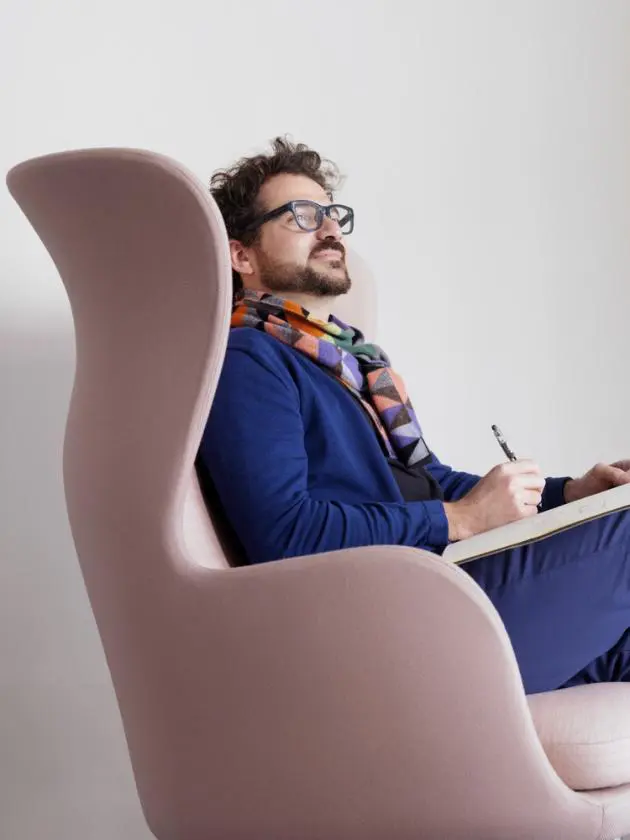
Fritz Hansen, which is best known as a high-end Danish furniture maker, has brought out a chair called “Ro” from the Spanish designer Jaime Hayon which costs just under US$2,600 in Europe, way below the usual Fritz Hansen level. Furniture Manufacturer e15 is selling a chair by Stefan Diez called “This That Other” for just $326.
The chair has a simple construction design and therefore can be made cheaply.
Marketing companies are re-focusing their strategies on young buyers – and on those who have a “young” outlook on life. This year sees yet another group of under-40-year-old designers dominating the market.
Among them is Benjamin Hubert, who was born in 1984, and who has produced an armchair called “Cradle” for Moroso and “Membrane” for Classicon.
An often-heard name at the Milan Furniture Fair this year was that of the 32-year-old German designer Sebastian Herkner. Pulpos showed off his side table “Layer” and Moroso his chair “Bangoli”. Furniture maker Very Wood is producing Herkner’s new lounge chair “Unan”.
Luca Nichetto, born in 1976, is the most important designer of his generation in Italy. Among the highlights at the fair were products designed by him in cooperation with Japan’s Oki Sato.
Furniture makers have also been responding to the new market conditions with a “slow brand” approach. Japanese company Maruni Wood Industries has taken that to heart. “We don’t want to develop too many products for the market,” explains Maruni’s creative director, Naotot Fukasawa. This year, the only new additions to Maruni’s catalogue are a bench from Jasper Morrison and a folding chair from Fukasawa.
The design label Established and Sons is taking yet another direction. The company showed off exclusively one-off items including a wall object by Zaha Hadid and work by Barber Osgerby. The aim is to reduce the firm’s catalogue and grow demand at the same time.
The approach also provides access to the art market in addition to its traditional furniture clients.
In times of financial crisis many Europeans are looking for security and are withdrawing to their own four walls. Comfort is therefore a topic and that in turn has led to lavish and elaborate decorations no longer being viewed as vulgar.
That accounts for why the furniture company Arper is making accessories, pillows and covers. Even Konstantin Grcic, who normally puts great value on a certain level of bulkiness, has been working on developing his “cuddly” side.
For Magis, Grcic has designed an entire collection called “Traffic”, including sofas and armchairs. He has also created a chair series for Emeco called “Parrish”, which is now on the market.
