
CARING FOR THE CRITICALLY ILL


Play
Philips Visicu brings its eICU system to Thailand to take the strain off the country's overworked medical personnel
One doctor to one patient is the ideal model for healthcare but it’s one that’s unlikely to ever be achieved here in Thailand, where one doctor often has to take care of somewhere between 1,000 and 2,000 patients.
But caring for the seriously ill could be about to improve thanks to the advent of telemedicine technology, which eases the burden on the medical workforce and strengthens the resources of any critical care unit.
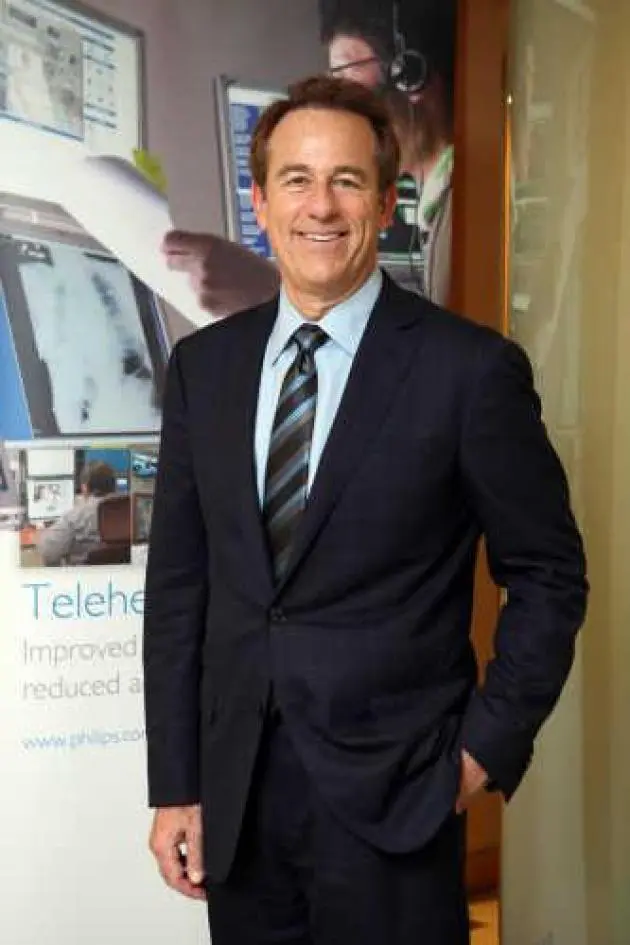
Executive vice president and chief medical officer of Philips Visicu, Dr Brian Rosenfeld, was recently in Thailand to present the company’s eICU systems to Thai hospitals. Blending medicine with technology, this care model remotely monitors ICU patients and has been adopted across the US.
In Thailand, both public and private hospitals are increasingly adding more beds to their critical care units to meet demand but lack the staff to provide monitoring around the clock.
“When patients are admitted to ICU, they feel safe because they think they will be watched by doctors all the time. While that’s true, the doctors are residents rather than ICU specialists. Also, coverage care in the daytime from Monday to Friday is very different from nights and weekend,” says Rosenfeld, adding that this situation is the same in the USA, a nation where pro rata staffing levels are considerably better than in Thailand.
The eICU, he adds, has been developed to ease the burden.
A hospital choosing the eICU system is responsible for providing the hardware and recruiting nursing staff and ICU specialists who will connect remotely with ICU patients and their bedside care teams. Philips-Visicu provides the software.
Networks are set up via camera, speaker, microphone with online monitors at a patient’s bedside allowing for easy data transmission to the remote eICU team, who continuously monitor patient conditions and alert bedside staff of potential problems as well as guide them through the proper interventions.
The system is particularly beneficial for leading hospitals who have networks or branches in provinces, as it allows ICU specialists to oversee and give guidance no matter where they are based.
An intensive care specialist with training in internal medicine, pulmonary medicine, Rosenfeld served as the medical director of two critical care units at The Johns Hopkins Hospital.
He maintains that specialists don’t need to touch patients in ICU while examining them so there is no difference between having a doctor on the ward or in front of a computer screen in the eICU.
“Physical exams in ICU have limited value. In fact, physicians at some hospitals in the US don’t make bedside rounds but view their patients via a conference centre. Most things you can do remotely,” says Rosenfeld.
When they launched the system in 1988, Visicu’s aim was to allow one doctor and one nurse to take care of 50 ICU patients. Today, that ratio is one doctor and three nurses for 150 patients. “In the US, we have a doctor in Tel Aviv working with nurses in Phoenix, Arizona and serving as a hub for ICU patients in different areas,” he says.
Infrastructure competence and good Internet technology are key to critical communication and Dr Rosenfeld says that Thailand is pretty good in this regard and better than in some parts of the US. Thai physicians and nurses, he adds, are well trained compared to other countries in the region.
After the initial investment of around US$4-5 million (Bt120-Bt150 million), the hospital can then set a fee to their peer hospitals. Philips provides a clinical team to set up the hub, trains the personnel and works with them for the life of the contract.
The team also constantly evaluates the ongoing process and recommends when and how to fix problems.
