
How the Aussies get along


Australia is home to millions of immigrants and authorities work hard to promote multiculturalism and peaceful co-existence. "We are, and will remain, a multicultural society," the government proudly proclaims.
Senator Kate Lundy, Australia’s Multicultural Affairs minister, in May unveiled a A$4.55-million (Bt129-million) “Building Multicultural Communities Programme” that will provide grants to community organisations for enhancing “social inclusion” and creating opportunities to bring together individuals and families.
Efforts are ongoing on various fronts to make new residents feel at home in Australia, regardless of their ethnic, religious or cultural background.
The Australian Federal Police force’s Community Liaison Team in Melbourne is reaching out to Muslim communities in particular, as Thai journalists learned on a recent visit organised by the Australia-Thailand Institute.
“For example,” said Anisa Sharif, a Muslim member of the team, “I really hope to see youth grow up feeling proud about being not just Australians but also Australian Muslims.”
The team was established in 2006 amid signs that some Muslims mistrusted the Federal Police, evidently as a result of Western military intervention in their home countries.
“So we have reached out to the schools that the Muslims attend,” Sharif said. “We have also reached out to the mosques. Not only do we talk to them about what we do, but we also listen to them.”
The team aims to develop good relations with local communities, encourage people from diverse backgrounds to apply for roles in law enforcement, and allow the communities to educate the police about their religion and culture.
Sharif said many activities have been organised to connect with these communities. Sports tournaments bring together youths of mixed ethnic backgrounds with police officers serving as their coaches and the kids take on the cops in friendly matches. There are feasts, “mosaic” workshops and even an Adopt-a-Cop programme.
“That’s where Muslim families invite policemen, from junior to senior level, to have dinner at their homes,” Sharif said. “The response has been good”.
Fear and distrust of the Federal Police seems to have lessened thanks to the bonding activities, she said, and more Muslims have applied for jobs in law enforcement. “It’s good to have people from various backgrounds joining us,” she said.
The City of Greater Dandenong, a suburb of Melbourne, has residents from 156 nations, and it’s still only the country’s second-most culturally diverse locality. About 60 per cent of its population of 140,000 was born overseas. The main countries of origin are Vietnam, Cambodia, Sri Lanka, India, China, Italy, Greece, Bosnia, Afghanistan, New Zealand and Britain.
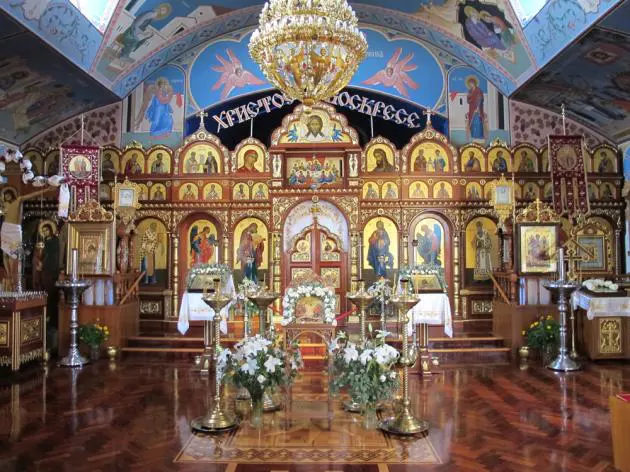
And with them, the immigrants bring their various religious beliefs. So the city council has actively worked with the Interfaith Network of Greater Dandenong to promote harmony and peace among its residents. Every two weeks leaders of different faiths take turns leading prayers at the council meetings.
“We have never seen any hate crime in our municipality,” Mayor Angle Long said.
The Interfaith Network was founded in 1989 and is considered the first of its type in Australia. Its goal is simple: promoting understanding, respect and tolerance for each other’s beliefs by living together in peace and goodwill.
Thanks partly to its efforts, the mix of cultures and faiths has benefited Dandenong. Its residents enjoy multicultural restaurants, shops, places of worship and sports clubs.
Venerable Oi Sam, a Cambodian Buddhist monk at Wat Buddharangsi in Greater Dandenong, said people of other faiths often greet him warmly when he’s out in the community, and some even pass on donations. He feels such gestures reflect a level of respect
for different faiths. “The signs are encouraging,” he said.
The monk regularly attends monthly Interfaith Network meetings with leaders of other local religions and said the gatherings have made them quite close. They have stood united in times of crisis.
“During the first Gulf War, for example, Christian ministers, Muslim imams and Jewish rabbis offered prayers next to one another at city council meetings,” said Helen Heath of the Interfaith Network.
During the Baltic conflict of the 1990s, leaders from the city’s Serbian Orthodox church, Bosnian mosque and Croatian Catholic church pooled their efforts to help new immigrants – refugees from the war – understand that Dandenong was a bastion of community harmony. They had nothing to fear here – and no reason to cling to animosities from their homeland.
NEWCOMERS
More than a quarter of Australians were born overseas. The top 10 countries of origin for immigrants in 2010-2011:
- New Zealand
- China
- United Kingdom
- India
-The Philippines
- South Africa
- Sri Lanka
- Vietnam
- Iraq
- Malaysia
