
As determined as Dilmah


Play
The Lankan tea firm that broke the monopoly's back is 25 years old
SRI LANKA’S DILMAH, the world’s first producer-owned tea maker, is celebrating its 25th anniversary this year by honouring founder Merrill J Fernando, the man who liberated the island-nation’s tea plantations from foreign exploitation.
Fernando wanted to work as a tea taster, but British expatriates keenly guarded the profession. He was fortunate enough, however, to be selected for training in London’s Mincing Lane, the industry’s global “headquarters”, and there observed how dysfunctional it was.
His homeland’s tealeaves, so painstakingly picked by hand and processed according to a traditional, even artistic, process, were being manhandled en route to and on arrival in Europe, a cheap commodity that only gained market value once it was branded and packaged.
So Fernando took it upon himself to give tea the respect it deserved, and finally – after 38 years of effort that his rivals and government did nothing to ease – wrested enough control from the post-colonial authorities to launch Dilmah in 1988 as the country’s first producer-owned brand. It’s now one of the world’s top 10 brands.
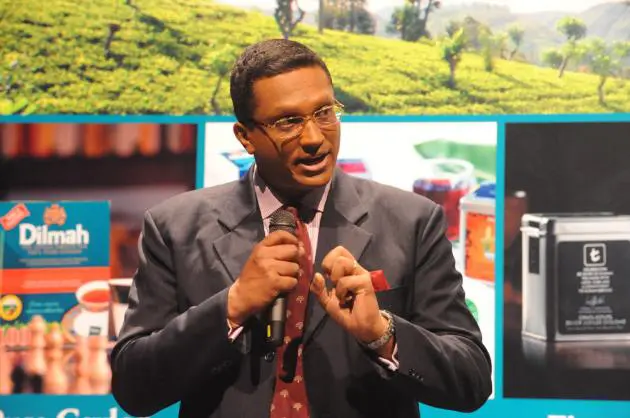
The name comes from those of Fernando’s sons, Malik and Dilhan, who work for the firm today. It was Dilhan Fernando who joined Thai enthusiasts at an anniversary dinner party last week at the W Bangkok hotel.
“All the growers in Sri Lanka now have to bring their produce to a central auction where anyone can buy,” he said. “And basically we buy our own tea back, which is a good system because it keeps the price fair for the producers. So, if we produce beautiful tea and we want to keep it, we have to pay more. In the past we had big companies from abroad buying up the plantations so they could have the tea very cheaply, which obviously was not good for the workers or the plantations.”
Fernando said quality is the top priority – and the firm has no compunction about charging a higher price for it to cover its costs. “If tea isn’t your real passion, it’s a very difficult business because it’s not hugely profitable. The teas you have in the supermarket are made to keep the price low – they’re a mix of teas from all over the place. My father saw it differently. He thinks it’s important that customers know where the tea comes from. As with wine, each region produces a different taste and quality.”
Single-origin tea offers the same desirable feature as the best wine – the terroir, the “sense of place” that imparts a unique taste and gives it identity. Dilmah leaves are handpicked, withered, rolled, oxidised and fired and then swiftly packed to ensure freshness, all parts of a tradition perfected over centuries.
You’ll see Dilmah teas on the shelf bearing the names Ceylon, Favoured, Natural Green, Speciality, Herbal Infusion, Boutique and Gourmet.
Now the firm has “tea schools” in Sri Lanka and France where students learning the hospitality trade can see how the best brews are made and how well tea can be incorporated into food and other beverages. The company sponsors events around the world where top chefs and mixologists concoct creative tea-infused food and cocktails.
Then there’s the Dilmah “t-Bar”, where the gourmet teas are served along with tea cocktails and tea food. There are 12 of them, from Poland to the United Arab Emirates to Chile.
Thailand still awaits its own t-Bar, but the tea-infused dishes presented at the anniversary five-course dinner were delightful. The tea cocktails made use of blueberries and pomegranate, and there was tea-infused salmon, Earl Grey-smoked pork tenderloin and halibut fillet served with Rooibos-tea-cream sauce.
EAT YOUR TEA
>>>Discover more about Dilmah at www.DilmahTea.com. Its online shop has free recipes for tea cocktails and food.
