
Drawing a career


Play
There are Thai animators behind the osca-winning success of Disney's "Frozen"
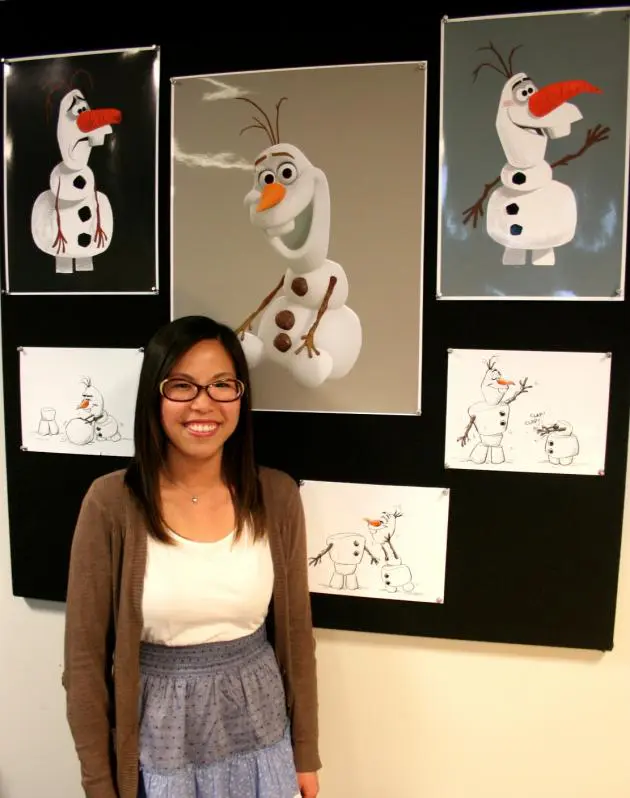
The photo of grinning animator Fawn Veerasuntorn’s clutching the Oscar statuette awarded to Disney for the hit movie “Frozen, went viral within minutes of being posted on the Disney Thailand Facebook page and reminded her fellow Thais that local talent is alive, well and thriving in Hollywood.
The photo, along with a later Facebook post stating that three talented Thais actually worked on the film, has given a much-needed lift to the Kingdom’s young animators, many of whom dream of landing a place with Disney.
In a recent Skype chat with the Nation Channel’s “Nation Midnight”, Fawn revealed that four Thais are working for the Walt Disney Animation Studios in Burbank, California.
While stressing that getting in to Disney or indeed any Hollywood animation studios is not a walkover, Fawn makes the point that it’s not impossible either.
Fawn was studying medicine at Ramathibodi Hospital’s medical faculty when she decided that drawing not doctoring was her dream. She took matters into her own hands by sending her portfolios of drawings to fellow Triam Udom Suksa school alumnus Paitoon Rattanasirintarawut, who was working with Disney, and asked him for his comments and recommendations. He advised her to further her studies at Columbus College of Art and Design in the US then apply for a job in professional storyboarding, character animation, illustration or filmmaking at Nickelodeon, Warner Bros and Disney
Fawn did as he suggested and was eventually taken on by Disney, most recently playing a key role in the 600-member team who worked on “Frozen”. As a storyboard artist, Fawn helped shape the story of a princess on an adventure in a frozen land, searching for her misunderstood magical-powered older sister. Also involved were Thai visual-development artist Sunny Apinchapong and effects apprentice Rattanin Sirinaruemarn.
Kompinn Khemkamnerd, director of the first Thai computer-animated feature “Khan Kluay”, is another example of a successful animator who worked with Disney during the golden age of 2D animation, putting pen to paper for “Tarzan” and “Atlantis”.
Kompinn, who was inspired by “The Lion King”, applied to study at the California Institute of the Arts after watching a TV interview with Disney veteran Sunny.
The college, he says, is a portal for entering Disney as both Disney and Pixar Animation often look there first when they seek new talent. Kompinn was among those recruits and stayed with the Disney for two years before moving to Blue Sky Studios as an animator on “Ice Age”.
Kompinn remembers his Disney days with fondness and still recalls being overwhelmed at meeting the authors of “The Illusion of Life: Disney Animation”, Ollie Johnston and Frank Thomas, “old-school” animators whose careers at Disney stretch back to the studio’s first cartoon feature, 1937’s “Snow White”.
Fawn, who works as a story artist, says her focus is more on scriptwriting work while a story visualiser is closer to filmmaking. In animation, she explains, the story artist transforms the script into pictures that represent story moments visually to see how a sequence will fit in with the rest of the movie before going into full sequential boards. Sometimes they add, change or retell the story in a way that works better visually.
Once they’ve completed the story idea, they present this in a screening for senior staff and if their idea is accepted, then their shots will be included in the final scenes.
“The work of a story artist involves a lot of discussions and these are in English, so it was tough for me at first,” Fawn says.
Each project, adds Kompinn, spends around five years in development and starts with a core staff of around 10 to 20 people before increasing to 500 to 600 as it nears completion.
While Disney has traditionally been the ultimate dream job, many budding animators are turning their attention towards such relative upstarts as Pixar and Dreamworks.
Pavidcha “Win” Arayaphong who left Dreamworks Animation late last year after working for two years as a visual development artist in the art department, says that people in animation industry are all a tight-knit bunch even if they are working for rival studios.
And with only a few Thais in the industry, they are all close friends and exchange their experience through the social networks or over drinks.
Win graduated from Rangsit University’s Faculty of Architecture before deciding to study animation at Seattle’s Art Institute. His career has taken him to game companies, Lucas Films and Dreamworks. He says that when he applied for Dreamworks, selected drawings from his portfolio were printed out and left for the supervisor and staff to pick up.
“You never know which art piece they will print out. It may not be the best piece,” says Win, whose credits include “The Penguins of Madgascar”.
An animator might be hired simply because a piece in their portfolio happens to match a project being worked on at the time while other talented artists are ignored because their drawings don’t fit.
“The problem for Thai animators is we are very much influenced by Japanese animation, which is totally different from America’s. So if you want to work with the Hollywood studios, you must learn to apply your drawings to fit their concepts, otherwise your portfolio will be ignored,” says Win.
Win says that working with a Hollywood studio is tough and often depressing but “the situation pushes us to work hard and improve our skills gradually”.
Being laid off is also part of the game, with Kompinn saying it’s quite normal to be put out to pasture when a project flops only to be hired again for another project.
Fawn says that anyone who wants to work at Disney or another major studio shouldn’t give up even if they get rejected.
“I applied for a job at Disney three times after working for years in other places. When I applied, I didn’t have high hopes, just knew that I had to proactive,” she says.
She does however recommend that would-be candidates work hard on their observation skills. “I have my sketchbook with me every time I go out. I draw anything that impresses me instead of writing a memo. It’s a great way of conveying my thoughts through animation,” she says.
The former medical student reckons that Thai kids spend so much time at cram schools that they often fail to look for careers in which they are interested
“I was no exception, I studied both after school and on weekends and it was only when I entered medical school that I realised what really interested me as a career. Thai kids should use their summer vacation to find out what they like,” she says.
Fawn is currently working on Disney’s “Zootopia”, which will be released in 2016.
