
In the dark of the Arabian nights


Play
Obviously TE Lawrence's victory in the Middle East was in vain. Jihad overshadows this painful biography
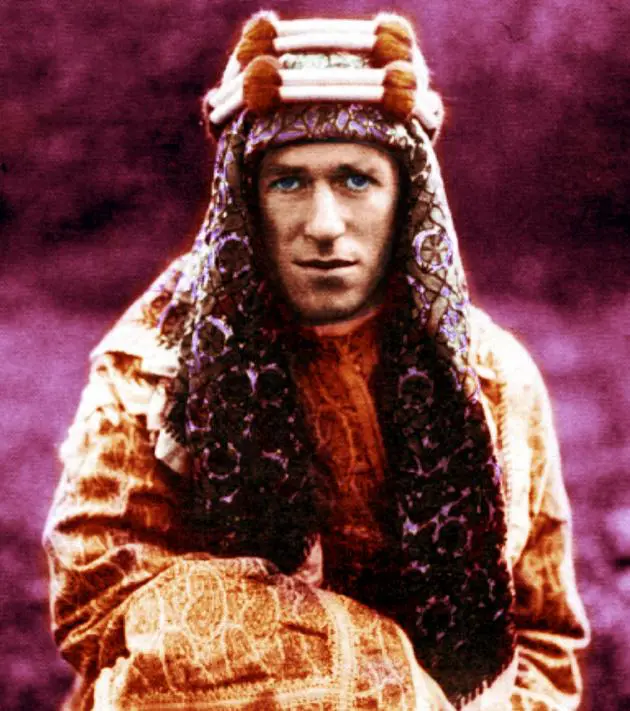
Perhaps the most remarkable thing to emerge from Scott Anderson’s biography of the English army officer who became world-famous as Lawrence of Arabia is how unnervingly accurate was Peter O’Toole’s portrayal of him in the Oscar-winning 1962 film.
Anyone watching the movie “Lawrence of Arabia” without benefit of biographical facts can’t help but grimace at O’Toole’s affected twitchiness, his fey aloofness and his boorish arrogance. Yet that was Thomas Edward Lawrence to a tee.
He was a basket case, emotionally damaged in youth and emotionally tortured to the point of psychopathic madness during the course of World War I. It’s a wonder he survived long enough to meet his end in a comparatively peaceful motorcycle crash in 1935 at age 46.
Not that Anderson, an American war correspondent, seeks to denigrate Lawrence. His account is even-handed to a fault, giving his subject’s detractors ample voice while never forgetting that Lawrence deservedly remains a hero, not only in Britain but in some sectors of the Middle East.
Anderson readily acknowledges Lawrence’s testing obnoxiousness, but so conflicting are recollections by his contemporaries that biographers (and filmmakers) can’t help but be ambiguous. There is Lawrence’s apparent homosexuality, too, and, importantly, strong indications that he was a masochist, a condition that certainly has a bearing on how we judge his conduct during the war.
For lack of definitive evidence, we are left with coyness. In his own dreamy memoir, “Seven Pillars of Wisdom” – even in his private letters to close friends – Lawrence was nothing if not coy. This fog of unrequited surmise makes for disappointing reading.
Most important of all, and most annoying, is the unresolved debate as to whether Lawrence resigned himself near the end of the war to ensuring his personal survival in the ranks, abandoning the Arabs he fought alongside to a woeful colonial fate.
His post-war efforts to salvage a better course for history notwithstanding, Lawrence ultimately called the Allies’ achievements in the Near East a “triumph”. By then Syria, which he and his co-warriors foresaw as part of a vast sovereign Arab state, was already in French hands, its western coast carved off as British Palestine. Only the Bolshevik Revolution prevented Turkey from being handed off to the Russians.
Syria, Palestine and the rest of the modern Muslim Middle East – there is the harsh rub that shadows Anderson’s book. In condemning the Christian allies’ appalling, faith-trampling pursuit of empire, here at least Anderson can stop being coy. He is scathing about the futility of “the Great War”, wreathed as it was in secret government pacts. It was, he writes, “a chance for Europe’s kings and emperors, many of them related by blood, to act out old grievances and personal slights atop the heaped bodies of their loyal subjects”.
Steeped in the culture of the Middle East, Lawrence warned his superiors that the faith of the Arab tribes they needed to beat the Ottoman Turks had to be earned. “We have appropriated too many Moslem countries for them to have any real trust in our disinterestedness.” Failing to honour that trust would have drastic consequences for the region, he predicted. And so it has.
Lawrence soon learned of the Sykes-Picot Agreement struck between Britain and France to divide up Syria after the war, a top-secret fait accompli that spat in the face of Allied promises to the Arabs waging war at least partially on their behalf. Captain Lawrence committed treason in warning his Arab friends that a deal had been done – and then he persuaded them to continue the fight anyway, in the hope of eventually overturning the agreement.
And yet he knew that the cause of pan-Arab sovereignty was already lost. Anderson notes Lawrence’s cynical view that the aim of a cohesive state was “something of a mirage” thanks to “the differences between [their] radically varied cultures” – even if the Allies were to enable them. Nor were the Jews and Arabs ever likely to maintain harmony in Palestine. Just too many Jews came flooding in, ultimately submerging Arab tolerance.
While the Allies’ epochal betrayal is rendered clearly enough in the book, Anderson is short on details as to how it shaped the region in the present day by triggering the domino effect that has delivered us into the hands of al-Qaeda and the Islamic State.
Instead, “Lawrence in Arabia” is the story of four Westerners engaged in “the Great Game” of espionage and disinformation by which the Allies won the geographical chess match. Lawrence was one of them. The others are the American oilman William Yale, the German operative Curt Prufer and the Jewish Zionist Aaron Aaronsohn. All of them ran spy rings during the war.
Anderson follows their progress in a chronological but somewhat dizzying swirl of episodes, but thankfully Lawrence remains the primary focus throughout, and the only one who commands any empathy, as vaporous as that might be.
His famous victory at Aqaba is wonderfully described, as are the march on Damascus and the guerrilla skirmishes in the desert, when he and his men were “drifting about like gas”, as he put it, meaning the chlorine gas used on all battlefronts in that terrible war.
The heart of the book, though, is in the mind of the man. TE Lawrence was sometimes charming, sometimes infuriatingly audacious. His complexity was Freudian. His mother beat him in childhood. She was a “commoner” for whom his father abandoned a baronetcy, and the family lived “on the run” from the shame of it. As a man, Lawrence once paid another soldier to whip him and, apart from that one treasonous moment among the Arabs, he was forever keeping secrets.
Lawrence in Arabia:
War, Deceit, Imperial Folly and the Making of the Modern Middle East
By Scott Anderson
Published by Anchor, 2014
Available at Asia Books, Bt535
Reviewed by Paul Dorsey
