
Double the size, double the pleasure
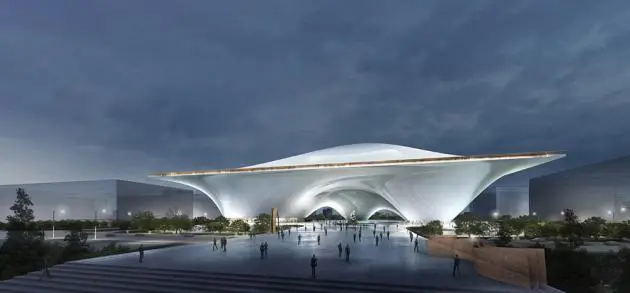


The National Art Museum of China, at twice the size of Louvre, is set to be the world's largest
Home to many museums and art galleries, Beijing will soon also host the world’s largest art museum when the new National Art Museum of China begins construction next year, say officials with knowledge of the design of the planned structure.
“If we put in parallel the Palace Museum with the Louvre, the National Museum of China with the Orsay Museum, we think the new museum should play a role similar to the one the Pompidou Centre plays for France,” says the museum’s deputy director Xie Xiaofan..
NAMOC, the planned museum’s acronym, has held a series of discussions on what kind of an art museum China needs after it announced in September that French architect Jean Nouvel would spearhead the project design along with the Beijing Institute of Architectural Design.
The new museum of nearly 130,000 square meters, twice the size of the Louvre, will stand on Beijng’s axis and next to the Olympic Stadium. The vast art museum will be Beijing’s new culture centre together with two colossal complexes, the Chinese Classics Centre and an exhibition centre for Chinese crafts and cultural heritage.
Plans call for permanent and temporary exhibition galleries, research and education centres, reserves and public space, and a service sector. NAMOC will house collections of more than 100,000 pieces from the Ming Dynasty (1368-1644), featuring ancient Chinese paintings, calligraphy, etchings, folk art, sculptures and videos.
The show space of more than 500,000 square metres, will mainly display Chinese art works from the 20th century and welcome shows of artists from around the world. It will have separate galleries for etchings and crafts, and for foreign art.
According to Xie, the design should follow the idea of “the time” – meaning the new facility must set a tone for the future buildings of its kind in China – and “the place” meaning it should match its surrounding environment, especially the city it calls home.
Since 2012, when the project was launched, the museum has received 18 design plans from across the world, including from such famous architects as Frank Gehry, who designed the Guggenheim Museum in New York. But the design plan from Nouvel’s firm Ateliers, inspired by the single brush stroke of the Chinese character “one”, caught China’s attention.
“Jean Nouvel’s design is more than simply using Chinese symbols. It doesn’t stress Chinese elements on purpose. But you can feel that’s a Chinese art museum immediately when you see it,” says Xie.
Stefan Zopp, the architect from Ateliers who is in charge of the Chinese project, says Nouvel’s team tries hard to match their designs with its surroundings, especially the other two art centers that will mainly display the classics of Chinese culture.
According to the design sketches Nouvel released in September, the museum will be wrapped by a perforated facade to filter natural light into an internal garden. A gold ceiling offering a view of Chinese art and culture from the 15th century will crown the summer hall, and plans also call for a sprawling open-air roof terrace that blurs the boundary between the sky and the roof.
However, there is more to think about than the appearance of an art museum, such as its function and who it will serve, says Tang Keyang, director of the research centre for art and architecture at NAMOC.
Fan Dian, who was the museum’s director until September, says that the new NAMOC will make more efforts to serve the public.
Tang notes that China’s museums face particular challenges. For instance, there is free admission, and the large number of visitors pouring into museums every day forces designers to consider exhibition spaces differently. The country’s museums also provide Western-style food for visitors as well as Chinese restaurants offering shredded pork with garlic sauce and other local favourites.
“People will likely pay the most attention to how the vast art museum will look,” says Tang. “But we should let them see more than the appearance.”
