
No space here for derelicts


With high hopes of its own, Seoul takes a look at New York's brillian high line
AN ABANDONED elevated-railway line is reborn into a lovely public garden. A derelict factory becomes a food cosmopolis, attracting not just local grocery shoppers, but also foreign tourists.
The former is the High Line and the latter Chelsea Market. Both in Manhattan, New York, they are regarded as the most celebrated urban reuse projects of our time.
The architects behind the two projects shared their experiences in Seoul, a city with noticeable design aspirations.
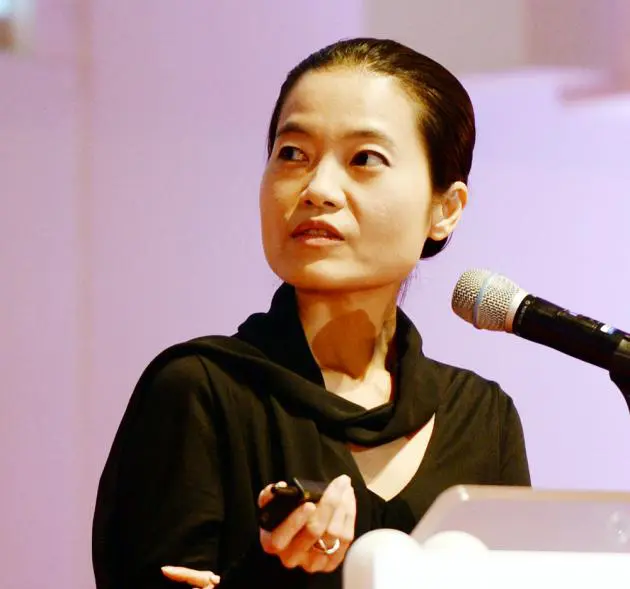
Speaking at the Herald Digital Forum 2014 on November 26, Nahyun Hwang, the High Line renovation’s lead project designer, introduced her work as “the reprogramming of the city”.
“Many cities are at the end of their developmental cycle and are thinking about the way forward and what development should mean for the future of the city,” the New York-based Korean architect explained.
Increasingly around the world, there is a conflict between the existing spaces and what needs to come next, she said, because “the aspirations of the past are oftentimes not relevant to the desires or needs of the present or the future.
“The idea is to turn some of these spaces into newly programmed spaces that can do something that is necessary for the city,” said Hwang, now a partner of NHDA Architect+ Urbanism and a teacher at Cornell University.
Her most acclaimed work, the High Line project, began in 2006, re-purposing the abandoned freight-rail line into an urban park. Its third and final section officially opened in September. Seoul recently announced a similar plan to turn an elevated road near Seoul Station into a public park.
Hwang pointed out that many years of planning through consultation with the city authorities and communities preceded the actual design and construction work.
Jeff Vandeberg is the architect who transformed a biscuit-factory complex into what is today’s Chelsea Market, an indoor food mall with many small delis, restaurants and meat and fish markets.
With a lot of photos, he explained in detail how he came up with the idea of making a central concourse |in the middle and then a sequence |of individual riffs, such as the waterfall inside the building and brick arches.
“One of my concerns is the loss of memory. Of course, not everything is worth preserving, but I believe the old can be integrated into the new,” said the guru who has made his name converting old warehouses and factories into lively, modern spaces.
As to the spaceship called Dongdaemun Design Plaza, which happens to serve as the venue for this year’s design forum, the two architects had similar impressions: Terrific as an “object”, but lacking reference to the history of the neighbourhood.
