
Staying safe from cervical cancer


Play
Though still a little expensive, an HPV screening test in addition to a Pap Smear can save your life
For years the most common cancer found among Thai women, cervical cancer has now been overtaken by breast cancer. That’s not to say the incidence has decreased. Today, 8,184 new cases are being diagnosed every year – that’s 22 a day – and the mortality rate is high too with an estimated 12 women dying from the disease everyday.
Roche Diagnostics (Thailand) recently set out to raise awareness of HPV, the Human papilloma virus that’s a major cause of cervical cancer and to stress the importance of using the HPV screening test to better assess the risk of cervical cancer among Thai women,
Dr Nuttavut Kantathavorn, a Gynaecologic Oncologist at Chulabhorn Hospital, says at that although the number of cancer cases have decreased very slightly, prevention still needs to dramatically improve.
While Thai women undoubtedly are more knowledgeable about cervical cancer than their mothers or grandmothers, many are still too shy to go for the test. Thus when symptoms do occur, it is usually when the cancer is relatively advanced and difficult to treat.
“Early detection is crucial,” stresses Nuttavut.
Most HPV infections have no symptoms. The cure rate for cervical pre-cancer is 98 per cent. However, once it has developed into cancer and spread to other organs, only 20 per cent of women survive beyond five years.
A check up can spot the potentially premalignant transformation and abnormal growth of squamous cells on the surface of the cervix known as cervical intra-epithelial neoplasia (CIN). CIN is a pre-cancerous condition and is divided into three grades. CN1 is the least risky type, representing only mild abnormal cell growth. But when abnormalities in CIN 2 or 3 are detected, treatment is required to prevent the cell changes developing into cancer.
Research conducted by the Chulabhorn Hospital on 146 patients revealed that more than 130 patients consulted the doctor at the CIN 2 and 3 stages and less than 20 patients at the CIN 1.
“Eighty per cent of women who have sexual activity are infected the HPV and more than 95 per cent of the infections will be cleared by the body’s immune system in two years,” Nuttavut says.
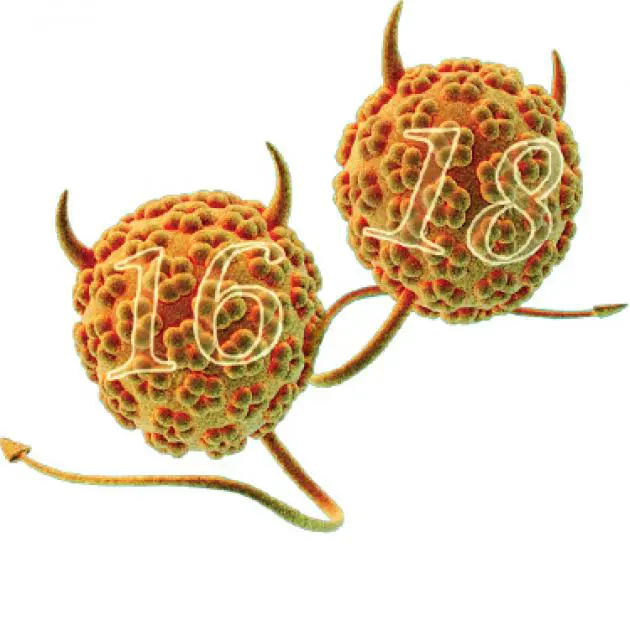
More than 100 different types of HPV are known and most of them are considered “low-risk” because they have not been linked to cervical cancer. However, 14 HPV types are identified as “high-risk” and are the cause almost all cervical cancers. The two highest-risk strains – HPV 16 and HPV 18 – cause about 70 per cent of cervical cancers.
“Women with those two high-risk strains are 35 times more likely to develop cervical pre-cancer,” he says.
Equally worrying is that the majority of women think that a negative pap smear test means there is no infection, The pap smear though is designed to look at cell changes not infection and indeed one in three cervical cancers occurs in screened women with normal Pap results. Doctors therefore recommend combining the HPV screening test with the Pap test, saying this allows for 99-per-cent accuracy
The cost of the HPV test – around Bt1,100 at a public hospital and Bt3,000-plus at private hospitals – means that many women brush it aside.
Doctors argue that it is an essential tool in early detection and recommended having this test before the Pap smear.
One of the newest HPV tests is also specific to the two highest-risk strains - HPV 16 and HPV 18 – thus doing away with the need for further testing should the first one be positive.
Those who have never had an abnormal Pap smear and whose HPV infection test is negative should be checked every three years.
All women should have an annual check up with a gynaecologic oncologist. This also applies to those who have received the HPV vaccine, which is only effective against the four types of HPV responsible for more than 70 per cent of cervical cancers.
Woman who have never been in a sexually active relationship should be screened from the age of 30 while those who are sexually active should start at age 25.
