
Culture and commerce collide in the mall


Play
Shanghai's K11 retail development gets set to host a show of works by Dali
In November, the K11 Art Mall in Shanghai will host a Salvador Dali exhibition, the only Dali exhibition in China to be authorised by the Gala-Salvador Dali Foundation since 2001.
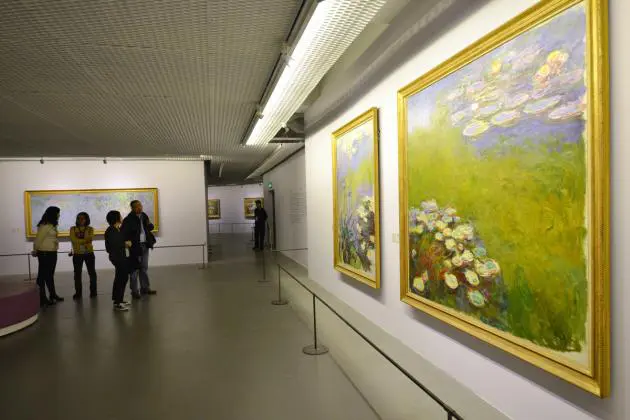
It is the second blockbuster show to be held in the retail development, the first being the Monet show last year that brought together 40 original artworks from the French impressionist including from the world-famous Water Lilies series. It attracted about 350,000 visitors in three months and the ticket price was just 100 yuan (Bt500).
“We made no money from Monet,” says Douglas Kotwall of the K11 Art Foundation. “Most of the money went into things like insurance and logistics.”
The foundation, which is headquartered in Hong Kong, is blurring the lines between culture and commerce. There is art in the Shanghai mall’s 3,000-square-metre basement as well as in the shopping areas. Adrian Cheng, an art collector and head of the foundation, previously stated that he wanted to bring art to the masses.
China is not short of places to enjoy art. The government said it wanted to have 3,500 museums by 2015, a goal it reached three years ahead of schedule, with Beijing and Shanghai having the lion’s share of institutions.
Of the country’s 1,560 art galleries in 2013, 742 are in the capital. A fraction specialises in contemporary art – Chinese or foreign. No Chinese mainland museum, however, is in The Art Newspaper’s top 10 list for visitor attendance. Europe dominates the publication’s rankings, although the National Palace Museum in Taipei holds steady at seventh place.
Half of the Taipei museum’s visitors are from the Chinese mainland and one-third are locals, said The Art Newspaper.
An omission from the rankings is the Palace Museum in Beijing, which had more than 15 million visitors in 2014.
“As in previous surveys, we have treated it as a special case,” the newspaper said. “Situated in the Forbidden City, it is part of a larger visitor destination and so it is difficult to compare it with a stand-alone institution.”
Shanghai Museum’s free exhibition, “Tracing History”, last year attracted more than 600,000 visitors in just under three months.
But despite the popularity of some exhibitions, visiting art galleries is still not a common pursuit for most people in China, as Kotwall from K11 explains.
“The visitor numbers we got for Monet are probably more than most (Chinese) museums see in a year. That’s a reason for putting it in a commercial space,” he says.
“People in China are unfamiliar with going to a museum or gallery. But they’ll go to a mall every weekend. That’s one of the missions we have – public art education.
“The Chinese are craving new culture and new things. For Dali, we are having a parallel show with established and emerging Chinese contemporary artists, to show the influence of surrealism.”
Kotwall says people who attend K11’s shows are interested in art and want to learn about it. “They are educated, they have gone overseas and have come back. The next level of lifestyle for them is art. Art connects them to the outside world.”
K11 is planning 19 Chinese projects based on its art-retail model. The biggest will be in Shenyang, capital of Northeast China’s Liaoning province, with 260,000 square metres of space.
Other retail developments are also attempting to broaden the cultural experience in China, standing out in a crowded marketplace by organising exhibitions of conceptual art and photography.
Beijing’s fashionable Taikoo Li Sanlitun mall hosted prize-winning architect Frank Gehry’s first exhibition in China in 2010 and this month is showing "Now Is The Time", a collaboration with the Magnum Photos agency.
Some retail spaces retain a museum-like feel, with the work on the wall and the consumer in front of it. Beijing’s Parkview Green presents a more personal approach.
On an overcast weekday afternoon, a young woman sat at the foot of Shen Jingdong’s Salute while her friends took her photo.
A security guard loitered but did not intervene. Elsewhere, another visitor peered through the long pink threads of Yang Tao’s Empty Bundle. Outside, people petted a pair of snarling bronze wolves and took selfies next to brightly coloured and outsized statues.
“Art attracts customers,” says George Wong, chairman of the Parkview Group.
“It helps to sell things. It’s also an important opportunity to present art to the public.
“Most artists want their work to be seen. It is my wish to give the public an education in art. But I want them to touch it and interact with it. Painting is for your eyes only.”
