
This bird flies on


Play
Toki arts week gets a new name for a new generation
CO-ORGANISED BY Hong Kong’s Zuni Icosahedron, Nanjing’s Jiangsu Performing Arts Group Kun Opera Theatre and Tokyo’s Japan Foundation and hosted by Nanjing Museum in late October, the Toki Arts Week 2015, not only had a new name – it was formerly Toki International Arts Festival – but also a new focus. That change saw it presenting performances, lectures and demonstrations by cross-gender artists Kala Krishna of India, Didik Nini Thowok from Indonesia as well as Japan’s Hikaru Uzawa, which formed a strong link to the local Kunqu master Li Hong Liang.
Notwithstanding the new name, the goals of this international platform, which developed from the Shanghai Expo 2010 when Noh and Kunqu artists collaborated with Hong Kong trailblazer festival curator and artistic director Danny Yung and Japanese director and co-curator Makoto Sato, remain intact. With nine young Kunqu artists at the core, they have been given this rare opportunity to not only learn from artists and masters from other traditions but also experiment and create new works with them.
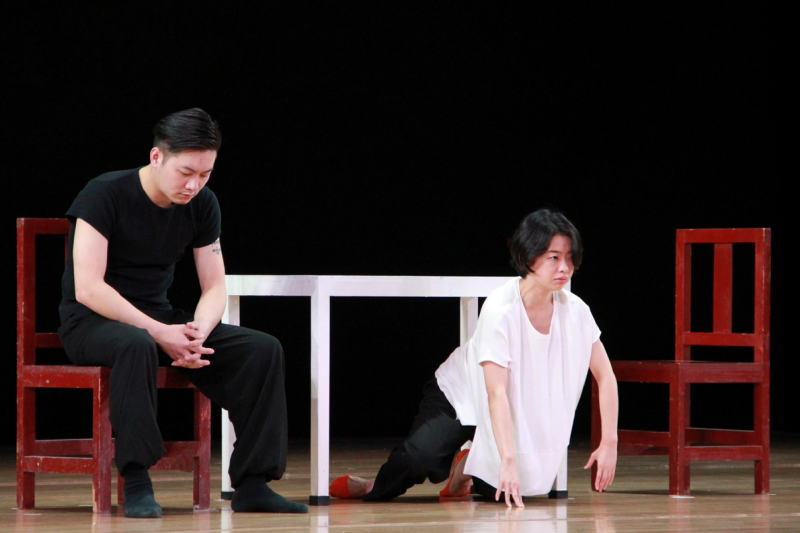
In Yung’s internationally acclaimed “One Table, Two Chairs” format, they showed how classically trained artists, given the right opportunity, themselves didn’t need to be as rigid as their classical performing arts genre. Out of the seven works presented to the public at the Nanjing Museum Theatre, the most memorable was by Japanese actor and dancer, Makoto Matsushima, Kunqu artist Sun Jing and his Jingju counterpart Gao Yun. With Matsushima, the only one with no classical training, taking the role of the director, the piece played also with the performance space, making it very different from the work by Yung, the man behind this experimental paradigm. A good sign was that the house was filled with many young audience members, mostly female university students who took many photos with their professional cameras and mobile phones and stayed for the post-performance discussion. I didn’t see them as future artists but, more importantly as we seem to have enough artists, as audiences of the future, who want to see Kunqu being preserved and developed at the same time.
The conference on the last two days drew artists and scholars from China, Germany, Japan, Singapore, Taiwan, Thailand and the US as well as the nine young Kunqu artists. They shared their opinions not only on the festival itself but also on how this cross-cultural and cross-regional platform is working in the preservation and development of intangible cultural heritage. And while many young artists revealed that, outside the Toki Arts Week, the remaining 51 weeks of their professional lives haven’t changed much, they have gained much more confidence in artistic experiments and are looking forward to learn more from this international platform.
Once faced with extinction, this rare bird is now indeed flying – and evidently in the right direction.
Our National Artist Patravadi “Khru Lek” Mejudhon told XP that she had enjoyed her Toki experience.
“It’s been rejuvenating. Before coming here, I felt tired and wanted to quit. I realise, again, how important it is to nurture young artists and to find an international platform for them, and it’s definitely my job as a senior artist. Toki has taught these young Kunqu artists to think forward, based on and yet beyond their cultural heritage background. If we do the same in Thailand, there will be more artistic creations. We have a lot in common with China and Japan, and, come to think of it, what I’ve been doing with classical Thai performing arts was inspired by my American and Japanese teachers, not their Thai counterparts. This kind of international exposure and interactions with artists from different cultures makes us all think more of our own culture.”
Her comment brought to mind Thailand’s Culture Ministry’s booking of the Royal Albert Hall for a presentation of khon, spending our tax money for the sake of preservation and promotion of our national heritage while showing little development. They also plan to have further regional exchanges and presentations of performing arts forms based on “Ramayana”, and to spend more of our tax money.
The writer’s trip was fully supported by Toki Arts Week. He wishes to thank Danny Yung, Carol Woo and Cheuk Cheung for all assistance.
