
M5.6 Yamanashi quake injures 10, Fuji alert unchanged
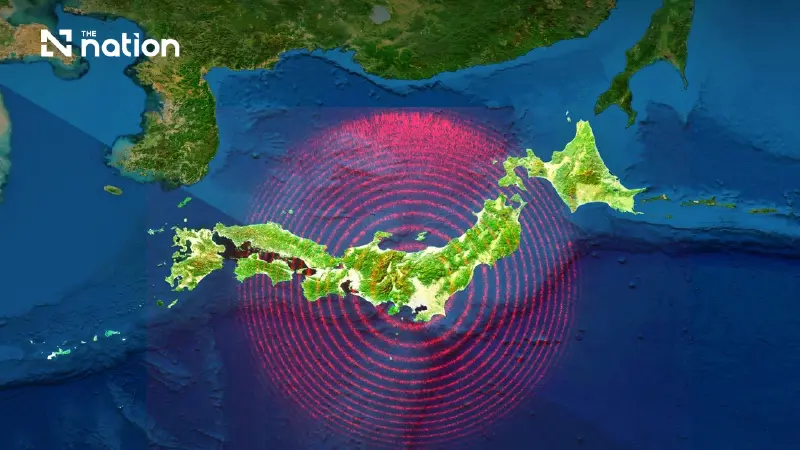


Japan earthquake: JMA reports a M5.6 quake in Yamanashi near Mount Fuji, with 10 minor injuries, no tsunami threat and landslide warnings
A magnitude 5.6 earthquake struck Yamanashi Prefecture in central Japan late on Friday, injuring 10 people lightly and prompting authorities to warn residents near Mount Fuji to remain alert for aftershocks and landslides.
The Japan Meteorological Agency’s Kofu Local Meteorological Office said the quake occurred at around 10.28pm on June 26 and was detected shortly afterwards at 10.29pm. The focus was in the eastern Yamanashi and Fuji Five Lakes area at a provisional depth of 20 kilometres.
The strongest shaking was recorded at intensity 6-lower on Japan’s seven-point seismic scale in Fujikawaguchiko, a town near Mount Fuji. Otsuki city recorded intensity 5-upper, while shaking was also observed across a wide area from the Tohoku region to western Japan.
JMA said there was no tsunami risk from the earthquake. The agency also said two further tremors of intensity 1 or higher had been recorded by midnight, including one at intensity 3 and one at intensity 1.
Japan’s Fire and Disaster Management Agency said in its 6am update on Saturday that 10 people had suffered minor injuries, while no residential fire damage had been reported. The agency also said Yamanashi Prefecture had set up a disaster response headquarters at 10.29pm on Friday.
Yamanashi Governor Kotaro Nagasaki said eight people in the prefecture had been lightly injured, mainly in falls or by falling objects. He said no major damage had been found on roads and that a water outage at one facility had already been restored. Because the damage was not increasing, the prefecture shifted from a full disaster response headquarters to a disaster alert headquarters at 10.30am on Saturday.

Despite the quake occurring near Mount Fuji, JMA’s official volcano information page continues to list Mount Fuji at eruption alert level 1, meaning people should remain aware that it is an active volcano. The page says there have been no new announcements in the past week, no current special precautions, and no signs of an eruption.
JMA warned that areas hit by strong shaking face a heightened risk of building damage and landslides, especially if further rain falls. The agency urged people to avoid dangerous areas unless absolutely necessary.
Residents have been told to remain cautious for about a week, particularly over the first two to three days after the quake, as strong aftershocks can occur during that period. JMA said past cases show that earthquakes of a similar scale have followed major tremors in about 10-20% of cases.
In a separate joint notice, Yamanashi Prefecture and the Kofu Local Meteorological Office said the earthquake may have weakened the ground in Fujikawaguchiko and Otsuki. As a result, the criteria for issuing landslide-related warnings have been temporarily lowered: to 70% of normal levels for Fujikawaguchiko and 80% for Otsuki.
Otsuki city said it had recorded intensity 5-upper but, as of 11am on Saturday, had no reports of injuries, no power cuts and no water-supply damage. The city said no evacuation shelters were currently open after Otsuki Higashi Elementary School was closed as a shelter at 11am.
Officials also urged residents to watch transport updates. Otsuki city said the Fuji Kyuko Line, which had temporarily suspended operations, had resumed service, while JR Chuo Line services could face delays, destination changes or cancellations because of approaching storm conditions.
JMA’s current assessment for Mount Fuji states that volcanic activity remains quiet and unchanged. The volcano page lists no new alert upgrade following the Yamanashi earthquake.
The quake’s proximity to Mount Fuji has drawn public attention, but official information so far points to continued earthquake and landslide vigilance rather than a change in volcanic status.
Authorities are urging residents in strongly shaken areas to check for hazards around homes, avoid unstable slopes and keep following official weather, earthquake and local government updates over the coming days.
