
Election chief defends September 14 decision to refer 77 people in Senate collusion case



Election Commission chairman Narong Klunwarin says he will explain the Thai Senate case decision in court if challenged, citing compliance with the law
- Thailand's Election Commission (EC) has referred 77 people to the Supreme Court in a case involving alleged collusion in the Senate selection process.
- The group of 77 includes 26 senators, 36 people eligible to vote in the selection, and 15 others.
- The referral is for the Supreme Court to consider electoral disqualification; it is not a final verdict of guilt.
- The EC chairman defended the decision, stating the commission acted in compliance with the law and is prepared to explain its actions in court.
Thailand’s Election Commission (EC) chairman Narong Klunwarin said on September 14, 2026 that the regulator was ready to defend its actions in court after deciding to refer 77 people to the Supreme Court in the alleged Senate selection collusion case. Narong maintained that compliance with the law and transparent explanations were the commission’s protection against potential legal challenges.

The EC’s decision covers 26 senators, 36 people eligible to vote in the Senate selection process and 15 others, out of 427 people accused. The commission approved referring the matter for the Supreme Court’s consideration of electoral disqualification; the decision itself does not establish guilt or impose disqualification. The figures are confirmed in the EC’s official statement.
Speaking at the press conference announcing the decision, Narong addressed questions about public confidence in the handling of the Senate collusion case and how the commission would respond if legal proceedings were brought against it.
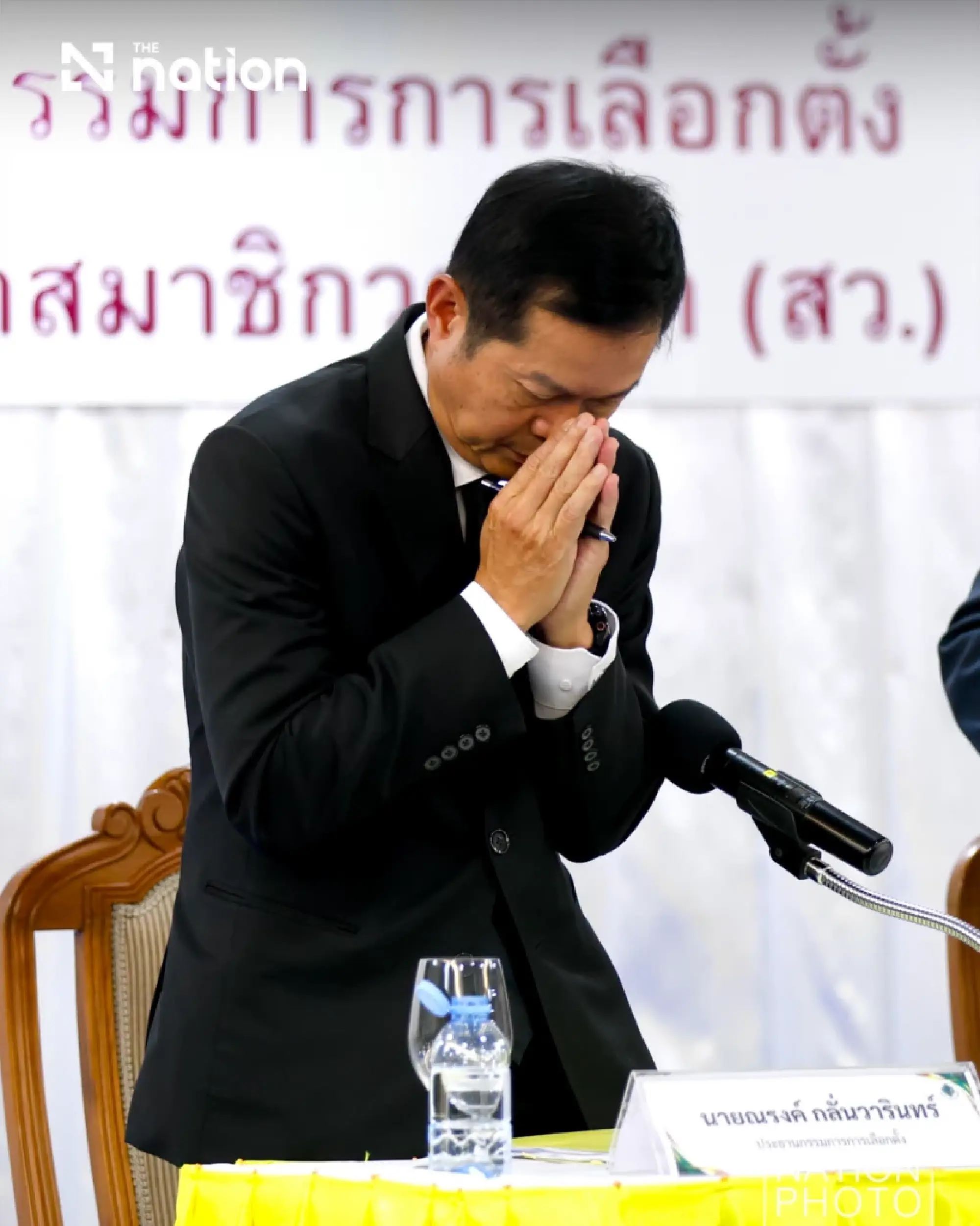

Narong offers to explain commission’s actions in court
Narong said the EC could not prevent anyone from bringing a lawsuit, but commissioners would explain to the court that they had acted within their legal responsibilities. Compliance with the law was their protection, he said, while emphasising that his remarks were not a challenge to potential litigants.
Narong said the commission had chosen to hold a press conference instead of simply issuing a written statement because it wanted to explain the facts openly. The EC had nothing to conceal, he maintained.
“I used to work in the courts, where contempt-of-court provisions offer protection against improper criticism. But here, I have nothing to protect me except complying with the law and explaining the basis for the EC’s decisions to the public,” Narong said.
Narong maintained that the commission’s explanations were clear and that members of the public who considered them carefully would see that the EC had not acted outside its proper remit.
Narong urges public to judge commission’s longer-term record
Narong said he had worked to improve the organisation and restore public confidence during what he described as one year and 14 days since taking office.
Narong acknowledged that people would assess the commission differently, but said he wanted its performance to be considered over a longer period.
“How people see us depends on their perspective. I do not want to use the words ‘give us a chance’, but I would like people to judge our work over the longer term,” Narong said.
