
Thailand weighs E20 and B20 excise tax cuts amid limited fiscal space
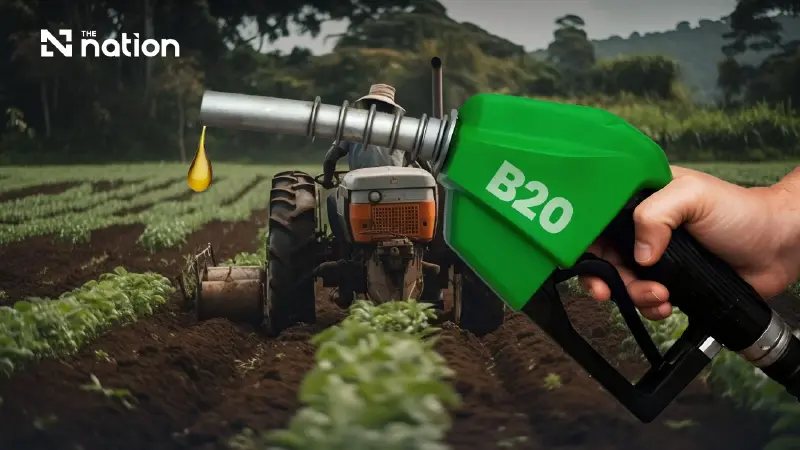


Ekniti says energy relief must balance living costs with fiscal discipline as fiscal space stands at just over THB10 billion this fiscal year.
- The Thai government is considering targeted excise tax cuts on E20 (ethanol blend) and B20 (biodiesel blend) fuels to manage energy prices.
- This specific approach is intended to also support the agricultural sector and farmers who supply the feedstocks for these biofuels, such as sugar cane, cassava, and palm oil.
- The government is hesitant to implement the cuts due to severe fiscal constraints, with only about THB10 billion in fiscal space remaining for the current fiscal year.
- Cutting taxes is one of several options being weighed, alongside using the Oil Fuel Fund or asking refineries to contribute excess profits.
A proposal has been made to use the unused portion of the borrowing allocation for measures to mitigate the impact of the Middle East crisis and manage oil prices through a reduction in the oil excise tax.
Most recently, Minister of Finance Ekniti Nitithanprapas said the government had several tools available to manage energy prices and needed to choose those best suited to the situation.
The three main tools are using the Oil Fuel Fund mechanism, asking refineries to contribute excess gains from refining margins to help ease retail fuel prices, and cutting oil excise tax, which is another option if circumstances make it necessary.
However, the government has not so far opted to cut excise tax because doing so would immediately reduce state revenue while government expenditure would remain unchanged.
The government might ultimately have to borrow to make up the lost revenue, so the impact on the fiscal position must also be considered.

Targeted E20 and B20 excise tax cuts if needed
Ekniti said that if the situation reached a point where tax measures were necessary, the government was considering a more targeted form of assistance.
This could focus on certain fuels, such as E20 and B20, which have high proportions of ethanol and biodiesel, respectively.
Such an approach would mean the measure was not aimed solely at lowering fuel prices for the public, but could also be linked to the agricultural sector and the incomes of Thai farmers.
Key feedstocks for the ethanol blended into E20 include sugar cane and cassava, while biodiesel is linked to palm oil.
Applying tax cuts to these fuel types would therefore provide another way to pass the benefits of energy measures on to the agricultural sector.

Finance Ministry concerned as fiscal space stands at just over THB10 billion
Ekniti stressed that helping the public with the cost of living must go hand in hand with fiscal discipline, particularly late in the current fiscal year, which ends this September, because only just over THB10 billion in fiscal space remains.
“If a measure that reduces state revenue is introduced without a comprehensive assessment of the burden, problems in the energy sector could spill over into fiscal difficulties, creating one crisis on top of another,” Ekniti said.
For the next fiscal year, the government will reassess the available fiscal space before deciding how much scope there is for further measures.
It will consider the suitability of any measure and the overall impact on the fiscal position.
