
Thailand weighs 31–39% excise tax on EVs without local parts
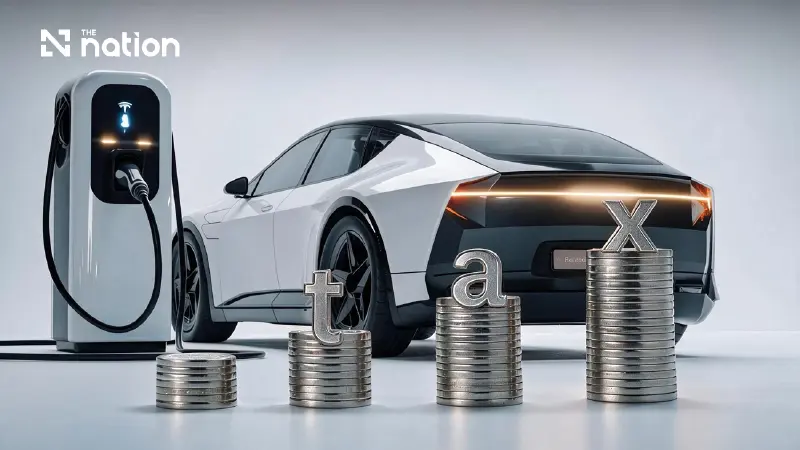


Thailand’s EV board meets on September 10 as officials review excise rates and local content rules, with protection proposed for existing orders
- The National Electric Vehicle Policy Committee will meet on September 10 to consider policy and support for electric vehicles.
- A proposal would raise excise tax on EVs without domestically manufactured parts from 10% to 31–39%.
- The proposed increase aims to encourage domestic production and protect manufacturers in Thailand from competition from imported vehicles.
- EVs using domestic components would retain the preferential 2% rate to support investment and local manufacturing.
The prime minister is due to chair a meeting of the National Electric Vehicle Policy Committee, known as the EV board, on September 10, a Finance Ministry source said.
The meeting will consider policy direction and clarify support for different vehicle categories, including fully imported vehicles and those produced by manufacturers with a production base in Thailand.
The aim is to retain the established Japanese automotive manufacturing base while encouraging new EV investment from China and other countries, allowing both groups to operate alongside each other.
31–39% tax considered for vehicles without Thai parts
Decisions on excise rates for electric vehicles (EVs), hybrids, plug-in hybrids and other vehicle categories fall within the Finance Ministry’s authority.
The ministry and the Excise Department are reviewing possible changes, including an increase for EVs and range-extended electric vehicles (REEVs) that do not use domestically manufactured components.
Under the private sector’s proposal, the current 10% rate would rise to 31–39% to protect vehicles manufactured in Thailand from competition from imports.
The treatment of hybrids and plug-in hybrids in this category remains unclear, with current excise rates starting at 15%.
Tax advantages for Thai parts and stricter local content rules
Vehicles using domestic components would retain their existing preferential excise rates to encourage production in Thailand. These include 2% for EVs and 5–6% for hybrids and plug-in hybrids.
The Excise Department will also consider additional criteria for calculating local content in vehicles manufactured in Thailand. It currently follows Customs Department rules based on a 40:60 ratio of Thai to non-Thai content.
Options include increasing the Thai share to 50%, creating a 50:50 ratio, or tightening the details of how local content is calculated.
If EV excise taxes rise, vehicles ordered in advance would be exempt from the increase and retain the old rates.
New orders would face the revised rates. The source estimated that, if the tax rose above 30%, the excise amount on a vehicle valued at 1 million baht could increase from 100,000 baht to approximately 300,000–400,000 baht.
Excise Department director-general Pornchai Thiraveja previously said automotive excise taxes needed restructuring to reflect the industry’s rapid changes. He outlined three principles.

- Use imports to attract investment and technology. Thailand should use EV imports to create an attractive investment environment and bring new technology into the country, rather than remain solely an import market. There are already nine to 10 factories.
- Expand production for exports. Once foreign investment has been attracted, the next objective is to increase production capacity and establish Thailand as a regional vehicle export hub.
- Promote higher-value domestic materials. Manufacturers should make greater use of high-value materials from within Thailand, going beyond vehicle assembly and the production of basic components.
The Excise Department and the Finance Ministry are preparing detailed proposals and related measures for submission to the EV board and the Cabinet.
Source: Thansettakij
